Remember...

Ancestral energy lives in the stars above us, the stones beneath us. Their memory gathers in oceans, rivers and seas. It hums its silent wisdom within the body of every tree.

Wednesday, March 20, 2013

Your Options After Death


If anything has become clear to me while doing this research, it’s that we need to start rethinking what place death, grief, and the disposition of the dead have in our culture. I would hate to lose the solitude of cemetery parks. In some cities, they are among the last vestiges of undisturbed, though manicured, green left. But cemeteries have physical boundaries and eventually all the plots will fill. Only in America do we think that if we purchase a plot, it’s ours for life, death, and afterlife.
Our country is fairly new and other countries have been dealing with this issue for centuries. In many large cities, after a certain time period had passed, allowing for natural decay, graves were disinterred so that newly dead could take their place in consecrated ground, and the bones were placed in ossuaries or charnal houses. Ossuaries allow for bones to be placed and stored in smaller boxes. In catacombs and charnal houses, the bones would often be broken up, skulls stored together, long bones stored together, etc.
Maybe we need to move away from permanent monuments and resting places. How much time do we need after death? How many generations pass until no one remembers us? Why bury your loved ones in a cemetery if you never visit them there? As an amateur genealogist, I have spent many afternoons reading and searching for the tombstones of my ancestors. I have felt the joy and thrill of discovering their resting places. But there are too many of us, to each own a piece of land for life.
I will have no descendants. And I will have no gravestone. So I need to rethink what I need and what I want. As well as what to leave behind to best serve those who love me when I die.
Funerals serve many purposes. They confirm the reality of death for those left behind. In theory, they aim to provide a contained environment for the living to come together and process through grief and mourning. It is a time for the living to remember and pay their respects to the dead, bringing closure to that life. It is the end to a story.
Most people don’t think about the details of planning a funeral until they are thrust into the crisis of death. In that moment, we don’t think to shop around and we are easily talked into traditional standards. So think about it now. Choice of funerals and services are largely influenced by family preferences, religious beliefs, and traditions. If you start the dialogue now, you could pre-empt any squabbling between loved ones after the fact. So, what do you want for your body when you die?

A Smattering of Options
You could find a place that would allow you to put yourself in the ground in a simple box, or natural fiber blanket or shroud. The purpose of a green burial is to return to the way things used to be; returning the body to the ground in a manner that does not hinder decomposition. Natural burial is where the body is returned to the earth to decompose in the soil. It has been practiced in Islam for almost 1500 years. It was reintroduced to the UK in the 1990s by Ken West and has gained popularity in Australia, China, Germany, Japan, the Netherlands, and North America. Find more information at The Green Burial Council and The Natural Burial Movement 

You can try your hand at a home funeral, where states allow. You can care for your dead and tend to their body yourself, seeing the entire process through, reconnecting to the event as a rite of passage. All but eight states in the U.S. have won the right to home funerals if they want them. Check out the Home Funeral Directory and the Home Funeral Alliance

This is a good article about a family who took on a performing a natural burial in 2007. It chronicles the choices they made, how they went about it, and how the different family members responded to it. It’s very thought provoking. Click on this Smithsonian article to read a real-life story of people finding closure in tending their own dead.

Thinking Outside the Box
One of the options available is to send your loved ones’ cremains to be pressed and heated into jewelry. You can have them made into earrings or rings, big gems for yourself or smaller gems to divide up into separate pieces for you and children or other loved ones. I like this idea, because you can leave a legacy, an heirloom that can be passed down through the family. No need for a tombstone, you become a travelling wearable memorial. You can read more about it, including testimonials, at the lifegem website.

You could merge your ashes with the seed of a tree and find new symbiosis as you feed its growth. You can truly become one with nature in a way we couldn’t in our bodies. At least until the tree dies and becomes something else. But trees are good. There aren’t enough of them anymore and they feed off of our carbon dioxide and provide us with oxygen. Do you want to Become a Tree After Death? If you want more of the metaphor, this other version, though pricey, allows you to see a visual shift as the tree grows, cracking the ceramic cover of the cremains, found at the Spiritree site.

You can simply scatter the ashes of your dead. Check out the laws here.

For something different, if you’re really invested in feeding the earth, you can have your body turned into liquid fertilizer. Not kidding.

You could gift your body to medical science. It’s important to note that most facilities have a weight cut-off limit. Some can’t accept a body more than 170 lbs max and others top out at 250 lbs. It’s something more people are looking into, as the facility will cremate the body for you, free of charge, when they are done, and send them to you, though you may have to pay for shipping or pick it up yourself. When used for medical science, your body must be embalmed and the formaldehyde adds a lot of weight. Many facilities don’t have the equipment or manpower to lift and shuffle around the bodies. They have to be easy to store and move. Check out the options at Life Legacy or Science Care or Bio Gift.

Wednesday, March 13, 2013

Death as an Industry


Death is a rite of passage that touches each of our lives, either through the death of a loved one or our own eventual demise. No one escapes. For that reason alone, we should talk about it more, but we don’t. We don’t value our emotional bodies in this society. Grieving is dirty and uncomfortable for everyone, and we have come to expect that it will happen behind closed doors. We prefer to leave it at the funeral home, as if we are pretending that death doesn’t happen to us all. That we don’t all grieve at some point in our lives.
We let the professionals handle death and it becomes something that happens to us, with little involvement from us but our grieving. Outside assistance with death will always be helpful, but the industry we’ve built around funerals allows for people to stay in denial. It allows for us as individuals to let our grief overwhelm and paralyze us, when the challenge is to claw our way through it. What closure can be found in viewing a corpse we have tried to make appear as lifelike as possible? How does that reinforce the reality of the death of the human body to our rational minds?
Why has it become its own industry? When did we allow outside parties to tell us how to handle the passing of our dead? I’m not dogging funeral home directors or morticians. I want to make that distinction clear. I have met some who were simply stepping into their family business and the legacy of caring for the dead. It is sacred to them. And others have felt a calling and a pull towards helping be in service in that way. We all try to find the place in this world where we best fit in. That’s not the concern for me. What I’m interested in is the way turning death into a third-party industry has affected the way we process it as a culture.

“Americans have lost the desire to be active participants in
funerals so we have very little exposure to the dead. I think that
if we were to witness the peaceful death of a loved one and play
a larger role in their funeral proceedings, Americans would be
less afraid of death and more at peace with themselves.”
 ~Loretta M. Alirangues,
“Funerary Practices in Early and Modern America”

In Judaism and Muslim deaths, when a body dies, it is buried as soon as possible. At death, the family stops to care for the dead before resuming their lives again. There is no need for embalming or refrigeration. They allow the clock of their worlds to stop. The way our culture works, we don’t allow for people to stop their lives at the death of a loved one. We are all part of a larger machine that we have given over power to and it infiltrates every aspect of our lives. When my Grandma died, I did not get bereavement time. I took it but I took the time off of work without pay. I informed my boss that I would be out for a week while I grieved with my family. It could have cost me my job if my boss had decided to be cruel. But I knew then that it was important to be part of it, to be there with my family through the transition. Our entire way of being a family shifted when she died. I knew that it would be a moment I could never reclaim. I chose my family first. We need to get back to putting people first.
I am not a fan of viewings. I do not appreciate the embalming process. I do not enjoy the lifelike tint of the corpse. When my Grandma died, I went to the funeral home to have some alone time with her because I had not gotten home in time to say goodbye. It actually threw me that she did not appear dead. The fact that she appeared to be sleeping made it harder for me to grasp. There was no death pallor, only an orange glow and too-much rouge.
It was putting my hands on her that brought reality home to me. It was feeling the cold of her body that made me understand. I touched her skin and I could not feel her vibrant energy. I could not feel the familiarity of her hugs. Whatever made her who she was, was gone. My Grandma was dead. I had to go to the funeral home to have that moment. I had to go to where her body was, in a strange place.
There are currently about 15,000 funeral homes in operation in the US. According to the National Funeral Directors Association, the average cost of a funeral in 2006 was $6,200, up twenty percent from $5,180 in 2000. I don’t know what costs are covered in their average, but it fits the prices people I know have been quoting me. For a minimal cremation, no frills, including obituaries, it cost a friend $1,600 in 2011. For a funeral with cemetery burial, as cheap as possible, it cost another friend $5,000 in 2012.
You know that death became in industry when they passed the Federal Rule of 1984. It was put in place by the Federal Trade Commission to require all funeral homes to provide consumers with price information over the phone, and, upon request, a written itemized list of their fees. This was done to insure that no funeral home could gouge the mourners in their time of grief. And with this rule came a way for people to learn how to navigate the industry that taking care of the dying had become.
For instance, funeral homes cannot embalm the deceased for a fee without permission from the family unless required by law. In history, homes would do an embalming and then pad the bill with the expense. Some funeral homes have a policy that if you want to hold a viewing, you have to embalm the body, but embalming isn’t legally required. That is the specific funeral home, and many directors and morticians have bought into the belief that embalming bodies saves the living from disease. If you need to delay, refrigeration is another option, where dry ice is used for the viewing. The trouble then may come in finding a place that has the ability to refrigerate.
Funeral homes cannot require you to purchase a casket for cremation. A cardboard box is all that is needed for the body to set in. Some crematoriums do not even require that much. And just because a funeral home doesn’t have any of its catalog’s cheaper caskets on hand does not mean they cannot get you one within 24 hours. You actually don’t have to buy a casket from the funeral home. You can acquire one on your own, and under the Federal Rule of 1984, the home is not allowed to charge you a handling fee for accepting one from an outside source.
Don’t be afraid to shop around and compare prices. Even better, do it now, before you need to. Obviously prices will increase, but you’ll get the feel for who you’d want to give your business to. Better still, not all states require the use of a funeral director or funeral homes for viewings. Unfortunately (for me) New York, Connecticut, New Jersey, Louisiana, Nebraska, Indiana, Illinois, and Michigan are some of the ones that do. In other states, it’s legal to plan and organize your own funeral. Right now you’re thinking, why would I want to? But maybe death is supposed to be hard. Maybe preparing the way for others is the spiritual-yet-not-religious thing missing from our lives that would naturally help us greet our own end more peacefully.
Standard funeral costs are made up of the services of the funeral director, the use of the funeral home facilities, embalming, the casket including linings and pillows, burial vault, obituaries, the disposition of the body including the cost of the grave site, the opening and closing of the grave, the cremation, transportation of the body, flowers, clergy, grave markers or plaques, and various other incidentals. Often in our grief we worry about being seen as cheap, as if the amount of money we spend displays how we felt about them. That myth is a by-product of our death services becoming its own industry, like how Hallmark Cards make a mint off of perpetuating Hallmark as the brand that says you care the most.
In this current economy, it is foolish to fall into that trap. We should do for our dead to the best of our abilities, but the dead would not want the living to bankrupt themselves on memorialization. When a person dies, their spirit moves on and only the body remains. Do for that body, as it was the sacred vessel of your loved one, but remember them in your actions. Speak their names to the winds and tell their stories. Truly the best way to honor the loss is to remember them by living.

Wednesday, March 6, 2013

A Funeral in 2004


I have attended a lot of funerals in my lifetime, which has not been nearly as long as should warrant that statement. But I tend to see that fact more as the result of all the people I have known whose lives have touched mine. Each funeral is double-edged. There is grief in the loss of a loved one and simultaneous gratitude for the friendship that created the grief.
My first experience with attending to the details of the dead came with my Grandparents, who died three years apart. I admit that the detail-planning was a lot to take in amidst the thickness of the grief. When my Grandma died I was more of a spectator, learning the process of death for the first time. With my Grandpa, I was more invested.
My Grandpa died in the hospital at 9:03 at night. The nurses told us to take all the time we needed, and asked who we wanted them to call. My mom gave them the name of the funeral home we were using. When we left, my Grandpa’s body remained at the hospital for the Funeral Director to pick up. My Grandpa and my mom had decided to use the same funeral home as we had used for my Grandma but other than that, little arrangements had been made ahead of time.
My Grandpa had been fighting his cancer. He thought he was winning. But when the doctor told him that the treatments weren’t working, and he was looking at weeks, not months, my Grandpa slipped into unconsciousness that same night. I will always believe it was a choice he made to be done. To stop fighting. He was in a lot of pain. By the next evening, surrounded by loved ones, he was gone. He never regained consciousness.
When we went to meet with the Funeral Director the next morning, he was kind, walking through the checklist of choices we needed to make and information he needed to retrieve. He took down the details for the obituary; names of living relatives, work history, local groups he belonged to, etc. He told us he would send the obituary into the local newspaper for printing.
When asked if we wanted to have a viewing, we said yes. The Funeral Director said that we’d have to have the embalming then, and added it to the sheet on his clipboard and we moved on. We walked into the show room and picked out a casket.
            When we picked out a casket for my Grandma, he said whichever one we wanted for her, and we picked one of Oak. It was pricey, but compared to the caskets in the showroom, not ridiculous. When we entered the same showroom for my Grandpa, money was an object. It’s something I’ve been hearing from a lot of people about the choices they’ve made for their own loved ones. Often finances have to come before what they would want to do for their loved one. Which speaks to the industry that death has become in our culture.
            For my Grandpa, we chose a Pine casket, which looked very much like every other wooden casket in the room. Not that any casket is less than another. All wood is sacred. And it only matters in the moment of purchasing it. No one is going to see it when it’s in the ground. It is kind of set up to make you feel like if-you-loved-them-more-you-would-show-it-by-picking-a-better-casket. It must be hard and overwhelming for those trying to make these choices from a place of extreme grief. We didn’t need the fancy linings or the fancy pillows, or the secret compartment in the casket for belongings and we were all in agreement on that. If you knew my Grandpa, he would have approved of the simple and classic choice we made.
Then we picked out a vault, which can be required when a body is embalmed in some states. I have also learned that some cemeteries will require the use of a vault whether the person is embalmed or not, and whether the state requires it or not. Using a vault assists with the ease of their ground maintenance, as vaults help keep the ground from shifting too much as the casket settles.
We planned the dates for the viewings with a simple service at the funeral home through the use of their retired minister. My Great-Grandparents were Roman Catholic but my Grandpa never claimed any religion as his own. What the funeral home could offer seemed the best option. The funeral home made arrangements with the cemetery for opening and closing the grave site for us, but only because we were using them for our service.
Then we waited until the viewings, sitting in quiet, sharing stories, cleaning to keep hands busy. We called family and friends and received them at my parent’s house. The viewings at the funeral home were a blur. Lots of reunions with people I hadn’t seen since childhood. It was an unfortunate circumstance and yet I thought my Grandpa, who enjoyed his alone time as much as he enjoyed socializing, would have approved at how much laughter filled that cold and somber room.
The morning of the service was a joke. I know the retired minister meant well, but he couldn’t remember my Grandpa’s name and he used the opportunity to throw every Bible story he had ever been fond of into his eulogy- and that is me being kind. I wish I had been a bit older. I wish I had anticipated the end was coming. I wish I could have stood up there and spoken to the awesomeness that my Grandpa had been made of. Still, the comical eulogy served as the source of much laughter during the afternoon.
We divvied up the flower arrangements, deciding what would go to the grave site. The plants we separated up for family to take home to grow and renew. It was touching to see the flowers come in from people we didn’t really know, whose lives my Grandpa had touched. The webs we weave in life are far larger than we can perceive.
It was a warm spring day, just after equinox in the cemetery. Standing graveside was the most natural part of the entire experience for me.  The sun was shining. Birds were singing. The ground sat open in wait. The strangest part of the morning was deciding who would ride in what vehicle with whom to get to the cemetery.
I don’t know how it is in large cities, but in my hometown we still ascribe to the funeral procession. The hearse takes the lead, with family cars behind it, and other cars behind them, safety lights flashing. It’s a slow crawl through red lights and stop signs. Life paused in breathes as we wound through town, picking back up in our wake.
Afterwards we gathered at a family member’s house for food and conversation. When my Grandma died, we gathered together in their house, filling the new void with friends and company. But with the second loss, we let someone else hold that part for us. I think it would have been too much, to see so many people populate a house whose future emptiness we were still coming to terms with. At the same time, I can see how it would have been healing, to bring life back into the house.
And then it was over. We stayed up late and talked. We shared stories and family secrets together at the kitchen table. A few days later my mom and I went back to his house. We walked through an emptiness that suddenly felt massive. The gravity of reality hit us, but now we had time.
We didn’t really know what Grandpa would have liked or would have wanted if he’d been able to choose, but we knew him well enough to make the best choices. And it prompted us to sit around the kitchen table and begin to discuss our own desires after our eventual deaths. It’s important to know what you want, what you don’t want, and what you don’t care about one way or the other. It’s important to share that with the friends and family that may be left to take care of those details. Both because it’s smart and because it’s kind.
What do you want done to best honor the temple that was your body? You might not care, and that’s all right. Don’t feed into the industrial machine death has become, simply because you think that’s the way it’s supposed to be. Question everything. And then call around to your local funeral homes and see how close you can get to what you want. 

Wednesday, February 27, 2013

Cremations in History

A columbarium in Oakland.

There is archaeological evidence of cremation in the Stone Age, around 3000 B.C. in both Europe and the near East. During the late Stone Age, the act of burning the dead spread across Europe and into western Russia. In the Bronze Age, 2500-1000 B.C., this practice found its way through the British Isles and the land that would be known as Spain and Portugal. Cremation was an elaborate Greek burial custom between 1000-480 B.C. that peaked in the time of Homer, around 800 B.C., when the country was ravaged by war. They would cremate the bodies of fallen soldiers in open fires and gather up the ashes and bones for burial when they returned home.
In Iron and Viking Ages, cremation was the practice used for the majority of funerals in Sweden. Around 600 B.C. Rome took to cremation and it became the standard method of disposing of the dead. More elaborate rituals evolved around their cremations, with days-long feasting and pyres 30 feet tall. Between 27 B.C. and 395 C.E. buildings called columbariums were erected to inter the cremated remains of the dead.
Early Christians considered cremation a pagan ritual and by 400 C.E., when the Roman Emperor Constantine had chosen to follow Christian beliefs, earth burials replaced the practice of cremation within the Empire. Six hundred years later, Iceland finally converted to this new religion. From that point on, in Western culture, cremations were extremely rare until the 1800s in Europe. They were performed only in times of emergency. Cremation was popular under Buddhist influence in both China and Korea until the 1300s, when Neo-Confucianism brought burials to the forefront of practice.
In 1656, when the Black Death crossed the European continent, 60,000 victims were burned in just one week in Naples. Two years later, Sir Thomas Browne of England promoted cremation as an acceptable means of honoring the dead. The first recorded cremation in Britain occurred September 26, 1769, but it was an illegal one. Honoretta Pratt was burned in her open grave at St. George’s Burial Ground. A plaque was later placed there saying that she believed the vapors of all the dead bodies were harmful to the populous so she asked that her body be burnt, that she might lead by example so others would follow. During the French Revolution, in the late 1780s, freemasons and anarchists promoted cremation as a means of reducing the church’s role in the funeral process.
Hinduism mandated cremation, in order to dispose of the body and free the soul into the next life or rebirth. Open funeral pyres were and are common in India. It was also a common practice to burn the widow of the deceased alive with him on his pyre, known as suttee. It is an English term derived from the word sati, which is what the wife of the deceased was called. There are documented accounts of suttees as early as the first century C.E. In Hindu belief, a sati was the opposite of a widow. Widows were bad because if they had been good wives, their husbands would not have died. For a woman to immolate herself as a sati was a way of winning back honor for her family. Often the eldest son would be the one to set the fire. In the early 1800s, in one year alone, 400 suttee deaths were reported within a 30 mile radius of Calcutta. It was outlawed by the British rule in 1825, though regular cremation for the deceased remained.
Everything changed in 1873, when Professor Brunetti of Italy exhibited a practical cremation chamber at the Vienna Exposition. A year later, Queen Victoria’s Surgeon, Sir Henry Thompson, founded the Cremation Society of England with fellow colleagues. In 1878, the first European crematoriums were built in Woking, England and Gotha, Germany. It wasn’t until 1885, seven years later, that the first official cremation took place in the UK, in Woking, for Mrs. Jeannette C. Pickersgill. The next year 10 more bodies were cremated.
Cremation was still illegal in Japan in 1876, when Dr. Julius LeMoyne built the first U.S. crematorium in Washington, Pennsylvania. There were only two recorded cremations occurring in the U.S. prior to 1800. The second crematorium opened in Lancaster, Pennsylvania in 1884, owned and operated by an established Cremation Society. By 1900, there were 20 crematoriums operating in the U.S. including Buffalo, New York City, Cincinnati, Los Angeles, Pittsburgh, and Detroit. Dr. Hugo Erichsen founded the Cremation Association of America in 1913, when there were 52 working crematoriums and over 10,100 cremations performed that year.
The Roman Catholic Church renounced cremation, although it wasn’t against church dogma. It is perhaps because of how strongly the Protestants advocated for cremation, both as a means of limiting the church’s influence on funeral processes and as a call for a need in burial reforms at the turn of the century. The Church softened their position in the 1960s and allowed for the practice to be chosen without penalty.
In 1970, only 8% of dead were cremated in America. In 1975 there were over 435 crematoriums in the country and 150,000 cremations were performed. In 1999, cremation accounted for 25.39% of deaths, with over 1,468 crematoriums now in use and 595,617 services performed. Six states had a cremation rate of more than 50%: Arizona, Hawaii, Montana, Oregon, Nevada, and Washington. At this point, cremation had become a universal means of disposing of the dead in Japan, just one hundred and thirty years after it was illegal.
In 2001, the National Funeral Directors Association reported that, depending on additions to the service, the average cremation cost between $300-$3,000, much lower than the average cost of a burial funeral, which was listed as $6,130. There are now over 2,100 crematoriums in America and over 900,000 cremations are performed a year. Cremation occurs widely in at least 31 countries around the world: 97% in Japan, 75% in Switzerland, 70% in Great Britain, 65% in Scandanavia, 38% in Canada, 37% in America, 2% in Ghana, just to name a few.
Most opposition to cremation is religious in nature, specifically Orthodox Judaism and Islam. Most other religions allow for its members to choose what method of body disposition is most meaningful to them. In cremation, the body is placed into a durable container in the chamber and heated to 1,600-1,800 degrees. After two and a half hours, all that remains are bone fragments, called cremains. After they cool, the crematory breaks them down into fine particles through a mechanical process, after which they are placed in an urn or box. What we call ashes are actually these powdered bone fragments.
It is illegal to cremate more than one body at a time. Most funeral homes have to contract out to a third-party crematorium, which incurs an additional transportation fee, though it is possible to deal directly with the crematorium in these cases. Some funeral homes have the facilities to perform them on the premises. It is possible to be present when the body is placed in the cremation chamber. If a body is being cremated, but a viewing is desired beforehand, a casket can be rented for the viewing from the funeral home; you do not have to purchase one. After the cremation, the remains are yours to do with what you wish. You can put them on the mantle, bury them, inter them in a columbarium, or scatter them in a location preferable to the deceased. Cremations are becoming more popular in the US, as they cost about a third less that average funerals.

The reality is we can’t all choose cremation. It’s possible that part of the end of cremation in the Roman Empire had a little something to do with the resources of timber expended in their elaborate pyres for each person. In the modern age, we use gas and energy to fuel the cremation chambers; resources that are finite. Not to mention that 573 lbs of carbon dioxide are released into the air for each cremation, as well as .8-5.9 grams of mercury from dental work, and toxins from bodies that were embalmed first. Seventy-five percent of the mercury dissipates into the atmosphere but the rest of it falls back to land and settles in the earth and ground water. Multiply 573 lbs of carbon and .8-5.9 grams of mercury per person by the current U.S. population of 315,398,368 people... I can’t imagine there’s enough forest left in our country to transform that carbon dioxide into oxygen. Cremations release 1,000-7,800 pounds of mercury in the U.S. every year and we use enough energy in cremation in a year to travel to the moon and back 85 times.
Still, I cannot ignore the number of people I know who have no financial choice but cremation when a loved one dies, or the many cultures who are attached to the process. After the tsunami ravaged Japan in 2011, their crematoriums could not attend to the number of dead, which was over 19,000 known deaths with several thousand still listed as missing. Bodies were buried in shallow graves but families, who saw that as a desecration, were stealing the bodies of their beloved during the night and burning them in open fires in secret. But where will the line be where we have to put the cost of our choices to the earth beneath us ahead of our religious, spiritual, and aesthetic desires?

Wednesday, February 20, 2013

The History of Embalming

Embalmed bodies on display for services during the Civil War.

Many funeral homes will require you to embalm the body of your deceased if you want an open casket viewing. And, like many industries, when they ask you if you want a viewing, they just add on the costs to the bill, stating that you will need to have the body embalmed, as if it is a fact. It is true that the funeral home may require it. But with some forethought and research, you may just be able to find one that doesn’t. Refrigeration is a valid alternative.
Western Civilization has lived on this American soil for almost 400 years and embalming has only been widely performed for the last 80 years. The embalming process disinfects the body from the inside out, preserving it, and dyes mixed in with the formaldehyde restore a life-like tint to the skin of the dead. I am going to come clean by saying that after my research, and given my spiritual proclivities, I am against the push of embalming for many reasons. Our bodies are our sacred temples, and I have spent the last two years cleaning out my temple, and ridding it of toxins and illness. I do not want it sewn closed, plugged up, and filled with chemicals after I die.
There is a natural order to the world. Our bodies, if buried, should be allowed to naturally decompose, without the potential of leeching toxic chemicals into the earth. If I am to become food for nature, why should I poison it? And, in my opinion, in a culture where we are already removed from the intimacies of death, making your loved one appear more life-like could potentially remove us more from its reality. For some people, seeing a life-like corpse could make it harder for them to accept the loss.
Embalming does not save the population from diseases associated with death. If that were true, morticians and undertakers themselves would carry a high mortality rate. The truth is morticians are at a greater risk of health threats due to exposure to embalming fluid than they are to all of the bodies that cross through their doors. In just the last ten years, OSHA has lowered the number for low level exposure with side effects from 3 parts per million to 0.1 parts per million of formaldehyde. What was deemed safe before, no longer is. What will we learn in another ten years? We are so keen to push for growth, that we often do so before the consequences can be weighed.
So why do we do it? Where did it start?
The ancient Egyptians perfected the art of embalming and mummifying the dead over 5,000 years ago, an art which was later lost to time. But the idea of embalming saw itself through many cultures, with varying degrees of success. During the Crusades, there are scattered reports of the alchemical process performed on fallen knights in order to return their bodies home for proper Christian burials. Many of the attempts to embalm during the Crusades were unsuccessful. My ancestor Saher de Quincey was not embalmed, but was buried in Palestine. His heart was returned home and interred there. We know the Egyptians practiced mummification as did the indigenous peoples of Peru and Chile. But many archaeologists believe that the reason they were so successful in preservation had more to do with the harsh and severe drying climates than the process itself.
In America, it was a war that divided our country that changed the funeral process. Embalming was developed during the Civil War as a means of preserving the bodies for transportation back home for burial, and was a practice only known to have been applied to Northern soldiers. Dr. Thomas Holmes experimented with preservative chemicals in his job as a coroner’s assistant in New York. He received a commission as a captain in the Army Medical Corps in Washington, D.C. during the War. He embalmed over 4,000 soldiers and officers for return home to the North.
A crop of “embalming surgeons” sprouted up in the battlefield. Some of these men embalmed unclaimed bodies to put on display in order to show off their work, which other soldiers found disgraceful. It was an expensive process and only families with wealth could afford to pay. Those who could afford it would then hope the surgeons could find their loved one among the dead on the battlefield. Along with good surgeons like Holmes, charlatans gauging grieving families for money emerged, too.
After the War, Holmes offered his services to the public for $100 a body, but eventually embalming fell into disuse due to both a lack of demand for its expense, and too few people able to perform the procedure. The classes for studying embalming consisted of a couple of days and the purchase of a gallon of formula. Embalming was originally a process of alcohol, arsenic, creosote, mercury, and turpentine, until the German chemist August Wilhelm von Hoffmann and Russian chemist Alexander Butlerov discovered formaldehyde in 1866.
In the 1920s, the funeral industry became highly profitable due to the physical losses of WWI. The industry began to involve the sale of caskets, embalming, grave vaults, funeral clothing, and other various paraphernalia. Embalming licenses were not universally distributed until the 1930s.
Embalmers are required to wear a respirator and full-body covering by OSHA while they work for their own safety. Yet, often in funeral homes, waste is flushed out into the sewer system or septic tank. Where does it go then? Shouldn’t that matter? Refrigeration is a valid alternative to embalming if a wait is required, even if the funeral home tries to deny it. Not all funeral homes have facilities for refrigeration, but many hospitals do. Other options are out there.
Embalming does not preserve the body forever. Embalming allows the body to decompose via dissolution and oxidation, as opposed to putrefaction and rot. The blood is replaced with a disinfectant and preservative solution, fixing the body from the inside out. After embalming, the body can only be attacked by airborne bacteria and molds. What it does do is allow for people to take some time in the planning of the funeral.
The main three purposes of embalming are disinfection, preservation, and restoration. In my mind, the last two steps remove us from the reality of what the death of our loved ones mean. Muslims and Jews consider embalming to be a desecration of the body. Hindus and Buddhists choose cremation instead of burial. Embalming is only a common practice in Canada and the United States.
Many funeral directors will not allow a public viewing without embalming, but a private viewing by family and close friends without it can be arranged. Modern funeral homes are forbidden by law from embalming your loved ones without your permission. There is absolutely no legal requirement for embalming. Some cemeteries have special requirements for the bodies interred there, but there are no universal legal laws.
Just for a bit more information, here are the ecological costs of burying embalmed bodies in the States. According to the website for Greensprings Natural Cemetery Preserve, a green burial cemetery in Ithaca, NY, each year 22,500 cemeteries in the U.S. bury about:
  • 827,060 gallons of embalming fluid
  • 30-plus million feet of hard woods for caskets
  • 90,272 tons of steel for caskets
  • 1,636,000 tons of reinforced concrete for vaults
  • 14,000 tons of steel for vaults
  • 2,700 tons of copper and bronze for caskets
  • On average, one cemetery buries 1,000 gallons of embalming fluid, 97.5 tons of steel, 2,028 tons of concrete, and 56,250 board feet of high quality tropical hardwood in just one acre of greenery.
One of the reasons we bury sealed caskets in concrete vaults is so that the chemicals of the embalming process cannot leak into the soil and water tables. The way we dispose of our dead requires us to waste more resources. The numbers are staggering to me. If it is our future we are concerned for, I cannot help but see the resources we would be saving if we returned to simpler burials of untouched bodies in simple wooden boxes, if boxes are used at all.

Wednesday, February 13, 2013

The History of Funeral Practices in America


I believe it is important to know why we do the things we do, especially when we’re examining whether or not we want to continue with traditional expectations. What happens when we turn those thoughts to how we dispose of our dead? To how we wish our remains to be disposed of upon our own death? Throughout history man has discovered and created rituals to bid farewell to those who died.
That is a through-thread that has not changed, even as our beliefs and religions altered. The idea of saying farewell in a respectful way to those we loved was a fundamental constant. In many ways, how we dispose of our dead says a lot about how we perceive death.
Death was a common occurrence in early American colonies. Indeed, out of the five of my ancestors who arrived on the Mayflower, three of them died the first winter, buried in an unknown mass grave. Their bones lay somewhere on the Massachusetts coastline, their bodies food for a new and unexplored land. Dying was seen as a common end to those settlers who believed that the “grave was as familiar as the cradle.”
The Puritans scoffed at the pomp of the Catholic funerals they had left behind and saw their dead to the burial plot in a silent procession with little ritual. Puritan law forbade the use of imagery on headstones so their grave markers were often inscribed with a few simple words. Many Puritans felt it was obscene to bury their dead in the churchyard and instead, buried them in community grounds. After Governor Winthrop died in 1649, funerals became more elaborate. In the 1650s, funerals grew into social gatherings, with feasts at the home of the deceased. Short Puritan prayers turned into eulogies with the occasional psalm and markers began to be engraved with more eloquent prayers such as this one: Remember me as you pass by, / As you are now so once was I. As I am now you soon must be. / Prepare for death and follow me.
When a loved one died in young New Amsterdam, Dutch “inviters” would travel door to door to alert relatives and friends to the news. They were often hired for such a task, and would extend an invitation to attend the funeral to those they visited. Just a bit away, in Pennsylvania, these same people tasked with such news were called “warners.” They often delivered a bottle of wine and a pair of gloves to the recipient, as well as two dead-cakes, cookies meant to be kept as a memento of the deceased. They were not meant to be eaten.
From the 17th century book The Rule and Exercise of Holy Dying, the shutters of the home of the deceased lay closed. Mourners gathered in the home and processed solemnly into the burying ground, after which they would take a funeral cake home in remembrance of the dead. In this time period, caring for the dead was a family task. Once death was confirmed, the family had to prepare the corpse, ready the home for a funeral, gather provisions for a large meal, and get together the gifts. Gloves were commonly given to attendees because it was believed they would keep the spirit of the deceased from entering the body of the living. Andrew Eliot, a North Church minister collected almost 3,000 gloves over the course of 32 years.
Religious beliefs often dictated the shape of the burial, but the idea of “waking the dead” has been practiced all over the world throughout history and was employed in early times in North America. It is partly where the tradition of holding viewings came from, as it was a time to watch the body to be sure the deceased was actually dead. There are stories of cases of bodies coming to after they were believed to have died, people who were most likely unconscious before we understood what that was.
Holding vigil with the body to be certain of death was common. Wakes stood apart from religious funerals as sometimes wild and unrestrained social gatherings that should be ‘fit to wake the dead.’ The other purpose of these events, were to imbue the dead spirit with life that they might continue on with their consciousness to whatever awaited them.
During the nineteenth century in the South, funerals were also social events. Friends of the deceased would spread the word of their death like a phone tree, with each person responsible for contacting a few people. This was mostly due to the size of plantations and how removed they were from each other. Guests were served hot West Indian rum punch and cake. They would follow the coffin to the burial site on horseback. A procession which sometimes numbered five hundred people.
Coffins were made of walnut, poplar, cherry, or mahogany wood, lined with simple muslin. There were no handles or padding added to the box. The term pallbearer comes from the pall itself, which was the cloth laid over the coffin. For adults, the pall was black with black fringes. If the funeral was for a child or a woman who died in childbirth, the pall was white with white fringes.
A coffin is a hexagonal shaped box with six-sides. A casket is the rectangular box that is more commonly used today. The term casket was another term for a jewel-box; a box that held something precious.
Families cared for their own dead until the mid-1800s but many communities had a group of women who had seen enough deaths, who would come and help lay out the deceased. Visitations were held in the front parlor of the home, followed by a procession to the church and cemetery yard. Early homes did not have parlors in them, but as funeral standards grew, parlors were included in new builds or added on to existing homes. The family’s finest possessions, furniture, portraits, and silver were placed in the parlor, and it was often where the piano lived if the family could afford one. These formal rooms were kept pristine and closed off to everyday use. In the nineteenth century, grander homes even had a death door built into the formal room so that the dead body would never have to pass through the front door.
Black was often worn for funerals but it was not a standard practice until the death of Prince Albert in 1861. Queen Victoria wore full mourning dress for him, which she called her “widow’s weeds,” until her own death in 1901. Following her royal lead, black became the standard for death, but black that had no shine. A black silk gauze, called crepe, was the fabric most desired and saw an industrial boon in the Victorian age.
The traditional mourning period was two years. For women, dresses went unadorned, hairstyles and bonnets were severe, and often veils were worn. Personal appearance was unimportant during this period and any decoration was case for scandal. After the first year, black trims and ruffles could be added to the mourning wardrobe, as well as black jet buttons and jewelry, including cameos. At this time, the severe bonnets were replaced with hats. In the final month of mourning, grey, purple, lilac, and steel blue could replace black in the wardrobe.
During the Civil War, death counts were so high that many women began to dye their existing wardrobe in large outdoor vats, since most of their dresses were hand-sewn and they could not wait for a mourning dress to be made. After World War I, the traditional mourning period of dress faded as a custom. Everyone was suffering a loss. It was still believed that wearing a color other than black to a funeral was disrespectful.
Sleighs and wagons were used to transport the coffins to the burial site. Early hearse carriages were black for adults and white for children. They were mostly plain with simple décor like urns and black bunting. By the end of the century, patents were issued for coffins made out of clay, rubber, glass, aluminum, iron, and even papier maché. Wood was still the standard. By this time period, hearses were larger, with fancy gilded carriages, plate glass windows, and fancy draperies. Automobile hearses began to be used in the early twentieth century.
After the burial, receptions were held in the home of the deceased for all the mourners. Food and spirits were served, tobacco flowed. Usually the cost of the feast was the largest funeral expense. Into the late eighteenth century, gifts were still given to invited mourners, like handkerchiefs as well as gloves. This practice was eventually abandoned because of the cost. Another side custom was to give a silver spoon to anyone who helped nurse the dead in their last days. These ‘coffin spoons’ were hung on cradles for infants to chew when they were teething.
Cemeteries initially began as churchyards or small family plots. Tracts of land were set aside to be used as cemeteries when city planning began, usually on the outskirts. Over time, many small family cemeteries of wealthy landowners were lost and remain unknown. In lieu of home burials, families began to set aside plots or build tombs within the cemetery for their use. Some religions dictated that burials must be on consecrated ground. People used to be buried inside or very near the church, in churchyards, but that was abandoned as cities grew except for those held in high community esteem.
Grave markers began as a simple pile of stones. Later, small boulders would be carved with a name or date. When industry boomed, commercialized slate stones were used; it was soft enough to cut. Eventually they became more elaborate, with symbols that began as skeletons and shattered urns but became cherubs and weeping willows. Later,  in addition to the short prayers and poems carved on the stones, some even included short biographies. I happened upon one in an old cemetery in NYC. It was written in Latin but I translated most of it, the story of a soldier who fell, though none of his companions knew any of his history or whether or not he had family or where he hailed from, they felt his death deserved to be honored and it be remembered that he lived.
I believe some ‘undertaking’ began when a family in the community had seen enough death that they became practiced with laying out the dead. They either felt it was their responsibility to aid grieving friends or their help was sought out. Others came to undertaking through the trade route, seeing it as a merchant would, like cabinet makers and livery men. For a time, men who made their living through the death of others were seen as necessary, but stood just outside of society’s circles as people removed themselves from touching death. By the late eighteenth century, it had become a specialty in large cities. Still, it says something to our culture that undertaking became a profession, almost removing from death its rite of passage and turning it into a third party industry that handles death so the living doesn’t have to.
Initially, undertakers were called when there was a death. If embalming was desired, they would carry it out or employ someone who had taken the required course to do it. They would hang a crepe badge on the door of the grieving home where services might be held before burial. During the procession to the cemetery, the undertaker would remove all sign a funeral had occurred in the home, leaving the family free from death-related tasks, leaving them free to grieve.
It was believed that women’s modesty would be offended by learning the mysteries of the human body, as well as being exposed to the dissecting rooms and other ghastly sights of death, so undertaking was left to the men. One man said in 1893, “It is remarkable that there should be one [woman in the undertaking business]. Women are peculiarly susceptible to their environment, and that any one of the sex should surround herself with all the paraphernalia of death for a life occupation seems almost incredible.”
As the funeral industry boomed, a need for larger gathering rooms and places to store bigger equipment resulted in the building of funeral establishments. These places replaced the use of home parlors and became known as funeral parlors. In these facilities, undertakers supplied caskets, carriages, chairs, robes, pillows, flowers, memorial cards, and crucifixes. When funerals began to be arranged and provided in outside facilities, the formal parlor rooms in the family home began to be called living rooms, and became a place for the family to spend time together leisurely.
Funerals once focused on the death of the person, but now they seem to be more focused on celebrating their life. Funerals are as much about honoring our dead by releasing the vessel that held their spirit, as they are for the people left behind. A good funeral or memorial service will include both aspects. Over the next few weeks I will be exploring other details of the funeral industry and the many ways we send our dead to their afterlife, in exploring the choices available to us today.
While doing my research I came across an interesting fact and truth. According to the World Health Organization, only corpses that carry an infectious disease require burial. There are obviously many laws in place today that tell us what we must do with our dead but I prefer to think outside the box. Once I know that a rule is in place because of things that were believed to be true, that we now know are not, I like to challenge those rules.
If you could choose any manner of your sacred body being disposed of, in a way that honored your life and your beliefs, what ritual would that include? Where would your bones or ashes spend eternity? How would you choose to be laid to rest?

Wednesday, February 6, 2013

The German Guy

A photo by Thamizhpparithi Maari

Nine years ago, I began a journey of meditation and trance to learn how to connect to the ancestral bloodstream within me. I believe in genetic memory, in the echoes of the patterns of living we have built generation after generation. I believe you can tap into that and touch it, for I have.
Everything in life is ebb and flow. In and out, up and down, left and right, forwards and backwards. The most helpful tool in connecting to this energy for me was the labyrinth, followed closely by the spiral shell of the ammonite. Knowledge lives at the dark center of each. In order to attain it you have to go in. And you have to go furthest into the darkness in order to get out. That pattern is also true in life; in order to get past something, you have to push through it.
Though it took me years to perfect the application of the meditation, the form of it is simple enough. Meditate on the blood, flowing through your veins. Trace it’s route through your body as you breathe in and out. Sink into that rhythm. Follow the blood back to your parents’ blood, to their parents’ blood, which is where yours came from. Watch as the bloodstream divides. Follow the branches of blood backwards like waves, rippling away from shore, into the depths of generations. Each layer multiplies. Known or unknown, there are always two parents, four grandparents, eight great-grandparents, and so on. Lose yourself in the black inky depths of the ancestral ocean. And open. This blood meditation is one way to connect to the taproot of our ancestors in this physical lifetime.
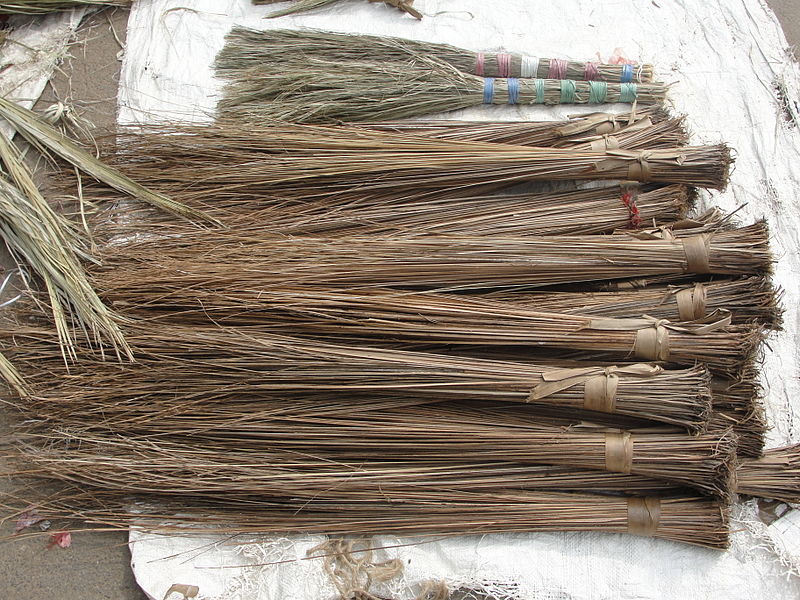
When I was better practiced at my meditation, I received a visual that stayed with me long after. I saw a man with dark curly hair, stepping out of a large forest with four or five handmade brooms slung over his shoulders. He was wearing a simple shirt and loose pants with boots on his feet, all of an indeterminate time period. He was leaning against a rough lumber fence but he looked at me, looked me in the eye. The sensation that only happens in the physical world was there. He was looking at me.
I began to meditate at night on that image, willing it to me, calling him back. I opened myself up to receive any message he had to share, but what I got were more brief flashes of images that meant nothing to me. Eventually, I started to feel a presence in the house that brought with it the sweet smell of pipe smoke. In my gut, I knew it was him. Whether he was an actual ancestor, or a metaphor for that cultural bloodline, I didn’t know, but I started paying attention.
I thought that the male spirit I was entertaining was Polish or German, both of which I know are heritages that live in my blood. Later, when he spoke in my journeys, it was German, and we found ourselves at an impasse. I had sung enough songs in German to recognize a few words but that was the extent of my knowledge. Several of my houseguests eventually experienced physical contact with the spirit, accompanied by the smell of sweet pipe smoke and I used to joke that he must have thought I was dense, requiring him to seek help in getting my attention. We all called him The German Guy.
On a whim, at a wedding rehearsal party, I asked my mom what she knew about our German heritage. And my mom told me stories about her bootlegging German grandfather, where his house was when they went to visit him and what it looked like. She even remembered the song he used to sing to the sound of his windchimes:
                        How dry I am, how wet I’ll be,
                        If I don’t find, the bathroom key.*
In the back of my head, I heard the German Guy sigh. I don’t know who he is or if he, in that shape, means anything to my lineage. But I liken him to the visual representation of my German heritage, to all the Germans standing in my ancestral tree. To the known families of Art, Arth, Schmeelk, and Pils. To honor them, I leave an offering I saw in one of my meditations, of dark German ale with chunks of hard bread softening in the bottom and I thank them for their lives. And I thank them for mine.


*A brief web search led me to the information that this was a common folk rendition that was a runaway from a small lyric of the Irving Berlin song “The Near Future”, written in 1919, during Prohibition.
Creative Commons License
This work is licensed under a Creative Commons Attribution-NonCommercial-NoDerivs 3.0 Unported License.