Remember...

Ancestral energy lives in the stars above us, the stones beneath us. Their memory gathers in oceans, rivers and seas. It hums its silent wisdom within the body of every tree.

Showing posts with label introduction. Show all posts

Wednesday, March 11, 2015

Our Natural, Magical World

It's sunny in my city, after weeks of being blanketed in snow. It's been a rare winter for where I live. But the ice is melting and the sidewalks and potholes are full of puddles today. The air is warm and I can smell spring beneath the snow. The grackles and robins have made their appearances and over the next few weeks the grass will emerge, the ground will warm through, and nature will reveal itself again. Nature is the seed-source of my spirituality.
One of the moments that developed my spiritual understanding came when I was prompted to read the introduction to David Abram’s book, The Spell of the Sensuous: Perception and Language in a More-Than-Human World. Abram, a philosopher, performer and ecologist worked as a sleight-of-hand magician in his early years in clubs across New England, including the infamous Alice’s Restaurant. In and after college he traveled around the world, studying the connection of magic and medicine in Indonesia.
His own experiences gradually altered his perceptions of native shamanism and the craft of their true work. He describes a significant moment during a stay with a young magic practitioner in Bali. Each morning, his hostess would bring him a tray of fruit. Each morning, she also carried many small green bowls filled with white rice, which she intoned were offerings for the household spirits, the spirits of the family compound.
Curious, David watched his hostess leave the small offerings of rice along the outside corners of the various buildings. When he sought them out later in the day, he found the bowls empty. He hid himself away on the second day to wait and watch. What he witnessed was a line of black ants struggling for hours to drag each kernel of rice away one at a time. He discovered that the same event occurred at each offering place.

“I walked back to my room chuckling to myself. The balian and his wife
had gone to so much trouble to daily placate the household spirits with
gifts--only to have them stolen by little six-legged thieves. What a waste!
But then a strange thought dawned within me. What if the ants themselves
were the "household spirits" to whom the offerings were being made?”

That thought initiated David to take in more of the natural landscape of the village, as well as the compound. He realized that there was a large population of ant colonies surrounding the buildings which should have been more of a nuisance to the family. In placing a consistent daily offering for the indigenous insect inhabitants, his host family had found a way to live with the natural world, assuring their own food and kitchen area to be left invasion free. This notion challenged his understanding of spirit as meaning something more than “not flesh.”

“… my encounter with the ants was the first of many experiences suggesting
to me that the "spirits" of an indigenous culture are primarily those modes of intelligence or awareness that do not possess a human form.”

All living things have spirit. It pushed me forward in my Ancestor work. The Western definition of ‘spirit’ limits them to a supernatural existence, separating us further from the natural world. Clearly we define things too much, and there is a point where understanding takes us out of the moment and into our heads, and definition stunts growth so that we can move on to something else. David Abram could have stopped at the observation of the ants taking away the rice and assumed he had figured out the magic trick. Instead, he allowed the revelation to open his own understanding.
The voices of our ancestors speak to us in the unfurling flower buds and the rippling grains in a meadow. They speak to us in the hatching eggs of spring. Everything of spirit inherits energy from our ancestors. Spirit is the natural world and the natural world is spirit.
It can be hard to garden in the city, where the birds, squirrels and stray animals are also looking to thieve themselves a meal. A full birdfeeder and a scattering of nuts in the side yard once a week stopped the squirrel-sunflower carnage and allowed the vegetable seeds to grow unscathed. We feed them through the winter so they are not starved come seeding time. The stray animals know there is always something for them at the back of the house, so they don’t pillage our garden or root through our garbage. As a result, we have co-existed beautifully together, while the quicker pulse of the modern world flows around us.

[This article was originally published March 9, 2011.]

Wednesday, February 6, 2013

The German Guy

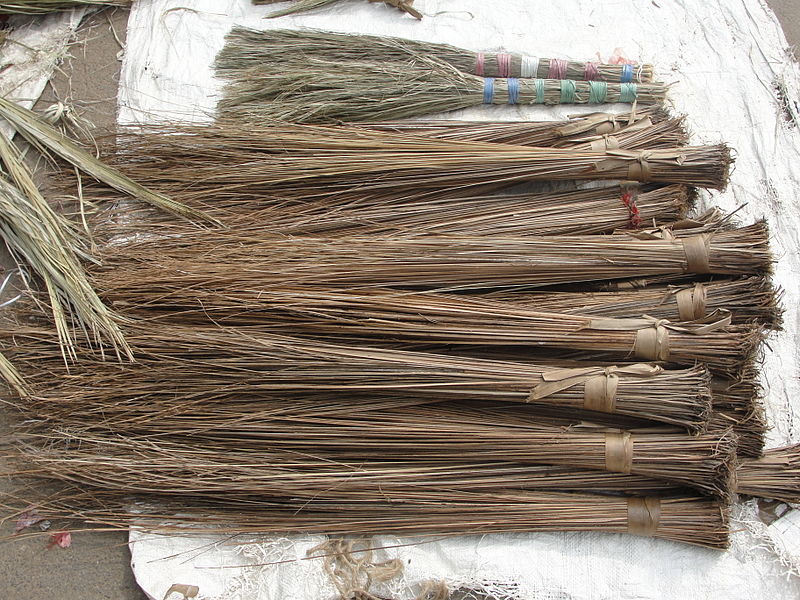
A photo by Thamizhpparithi Maari

Nine years ago, I began a journey of meditation and trance to learn how to connect to the ancestral bloodstream within me. I believe in genetic memory, in the echoes of the patterns of living we have built generation after generation. I believe you can tap into that and touch it, for I have.
Everything in life is ebb and flow. In and out, up and down, left and right, forwards and backwards. The most helpful tool in connecting to this energy for me was the labyrinth, followed closely by the spiral shell of the ammonite. Knowledge lives at the dark center of each. In order to attain it you have to go in. And you have to go furthest into the darkness in order to get out. That pattern is also true in life; in order to get past something, you have to push through it.
Though it took me years to perfect the application of the meditation, the form of it is simple enough. Meditate on the blood, flowing through your veins. Trace it’s route through your body as you breathe in and out. Sink into that rhythm. Follow the blood back to your parents’ blood, to their parents’ blood, which is where yours came from. Watch as the bloodstream divides. Follow the branches of blood backwards like waves, rippling away from shore, into the depths of generations. Each layer multiplies. Known or unknown, there are always two parents, four grandparents, eight great-grandparents, and so on. Lose yourself in the black inky depths of the ancestral ocean. And open. This blood meditation is one way to connect to the taproot of our ancestors in this physical lifetime.
When I was better practiced at my meditation, I received a visual that stayed with me long after. I saw a man with dark curly hair, stepping out of a large forest with four or five handmade brooms slung over his shoulders. He was wearing a simple shirt and loose pants with boots on his feet, all of an indeterminate time period. He was leaning against a rough lumber fence but he looked at me, looked me in the eye. The sensation that only happens in the physical world was there. He was looking at me.
I began to meditate at night on that image, willing it to me, calling him back. I opened myself up to receive any message he had to share, but what I got were more brief flashes of images that meant nothing to me. Eventually, I started to feel a presence in the house that brought with it the sweet smell of pipe smoke. In my gut, I knew it was him. Whether he was an actual ancestor, or a metaphor for that cultural bloodline, I didn’t know, but I started paying attention.
I thought that the male spirit I was entertaining was Polish or German, both of which I know are heritages that live in my blood. Later, when he spoke in my journeys, it was German, and we found ourselves at an impasse. I had sung enough songs in German to recognize a few words but that was the extent of my knowledge. Several of my houseguests eventually experienced physical contact with the spirit, accompanied by the smell of sweet pipe smoke and I used to joke that he must have thought I was dense, requiring him to seek help in getting my attention. We all called him The German Guy.
On a whim, at a wedding rehearsal party, I asked my mom what she knew about our German heritage. And my mom told me stories about her bootlegging German grandfather, where his house was when they went to visit him and what it looked like. She even remembered the song he used to sing to the sound of his windchimes:
                        How dry I am, how wet I’ll be,
                        If I don’t find, the bathroom key.*
In the back of my head, I heard the German Guy sigh. I don’t know who he is or if he, in that shape, means anything to my lineage. But I liken him to the visual representation of my German heritage, to all the Germans standing in my ancestral tree. To the known families of Art, Arth, Schmeelk, and Pils. To honor them, I leave an offering I saw in one of my meditations, of dark German ale with chunks of hard bread softening in the bottom and I thank them for their lives. And I thank them for mine.


*A brief web search led me to the information that this was a common folk rendition that was a runaway from a small lyric of the Irving Berlin song “The Near Future”, written in 1919, during Prohibition.

Wednesday, July 11, 2012

Experiencing Death III: Squirrel in the Road

This is the third installment in a monthly thread, where I will be looking back at the early experiences I had with death and reflecting on how those moments shaped my views and fears of it. In order to change my relationship with the concept of death, I have to understand what shaped it to begin with. Our ideas and philosophies are meant to evolve and change, to grow as our own experiences do.

It was a quiet afternoon. I was young enough that we still played to the edges of our block and looked multiple times, both ways, before running across the street to the other side. Halfway down the block, in front of the only house of apartments, there was a squirrel in the road. I thought it was dead, another casualty of an automobile on our mostly quiet street. But I thought I saw it breathing.
I looked back and forth many times and darted out into the road. I think the fact that in my memory the road seemed bigger than I know it to be, is telling of my age. I was glad I did because the squirrel wasn’t dead. He was gasping for air, looking at the sky. And then he turned his eyes to me.
He started trembling, every instinct telling him to run. His tiny hand opened and closed with his labored breath. He was still alive but I knew he was dying. I wanted to scoop him up and run him home but I worried that the grown-ups would be more mad that I had touched a wild animal than that a squirrel was dying.
I’d seen dead animals in the street before, flat shapes in the road. We all have. All I knew was that I couldn’t leave him in the road, half-alive, to be crushed as he died because he couldn’t run away. I talked very softly to him, told him I wasn’t going to hurt him although it might hurt a little. I remember promising him I wouldn’t touch him, having been told that some animals would reject other wild ones that smelled of human.
He was laying atop a large cluster of leaves and I very slowly and very gently pulled the leaves closer to the side of the road, obsessively watching for traffic. He made no sound and didn’t move. He just opened and closed his little fist as he struggled for air.
I calmed a bit when he was no longer in the open and I sat on the curb, my knees pulled in, sitting with him. Even then I had a sense that he shouldn’t be alone. Who knew how old he was, if he had family? What if animals could feel the way we felt? What if he was scared? It must have been autumn. In my memories leaves fell softly while we sat there.
I talked quietly with him and sang softly to him. I wished I could save him. I’m pretty sure I prayed for him to be okay, that he might get up and walk away. After that, my memory splits.
I remember my mother coming to find me. I remember her sitting beside me for a moment. She asked me if I touched it and I told her I knew I shouldn’t. She wanted me to come home but I didn’t want to leave it alone. She said that I was right that it was dying. Its breathing was already slower and less urgent. She told me I did a wonderful thing for the squirrel and it was time to come home.
I also remember a woman sitting beside me, more ether than flesh, with chestnut hair and a weathered housedress. She wrapped an arm around me and we watched the squirrel as I cried. I think I apologized for not being able to be more help. Maybe they both happened. Maybe the ghost arm became my mother’s when she came to see where I was. I remember there was a woman. Maybe my mother was never there and my brain imposed her face onto another, because she is known to me. All I know for sure is that it wasn’t just me and the squirrel at the curb.
There’s no clear lesson in this experience for me except that I have always remembered the look on that squirrel’s face. It was the first time I recognized the shadow of death without having seen it before. I have never forgotten the feeling of knowing that death was imminent, as if I saw it every day. Often our intuition knows better than we do.
Once we see that shadow, however it manifests for us, we are altered. It is our fear that changes us in harmful ways, closing our minds to the reality of it. Sometimes the alteration is as simple as awareness and we open ourselves to a larger cycle of life. Life and death are intertwined, interconnected and those who can embrace the inevitability of death are the ones who can embrace the wonder of the living world more fully.


Relevant Posts:
Introduction to Death: The Unborn Baby (published May 16, 2012)
Introduction to Death II: My Father’s Father (published June 13, 2012)

Wednesday, May 9, 2012

Daughter of Margaret, Revisited


I am Sarah.
daughter of Margaret,
daughter of Patricia,
daughter of Margaret,
daughter of Eliza,
daughter of Mary, of Ireland.

That is what I know of the line of my mothers’ mothers. Five generations, three names who have passed. The line of my fathers’ fathers stretches for twenty-five generations, and further yet unverified, like so much of our history. But in a world where an unbroken line of fathers is given power, what of the mysterious unknown line of mothers? It was important for me to pay homage to the silent women of history, to the broken lines of voices that seemed unimportant to the passing of time. Blood matters. It was important for me to find the unbroken branches of mothers birthing daughters.
If you think about water as life, there is all of this energy pouring down into me, from mother pushing daughter out of her uterus to mother pushing daughter out… What will I do with that energy? That gift? This life? How will I use it? How will I honor the mothers who came before me?
It’s the crux of this journey I’m on. At the moment, it’s with my voice, it’s with this blog. The strength of those who came before me trickles down through me and as I share my discoveries of and journey into the spirit world, it filters out into the larger world. I do it for all of my nieces and my nephew, for my great-nephew, for the children whose lives I have become part of. I do this so those who come after me might find their way more easily.

I am Sarah,
the first daughter born of Margaret,
the only daughter born of Patricia,
the third daughter born of Margaret,
the third daughter born of Eliza,
the fourth daughter born of Mary Dowd,
Mary, born of an unknown mother in Ireland.

My mother taught me independence, taught me to listen to my voice as best she could in a society that once tried to silence women. My mother made it possible for me to be open to this path I am on. My mother is the gateway to all my mothers. But we can follow the path of mothers, all of us, back to the earth, back to the primal mother, back to where all of our energy originates.
I tend to her in the summer, coaxing food from her soil to nourish myself with. I grow flowers to feed the squirrels, birds and bees we share the land with. I clean the garbage from her flesh as I stumble across it. As much as possible I reuse what I have used and I allow her areas of wild to stay wild and untainted.
I make altars with her bones to mark the earth, in parks and woods. I do it in the name of my mothers, in the names of those unknown, in honor of those I have loved. I know even as I do it, that someone else will happen upon them. That someone will find them and see them with new eyes, and what I created will be reborn with new meaning and new purpose as part of someone else’s journey.

Sleeping In the Forest
by Mary Oliver

I thought the earth remembered me, she
took me back so tenderly, arranging
her dark skirts, her pockets
full of lichens and seeds. I slept
as never before, a stone
on the riverbed, nothing
between me and the white fire of the stars
but my thoughts, and they floated
light as moths among the branches
of the perfect trees. All night
I heard the small kingdoms breathing
around me, the insects, and the birds
who do their work in the darkness. All night
I rose and fell, as if in water, grappling
with a luminous doom. By morning
I had vanished at least a dozen times
into something better.

Wednesday, September 22, 2010

Daughter of Margaret

My name is Sarah, daughter of Margaret, daughter of Patricia, daughter of Margaret, daughter of mothers unknown. From womb to womb, this is the line of my mothers. From first breath to first breath, this is the line of my mothers.

My blood swims with the lives of Eatons and Riddles; Arts, Durants and Rustons and so many more… Berry, Bird, Burke, Clickner, DeLozier, Dutcher, Gillet, Ireland, Lenton, Lusk, Sears, Tenney, Whitcher, Wicker.

And those who have been forgotten.

I am the descendant of Mayflower carpenters, German bootleggers, Polish servants to royal houses, Irish settlers… People whose lives I can barely begin to imagine and whose stories flow dormant within me. All of them, names remembered and lost, written down and forgotten, were people who lived in their day just as I live in mine.

My ancestors were flesh and bone beings with hopes and dreams of their own. They each had their own idea of what the future would look like. Their feet blazed new trails in the world and wrote my history. My ancestors were people whose hopes lived on through their deeds, their dreams and their children.

My thread in the universal tapestry dies with me. Which is the realization that prompted me to wonder about the names on my family tree. The names I don’t know. The names we don’t remember because their branches didn’t bear fruit. My Grandfather had a brother who I never met. I received birthday cards every year from the mysterious Uncle Sonny who no one ever spoke of. When I mentioned his cards to my Grandpa, there was always a swing moment of silence marred by emotional swallowing. And then he would smile and say that was nice of him to remember us. I think about my Uncle Sonny, and how far he strayed, and how he died with estranged family ties. Who will be left to tell his story? When will he become one of the forgotten?

An uncomfortable truth lives within me. I do not want to be forgotten.

That is something that has come into clarity only recently in my practice, though I am sure the emotional need colored my early immersion in what it means to create my own spiritual path. I wanted to actively honor Those Who Came Before, who pushed forward through the decades and made my experience here possible. I want to bear witness to the effect our Ancestors have had on our world. I want to know their stories, their hopes and their dreams. I hope to bear witness to the impact your lives have in our world. In this purpose, my life is sacred. In this purpose, I give my breath weight.

The Yorubans who practice Ifa believe that you cannot know who you are if you do not know the stories of seven generations of your ancestors. I do not have that wealth of knowledge. But I do understand that it’s important to know where we came from, so that we can wholly see who we are, so that we can take the necessary steps forward on our path. The purpose of this blog will be to share the work I have done and continue to do, so that others may also strengthen their connections to their ancestors.

We are each trees of the earth, standing with our feet firmly planted on the bones of our ancestors, our heads and arms lifted up to the attend to the stars in the night sky… Those stars twinkle at us with light that is millions of years old. Every night that we gaze up at the ancestral energy of the larger cosmos, we become a stronger part of it.

We gaze up at the same stars our mothers did, and their mothers, and their mothers, and their mothers did.
Creative Commons License
This work is licensed under a Creative Commons Attribution-NonCommercial-NoDerivs 3.0 Unported License.