Remember...

Ancestral energy lives in the stars above us, the stones beneath us. Their memory gathers in oceans, rivers and seas. It hums its silent wisdom within the body of every tree.

Showing posts with label journey. Show all posts

Wednesday, June 12, 2019

Taking the Ancestry.com DNA Kit


I was excited when I got my Ancestry.com DNA test results. Due to my genealogy research there were no big shocks for me but it did verify and validate some of the intuitive leaps I took in assuming who my family members were. 

That’s exciting news, Ancestor Hunters!

The kit itself is straightforward. No drinking or eating for a half hour. Spit in a tube to the line. Package it in the packing they provide. Put it in the mail. Wait for an e-mail. They say 4-6 weeks for results. Mine came in 4 weeks.

These results are the 50% of DNA I received from my mother. I am curious now for my sister to take it because she may have received different maternal genes than me and her percentage make-up may vary. Because women are XX we can only map the X code. We have no Y to trace. If I want to know the paternal DNA, which I do, I have to poke the nearest and closest male relative on that side of the family. That’s my dad. The ideal option would be a brother but dad is second best. The further away you go the more variations that occur between what they got and what I got, so the percentages quickly become guesstimates. But it’s closer than not knowing anything.

Culturally, all of my ancestors are all of my ancestors. I only exist because they each existed. So to layer that with the concept that there is actual genetic code from some of them in my body now... I think that’s cool.

I should also note that men have a choice to do maternal or paternal or both as they have both the X and Y. I'm a bit jealous of that.

When you do the kit you have to activate it on-line first which involves creating an account on Ancestry.com. I hesitated to do it as I already had an account with my dad but it goes to his e-mail and he doesn’t check it often and I didn’t want to have to wait on him getting them to me- haha! Totally true. So I started a new account so I could get the results as soon as they were ready. And it afforded me the chance to try it out from a fresh perspective.

It’s free to do. And it ended up being better than I expected. When my results came in, they included a list of other people who have been tested and who allowed for their tests to be shared for this purpose. So my results came with a list of second and third and fourth and fifth and sixth cousins... Their messenger feature allowed me to send messages to some of my new-found cousins to see how we related to one another!

Then I was offered the ThruLines option. If I plugged in a family tree I’d be able to see what ancestors all those new cousins and I shared in common. Cool! I figured that this was going to be where they were going to asking me to join a membership. Nope. Making the family tree comes with the free account. It's researching their archives that costs money. 

[It might be worth it to do the family tree and then subscribe to the site for a month and do research on the names you have.]

Even without the ability to search the archives, the tree maker is fantastic and better than any other free ones on the web. Ancestry.com is constantly upgrading their applications and a new feature on the family tree offers you potential fathers and mothers for the names you plug in. You can accept or deny them, or even say 'maybe' so you don’t necessarily need to pay to search. Ancestry.com helps you do that.

That meant I did not have to manually plug in the 2200 names I had already! It offered me about 1600 of the names I already had. I double-checked what they offered against my notes from the family tree my father and I have been working on together and what Ancestry.com suggested to me was 98% accurate.

That was a feature I did not expect.

Along with the percentage results you get a map with the countries your people are from highlighted. 
A cool feature with the maps is that if you click on the seemingly random century timeline on the bottom it will show you where your people were at the start of each century. You can see vague migration patterns. And if you’re very English, like me, and your people don’t move around so much, you can zoom in on the map and see it in more detail!

I am very happy with this test. It’s the only one I’ve taken so I can’t speak to any others. I would like to take the 23&me test to see what genetic anomalies lurk in my ancestral blood and see how the results compare.

As far as genetic privacy goes, you have options when you activate the kit. You can change those options anytime you want through your account settings. They were explained well. I should say that the more private your settings the less matches you will find yourself with. I risked it. I don’t like making choices-for-now based on what might happen in the future. But it's a personal choice. You can have your account and dna deleted at any time. 

I’ll be posting about some of the things I learned in the upcoming weeks. Happy hunting to my fellow genealogists!


Wednesday, February 13, 2019

Getting to Know Uncle Frank

       I have mentioned my Uncle Frank before, in a piece I posted My Great Aunts and Uncles in 2014. He was the brother to my 2x Great-Grandfather Hiram King Wicker. Hiram was a well-to-do man in Lockport, NY but his brother Frank was a man whose career took him to New Orleans, Alaska, and Cuba.
       He was among the surveyors of Russian-America which would later be called Alaska, whose purchase was based on his findings. Frank Wicker worked for the Telegraph Company and while on expedition, he kept a journal of his- often monotonous- journey. 
       His journal is in a stack of photocopied pages. I have been working on transcribing them. It took me a few days to get the feel of his handwriting before I could get into a rhythm. But once my eyes adjusted to his script, I began to read 'him' within the words.
       Sometimes this work feels a lot like time travel.
       I'm in love with Uncle Frank's quiet and clever wit in how he manages the men and the captain. His journal is very matter of fact and yet I hear his humor and amusement and I feel I am getting to know him.
       I'm in love with the way he elongates his lower case 'p' and swirls his 'I' and 'S'. I love that if my brain reads 'r' it's meant to be 'w'. And if I see 'm' its really an 'r'.
       And he's a reader. He's currently working through both Hugo and Dumas. He and I agree about Hugo's unabridged works: "His descriptions are a little too definite and become tiresome and uninteresting." (I mean, who needs to spend 62 pages writing about packing hats?!)
       Uncle Frank is also very serious about how he represents the Telegraph Company. I can recognize moments where he was totally That Guy asserting Authority just to wave his dick around- which he only does when the Captain of his ship harasses his men and/or threatens the purpose of the expedition. But I can also see in him the man who survived the Civil War, who wants to help shape what his beloved country is becoming.
       I am almost halfway through. We have finally arrived at Alaska and are attempting to get through the mouth of the passage. It's almost my birth day, 110 years before I was born...

Wednesday, January 23, 2019

Tracking the Arths from Germany

I know a lot of my genealogy. A lot. I can take a few branches back to Charlemagne, which I’m grateful for, whether or not there were errors made along the way, which happens. But when you have that many names, lines stretching back centuries, it humbles you with the vast number of people who were all integral to your standing where you are and breathing in the oxygen of this world.
That may be the truest reason why I do what I do.
I have spent my time in recovery on Ancestry, trying to push all the lines I have to their immigrant ancestor. I am hoping to, once I have a list I feel confident about, buy the International tier for a month and try to discover where in their countries these ancestors originated. But until then…
If you read my blog you know that my Grandma Pat passed away this year. I have been spending a lot of time on her family, maybe as a means of processing through our complicated relationship, but also as a means of deepening my connection to our shared ancestors. Her own mother died when she was eight and she didn’t know a lot about her family past her grandparents, the Arts, who worked as groundskeeper and housekeeper of the wealthiest family in my hometown, the Kenans.
             A few years ago I wrote down all of the Arts living in Pendleton who came from Germany, based on the family story I had been told. It was like putting a jigsaw puzzle together but eventually I figured out the relations between the separate families and then hit the jackpot when I discovered through an early census that they lived on three separate plots, all next to each other. It validated my theory that they were relations who had likely come over and settled together.
             Then my mom told me, after speaking to her mother, that my Grandma always believed she was related to the Pendleton Arts. We didn’t have this conversation until after my Grandma passed. I wish I could have told her that they were all her cousins. But her story was more verification for my theory.
            The earliest census I found them on was 1855 where Adam Art is married to Catherine (uncertain) and is the Head of his own household, on a plot beside Wilhemina Wernersbach, living with her other two children Jacob Art and George Art. As Adam was only four years older than the boys in her house, I assumed that he was Wilhemina’s older son.
            I also found an arrival note from 1853 stating that Wilhemina Wernersbach came to America from Germany. But not with her children. Was the card incomplete?
            And where was her husband? Did he not come with them to America?
Ahhh?! Oh to go back in time and act as my own census taker. “Please, who were your mum and dad and what was her family name?”
And then… a few weeks ago I discovered a new hint on Ancestry that led to a second new hint that answered some of my questions. A hand-written card from 1836, stating a departure from Antwerp, Belgium. “Georg Arth, 35 and Wilhelmina Wernersbach, 37 and Adam, 7 and Jacob 3, and Georg, 3 mo.”
The family emigrated to America together. Proof!
That hint gave me a census for 1850 which lists Wilhemina Wernersbach and her children Adam, Jacob, and George, living in the household of Jacob and Martha Vandnspoch. Based on age, I am guessing he is her brother. Maybe a cousin, but she did name a child of hers, born in Germany, after him (feels like a safe assumption). So I say brother. And if you say both last names out loud, they are variants of the same name. In America, census takers often spelled them out phonetically.
            The census of 1850 does not list whether she is widowed or not. Not all census’ asked the pertinent questions that genealogists want to know. But perhaps Wilhemina’s return visit to Germany was related to the loss of her husband George. Or a parental loss. But it was one she undertook alone.

            It's a little thing, but I feel a step closer to her, to Wilhemina, and to the clan of Arths from Hesse-Darmstadt Germany.


Wednesday, September 21, 2016

Autumn Crossroads on the Equinox

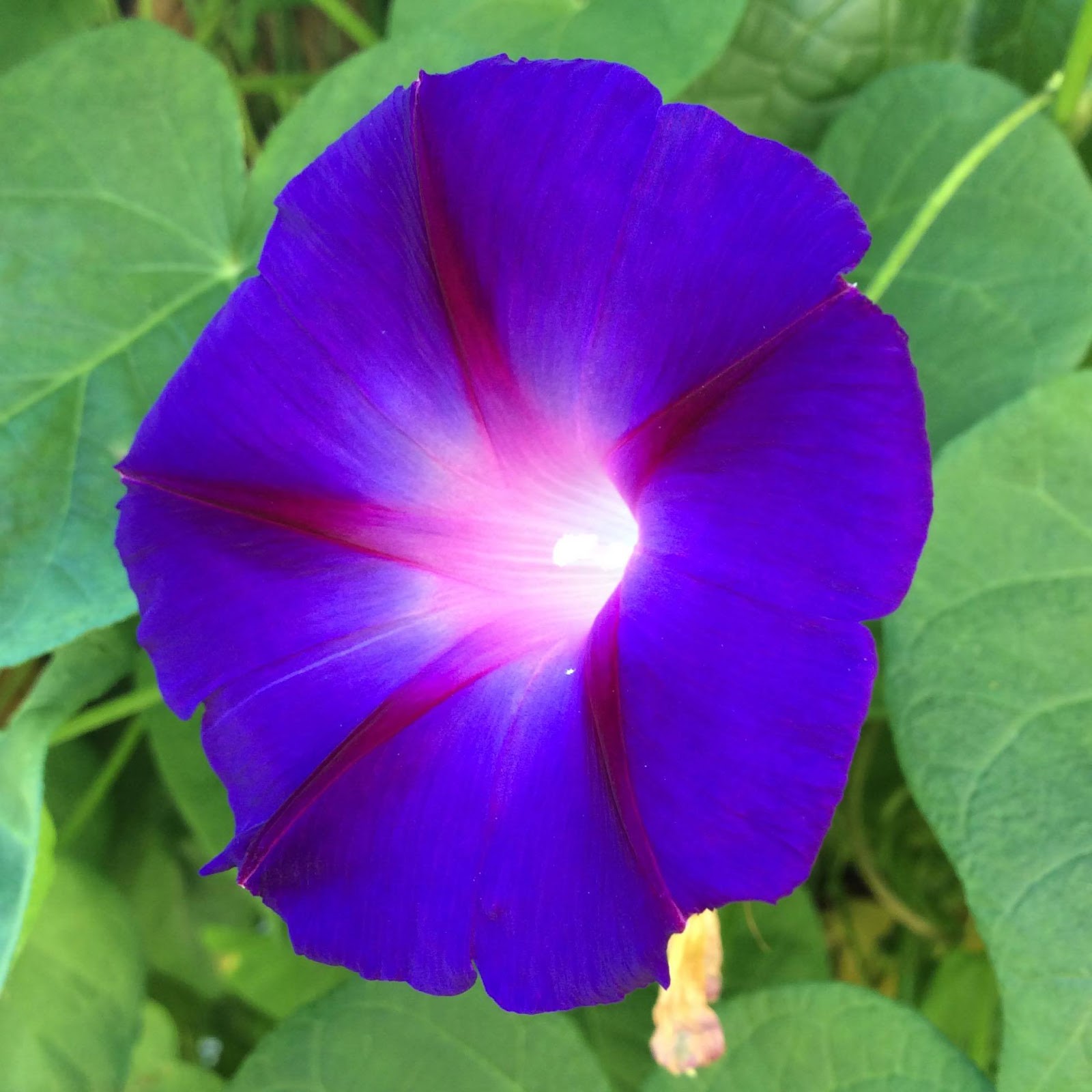
We are turning into autumn and the last of our tomatoes and beans are fruiting. The morning glories herald the dawn in vibrant hues of violet, periwinkle, and fuchsia. White moon flowers twine around the rail, their buds thick and strong. They are ready to burst open and hail the darker days of the year. Silence stills the land here, five years after the horrible flooding that made our city headlines in the news. We’ve moved on but the earth remembers. The first of the geese flying north to south in migration have trumpeted across the sky.
Smells turn crisp and quick as leaves dry, drop and decay, crunching against the bottom of our feet as we walk through the brush. Garden fruit and vegetables that missed their harvest will rot and fall. They become mulch and nourish the earth for sowing in the spring. In autumn, layers of bone, earth and leaves cover the world, dulling the sharp piquant of summertime. We bed our gardens and add bulk to our bodies against the funneling twist of leaves lifting in chillier winds. The beauty of life is migrating onward, disappearing into the earth and ether. The world outside us prepares to sleep. The world inside us softens into rest, too.
We have toiled through the languid heat of our longest days and the changing landscape heralds the lengthening dark that will descend soon upon us. This Equinox is my favorite time of year, symbolized by the crossroads. We stand at the point where the breathing world bleeds into the spirit world.
It’s a place where two conflicting truths can stand equally as firm and where balance is born. It is the place where the gateway exists. It is a gateway that lives inside you.
As the point of balance floats over our land like twilight fog, obscuring lines and blurring edges, we have the chance to touch the other side without walking through it. On Equinox, I pause to catch a breath. I stand between the long days of light and the long nights of dark. I stand at the crossroad and pay homage to those who have stood here before me, to the pause in the passage of time, and to those who will stand here long after I am gone. On this day I can see into the future as far as I can see into the past.

We stand in the tipping point, the grey space, the limbo, the in-between. Equinox is a time for feeling and reflection, a chance to catch our breath before moving forward. This is the time of year when I pause my search for more lines of my family tree. I wrap up my current work and make notes of where to look next. I will spend the winter months researching what names I have, reading old tomes and histories so that I might discover who my ancestors were and what places they inhabited.
The genealogical research is easier for me to do in sprints, following one line through till I hit a wall, then fleshing out that line, giving it form and story. In this way the act alone is a study in my own history and I am the eternal student. By using this method, the names and dates imprint on my memory with context. Every winter my living knowledge of my family grows stronger. In my dedication, the threads between me and my ancestral dead grow thicker.
We are about to enter the labyrinth, going underground like the mythological Ariadne, under and inward. I have been practicing my embroidery, in remembrance of my Great-Grandmother Minnie, and her mothers, whose scraps of sewing craft I treat as sacred objects from a line of women I never knew. In my nightly meditations I have been embroidering labyrinths, moving into the dark to come out of the dark. It takes two full lines, two lengths of needle and thread, in at one end and out at the other, to create the full labyrinth, which is made up of two roads, crossing at the key. In this ancient tool, duality and balance snake into forms that do not lose their symbolic origins.
If I unwind the labyrinth, the four arms of the equinoxes and solstices spread before me. We stand at the crossroad, facing autumn, knowing that as we step onto the road it is already turning towards winter. The crossroad lies near the heart of the labyrinth. We turn inward to find center at Solstice, and roll outward, retracing steps to find the sun again next Equinox. In walking the labyrinth, we move like the waters of our body move to the currents of the ocean, rolling in and out, each turn in moving us closer to healing and wholeness. As life continues through the shorter days and my body moves daily through the world, I carry the peace of the labyrinth inside me, as an anchor of stillness, walking it quietly within while the world moves loudly around me.
As the leaves dry and fall, I find some of this peace in the act of showing honor to those long gone. I often walk the local cemeteries, picking up trash and litter. It is such a small offering made to the memory of those gone before. They may not be my ancestors but they belong to someone. These dead shaped the town that I live in and they had lives filled with hopes and dreams, just like mine. To me the cemeteries feel most like parks, with spirits wandering here and there. They are some of the quietest spaces, full of the grace of those who lived and those still living who remember their names.


[Originally posted as Autumn Crossroads at Equinox on September 19, 2012. Some moments updated for the current time.] 

Wednesday, September 7, 2016

Morning Glories in Meditation

Every year, as spring begins to blossom, I push the base of a wooden trellis into the fresh dirt next to our little stoop. I watch as the small seedlings from the previous autumn poke their way through the earth and unfurl. I weed the bed and water the small beings reverently. As the vines grow, thin and spaghetti-like, I teach them to move towards the trellis. They grow thicker, covered in short fuzz. The leaves grow bigger, shaped like hearts. The larger they get, and the deeper the color, the closer they are to budding.
I spend each morning in a gentle meditation, wrapping the sweet vines around the trellis, and watching them catch on over the days, until they wind themselves, in and out. The trellis is the loom where nature and I create beautiful art together. As the weeks pass, the vines become a green wall, offering us a sense of privacy; our nature guardian.

When the buds first come, they are tight little spirals, growing bigger each day. When I can see the color threaded through them, I know they will open the next morning and it will be a morning treasure hunt to see where the early blooms have hidden themselves.
The flowers are full and thick and brilliant at dawn, staying to the shadows. The beautiful heart-shaped leaves act like umbrellas, extending the lives of the blossoms by shading them. At mid-morning, the blossoms glow with a luminescence that makes them seem otherworldly, as if tiny portals are opening from within the heart of the flower.
This is my favorite time of day to be in the garden, to be sitting on the stoop with a book and a notepad, stirring my own creative juices in their wake. I watch as the bees frolic and pollinate, leaving tiny dustings of pollen on the petals. I watch as the light fades from the petals.
As the day lengthens and the sun climbs in the sky, the morning glory blossoms grow weaker, their petals more translucent. The softening flowers tear easily and stick to the leaves around them. By mid-afternoon those that have survived curl in upon themselves. At dusk, the day-old flowers drop unceremoniously to the ground below.
Every day in the world of the morning glory is a new beginning, a new life. Their beauty doesn’t last because nothing lasts. The nature of life is that it ends. That is the magic of the morning glory for me. They are dead when dark descends, but tomorrow, there will be life again.
In the fall, when the garden withers, small buds of seeds are left behind on the browning vines. They will dry and shrink and loosen their eggplant-colored seeds into the ground. There, they will slumber through winter, waiting to emerge come next spring. So even in their seasonal ending, there is hope. There is always hope. But for today, under the last of summer sun, there is still beauty and joy.

[New photos, 2016. Reprinted September 2, 2015. Originally published August 14, 2013.]

Wednesday, August 31, 2016

The Shape of Spirituality

For me, concrete belief is the death of spiritual growth. We are students from the moment of our first breath until our last. And possibly beyond even that.
My personal spirituality has been a journey of trial and error, of accepting that what I thought I knew before was… not wrong, but not the whole truth. Multiple times, what-I-knew-as-true was altered by new expansive experiences. This was especially true in the wake of my accident last autumn. Our trials test us, not our deities or divinities. The world happens, and we fall victim to it as it unfolds.
Ten months of walking through pain and regenerating skin cells, of sitting and laying and reviving muscle tissue. Ten months of solitude and self-reflection, and the shape of my spirituality has shifted and grown once more. After a decade, I have finally stopped trying to label it.
Language can open our worlds and it can make it small. Spirituality should never be small. Our world isn’t small. And spirituality is larger than the world we see.
I may not know what it is, but I know where I stand in it. Fool. Witch. Shaman. Animist. Naturalist. Spirit Talker. Dream Walker. Word Knitter. Gardener.
In the beginning my work was all about ghost investigating and forest meditating. And still, the first time I heard the language of the trees, I freaked out. I hit a Wall of the Unknown. Yet instead of denying it, I took a breath, exhaled, and opened my world.
And then I understood that everything has life, even if we do not understand its language. And then I discovered the path to loving everyone, even if it’s from afar, and finding the way to a form of forgiveness that brought me healing. And I began to see the spirit in everyone around me. And my everyday became my spirituality. And when my head spun, when I hit a wall, I simply took a breath, exhaled, and stepped into a larger world.
I hit a wall the day I heard the voice of my deceased grandfather speaking to me in the forest. My heart raced and I broke out in a cold sweat. But I didn’t want to lose it. I didn’t want to lose that connection just because I couldn’t understand it. So I accepted it as a truth I had not known before. And suddenly my idea of world was not limited to just the physical one. Every time I grow, the edges of my energy sphere stretch out more and I feel more immersed in the oneness of the world we live on.
That ability to surrender helped me in my recovery at the hospital. Others might have gone mad in the necessary-drug-induced fog of torture. It’s not that I didn’t fight against it. But when I realized I was smothering beneath it, I took a breath and sank in deeper to the horror of it. And then I saw it for what it was. Necessary. I did not give in to madness. I smiled at the spirits standing around my bed. I thanked the housekeepers for cleaning my room. I told the nurses what it was that made them special. We were all one team whose only goal was to get me better, even if the way there is more painful.

My spirituality shifts with every choice I make. The shape of me flows in to fill that space, like water, and I am forever, and momentarily, altered. And I am at peace.

Wednesday, June 8, 2016

The Practice of Hanging Names


When I created my first ancestor altar it was meant to be a place and space to honor those who came before me. I was only looking for a quiet space that could be made sacred, to light candles and say names. It was a good place to start and my ancestors became a meditation of names burned deep into my bones.

After a year of devotional practice and attendance to my altar, I had a firm foundation and I was ready for something less passive. I was prepared for the next step, to reach out to the names I had been speaking for connection and counsel.

My personal altar changed and the travelling shrines I created during the year did as well. I wanted them to be a space, whatever the place, for spirits and humans to meet, where I could speak to them with greater chance of being heard, and vice versa. But I wanted the shrines to be thoughtfully provocative to the senses, to help blur the line between the living and what comes after.

I had been doing research into my Slavic genealogy and then into early Slavic pagan practices, trying to bridge a gap from the last known-to-me name and their unknown ancestors. I stumbled across information describing how, when babies were born, a piece of earth was placed in their mouths as the first food they would ingest, as a means of keeping them always connected. Then, the umbilical cord was tied to a tree in the center of the village, where it would leather over time, swaying in the breeze with the cords of those who had come before them.

I had the thought that someday, when I had a home that had a tree, I would tie a natural ribbon on it for each of my ancestors, and let them decay away. That visual stayed with me so strongly, that I began to include it in all of the shrines I help co-create. I offer people the chance to write the names of ancestors or deceased loved ones on ribbons cut from natural fabrics, and hang them on an installation. When the shrine comes down, I roll the ribbons up and keep them until All Hallows, where we read the names on them out loud and burn them in our sacred fire, sending them up like prayers.

The unexpected layer of the magic for me came in the first shrine we created like this. I was sitting in it at dusk and the ribbons swayed gently in the evening breeze. And I peered through the veil they created. I peered through it and I heard a woman's laughter. On the other side of the ribbons, on the other side of water, two young women laughed on a floating bridge.

I remembered that one of the ways to truly honor the dead was to be alive in the world.

Wednesday, May 4, 2016

Alive Things You Love

When you're on the edge of this world, your heart will speak of kith and kin, and sing of the alive things you love. All the things you love. Parents, spouses, siblings, lovers, friends, children, pets... Yes, these things.

When you're on the edge of this world, you will learn you love the wild creatures that roam the forests and giants that swim the seas. The peppery scent of the marigolds and the day-long cycle of the morning glories, the creaking grok of the grackles and the warning bark of the seals, the gentle sway of the birch trees, the ferns unfurling in the front yard. You will dream of the healing caves beneath the weeping willows. You will fall in love with the sky above and the stone below, and you will count their children on your fingers, like sheep, as you burn.

At the edge of decay, my natural world became built of white walls and bleating machines, of yellow gowns and the smell of absence. I counted down to the end of the things I loved, pulling their energy into the room with me, a balm against isolation after the last frog was named...

The end never came.

At the finish of my list, gratitude and love expanded. There was more beyond the skin I had drawn and I pushed at the edge. Any heart that can feel infinite grief can also feel infinite joy. 

I fell in love with the way my finger bones curled into the muscle and tendon as I struggled to make a fist and release it again. I fell in love with the tiny atoms knitting themselves together to become cells in my body, to multiply, to spread out and become skin. 

Somewhere, in my solitude on the rehab floor, I fell in love with my new body, as it was, scars and all... and somewhere along the way, I finally fell in love with me.


When you're on the edge of this world, your heart will speak of kith and kin, of the alive things you love. When you return from the edge, you will walk with light, and the things that you love and touch will not remain unaltered.

Wednesday, October 28, 2015

The Rite of Passage in Trick-or-Treating

When I think of Halloween, my mind drifts to cups of mulled cider, the crunch of fresh apples, bright orange jack o’ lanterns, crisp leaves underfoot and the smoky breath in the evening air that foretells the coming of winter. The holidays of my childhood evoke memories of monster movies and spider webs, pillowcases full of candy, bobbing for apples, spooky houses and things unknown.
And trick-or-treating.
Once a year we had permission to, and were encouraged to, dress in costumes while travelling door-to-door, collecting candy in our pillowcases. Looking back, I understand that Halloween was a chance for an insecure girl to wear another skin, someone else I might be. Our parents would ask us, “What do you want to be for Halloween?” and the universe would open before me. When I didn’t have an idea for a costume I would raid my parents’ closet and come out some version of hobo, hippie or gypsy. Halloween, dipping us into darkness, was ripe with possibility for those among the living.

Halloween has its origins in the Celtic festival of Samhain, pronounced sow-en, eventually coming to America with immigrants in the 18th and 19th centuries. Children went out into the night carrying lanterns lit with candles, called samhnag, made from turnips. The root vegetables were carved with frightening faces to scare away the spirits wandering the night. Children went from home to home, guised in supernatural costumes, where they were given offerings of food or coins. The gifts were meant to help the children ward off any spirits wishing to do harm on Samhain, the night when the dead walked again.
Some later customs refer to it as Souling, where children would offer prayers for the dead in return for a small cake. At houses where they were refused, they would batter the door with the butt ends of turnips. One of the earliest records of guising for Halloween comes from 1895 Scotland. A North American reference to it in a newspaper in Ontario in 1911, reports that children would go guising between six and seven on Halloween, spilling songs and rhymes and being rewarded for them with candies and nuts. Trick or Treating as we know it in America didn’t begin until the 1950s.

Our parents carried us door-to-door when we were children and later, when we could walk on our own, they would coax and encourage us to go up and ring the doorbell while they waited for us on the sidewalk after a whispered reminder of what we were meant to say. The walk to the porch was long to my short legs. The temperature in the air dropped in the space between my parent and the heat behind the unfamiliar door opening before me. After a hearty “Trick or treat!” and a piece of candy dropped in our pillowcase we would run back to our parent, back to safe, and on to the next home.
The first year that we went out trick-or-treating without chaperone- our own little gang of tricksters- was an early, and personal, rite of passage. Mom stayed home to mind the door and was busy making sheets of homemade pepperoni pizza so it would be hot and waiting when we came in out of the cold. We walked the neighborhood and then the same route we walked every morning to elementary school. Up one side of the street and home the other. It was familiar and known, but in the cloak of darkness it felt foreign. Landmarks stood in shadow and we needed new eyes to find our way.
We were being trusted to watch out for each other, to stay safe, to cross streets wisely and not to stray beyond the streets we knew, or the ones we were told we could travel. As children we didn’t realize how far the web of grown ups-who-knew-each-other spun and we were not hip to the fact that we were never in any true danger.  But that unknown is an essential element to the rites of passage that test our mettle and help us grow. The cold leaves crunched underfoot as we ran from porch light to porch light, pillow cases filling fast with candies my brother and sister and I would later sort through and trade (always setting aside some tootsie rolls for my dad).
There was one house that was always decorated fantastically for the trick-or-treaters. And then one year, the house was barren, the only decoration a scarecrow flopped onto the porch with a bowl of candy in its lap. A lot of houses that closed for the night would put the candy bowl out on the porch with a note. As we closed upon the porch, I felt a strange feeling in my belly and I stopped. That’s a person, I thought. I knew that when we got up there, the scarecrow was going to grab us.
We stood still, watching the scarecrow and debating whether or not it could be a real person. We dared someone to see what kind of candy was in the bowl so we could gauge whether or not it was worth it. The scarecrow didn’t move the entire time and was sitting at a strange angle. We approached in a group and as I reached into the bowl… the scarecrow grabbed my hand as we screamed and ran halfway back down the sidewalk. A familiar voice laughed, assuring us it was our neighbor. We stood our ground and made him show his face before we went back for the candy we had earned.

There was a thrill in being able to be brave without the need for a parent. On our own we had evaluated the threat, calculated a plan and supported each other in carrying it out, calling on the energies of our Other skins to aid us. On Halloween we stood in the shadow of no one. It was always light when we started our adventure and in the joy of running from porch to porch we would lose the subtle slip into darkness until we were cold and tired and our bags were heavy with loot. Often, home seemed far away. We would slip home and share stories of what we had seen on our travels.
The next morning’s walk to school, I was aware that the same-old route I had been taking every morning was different. It was bigger. The houses weren’t just landmarks anymore. They were also skins of homes with families and faces inside of them, containing other children who thought the world was no bigger than the size of their house. On that morning I understood the world was bigger than my house, my block, my route to school. There was more of it than I could comprehend.
As a child, on Halloween night I walked with demons and devils, witches, ghosts and ghouls borrowing human skin, along with superheroes and princesses. I dared to enter dark places and returned from them unharmed. In the turning of the world, I learned I could enter the darkness and return. Maybe not unscathed, but I could return and know the healing would come. Each year now, as I drop candy into the bags and baskets of little cows, superheroes, witches and pirates, I hope they will remember their fearlessness on this night. I hope they will remember how they learned to move from jack o’ lantern light to jack o’ lantern light as a way as a means to get through the darkness.

[Originally published October 26, 2011.]

Wednesday, October 14, 2015

Unwanted Ancestors

Every family tree has bad apples. It’s that simple. I mean, history is full of bad people. Every one of them had a mother and father, and perhaps siblings, and many of them had children of their own. If you go down far enough, some of us dangle at the end of those branches. This is a notion that commonly steers people away from ancestor work. They worry about what kind of spirits they’ll open up their world to.
Every apple tree bears some bad fruit. Every orchard sometimes suffers the rot of an entire tree. It happens. And sometimes blight will devour an entire orchard and kill off a species. You are who you are because of every person on your family tree that came before you.
Everything is interconnected. Everything. Just as you control who you open your front door to, you can control what spirits you open yourself and your heart to, without keeping that door locked. As long as you remember and believe that, you can work with or around your unwanted ancestors with ease.

When Bad Seeds Fall Close to Home
It’s hard for people to contemplate what sort of ancestors they might have had when the only family they’ve known were bad seeds. I have known people whose immediate families were so toxic they didn’t believe that they, themselves, were capable of being good people. In this way, reaching backwards into the line of ancestors can be healing. Every pattern of bad behavior starts somewhere, no matter the catalyst or reason. Remember that, because there were ancestors who existed before that pattern began. They are waiting for you.
In this world, we all have scars. It’s not a competition over whose are worse. It’s just a sad circumstance of our culture. For cases where the scars run deep, I heartily endorse and recommend therapy, as cycles of hurt are hard to overcome. It’s difficult to believe in a perspective outside of the world of hurt. Therapists, counselors and psychologists can offer that help.
It only takes one person to teach hate and fear, releasing it onto further generations. It also only takes one person to stop the cycle of violence, hate and abuse. If you can recognize the behavior, recognize the triggers that prompt it in yourself and/or prompted it in others, you can find the strength of will to stop yourself from repeating them. You are of your family, you are not your family.
Being able to see the cycle that your parent hurt you because their parent hurt them because their parent hurt them because… allows you to see the bigger picture and the larger energy. You can step back and see it without the personal attachment to it which allows you to decide that you don’t want to be a part of that energy. And your stepping out of it lessens its momentum. Sometimes we have to remove ourselves from one current of energy that’s polluting us, to a healthier one. It only takes one person. Gandhi said, “Be the change you wish to see in the world.” No one has said it better.
I do not argue nature or nurture. I believe in both. I have watched a boy, nurtured in a loving family struggle with his angry outbursts and violent tendencies. A boy who never knew his biological father and struggled with emotions he could not control until he was a man, meeting the mirror of himself in his father. Without being exposed to him, he struggled with the same fights he himself had. Growing up nurtured was one step of his evolution. Learning to nurture himself was the next. This is why it’s important to have a connection to something that reminds us of the length of time stretching before us and the length of time stretching after us. Our world is bigger than us.
You don’t have to do work with the dead who hurt you. You don’t even have to honor them. But if you allow your emotions to block their presence in your past in your heart, you block everyone who came before them too.

Ancestor Ritual of Self
Here’s a simple and symbolic ritual designed for attachment and detachment. It is specifically tailored here to help you disconnect from pain associated with specific spirits- not the spirit itself. This is not a cure-all, or a solution to feelings you have not dealt with yet. This ritual is not about forgiveness. A Buddhist teacher once told me that forgiveness is something you give when you need to because your anger is hurting you. It is never about absolving the other person.
Anger is a response our animal bodies have to situations that hurt us. It is supposed to act as that little burst of energy that propels us out of a bad situation. What it has evolved into, culturally, is something greater than it was meant to be. In that vein, this ritual is also about walking your body through a physical action of detaching to help change your actual brain chemistry and emotional response to the ghost of the person who hurt you, and, over time, to how you respond to being hurt in general.
Light a candle to focus your energy. Gather two slips of paper. If you need a stronger visualization, you can use pictures. On one paper, write the name(s) of the deceased family member(s) that caused you pain, and on the other paper, write your name. Put a hole in each paper and tie them together with a piece of red string or yarn, visualizing your connection.
Call on your ancestors, however elaborate or simply you wish, to offer support and witness. Concentrate on the red cord (this is meant for people who have done the internal work first). Acknowledge the hurt done to you from the deceased person. When you are focused and ready, and clearly see the thread between you, cut the red cord where it meets your name or picture, with the intention that you no longer accept the energetic hold the other person had on your heart.
Discard the paper with the cord still attached however feels natural in the moment. You can burn it. You can bury it. You can put it in the garbage.
Hold your name or image, free from tethers, and feel that strength run up your arms and into your heart. Then hold it in your heart and pull it down into your core. Remember that strength. This is where your magic lives.
You are not cutting these ancestors out of your family tree. Rewriting history never solves anything. But you are severing the cycle of hurt between the two of you, and passing peace onto your children and their descendants. The other benefit of doing this kind of work is that, as your ancestors see you working towards wholeness, you may be unknowingly equalizing a generational cycle of bad turns that will allow your ancestral energies some semblance of peace as well- and perhaps at last.


[Revamped from an article originally published November 10, 2010.]

Wednesday, October 7, 2015

Honor the Recent Dead

All Hallows
Last week, I shared the difference for me between my Ancestral Dead and my Beloved Dead. As we near All Hallows Eve, I want to talk about the Recent Dead, where the emotional waters of grief are shallow and stormy, and easily stirred.
As the earth quiets and stills at this time of year, both we and the animals prepare to spend more time indoors than out. In the solitude we can hear more clearly our own thoughts and emotions. Mine move to the people I have lost in the last turning of the wheel.
The celebrations of Halloween and Samhain are dedicated to the concept of the spirits of the dead walking the land. Millions of minds are directed towards this idea on October 31st, whether in belief or mockery or fun. With such a large pool of energy to connect to, it is a fitting time of year to actively honor their memories.

Death as a Passage
Just as births are a joyous occasion and a rite of passage for both parent and child, death is also a rite of passage for both the deceased and their loved ones. It is meant to be a moment that alters our lives. After death we are forced to make sense of the sudden absence of physical life. We are forced to try to put faith in something fundamentally unknowable.
A fetus spends nine months in its cocoon, forming and birthing itself. As someone who appreciates the balance of the natural world, I believe that our spirits, once released from the larger physical cocoon, spends time to unform from the essence of who we are into… whatever comes next. Whatever you believe that to be. I honor the unknowable journey when I honor their memory.

Let Them Rest
            I do believe that those spirits who recently die are in a state of transformation, even though I don’t know of or into what… it’s where I put my faith. And just as our hearts are in turmoil at their loss, pulling at the strands of life that still might be connected to their spirits would pull at that transformation they are meant to undertake.
            Sometimes the recently dead reach out to us. Sometimes they are not finished. But that should be their instigation, not ours. So do not call the recent dead to work. But honor the love you feel for them. Honor that they were in your lives. Remember them that they will live on.

My Recent Dead
What names sit in your list of recent dead? Who were they to you? What impact did they have on your life? What lessons did they bring that challenged you and helped you grow?
This summer we lost a good man, my uncle, David Ruston Eaton. This loss seemed to bring the mortality of everyone I love into sharper focus. I will also honor the lives of Connie Salisbury, Ralph Hall, Arawn our kitty friend, and my grandmother’s youngest sister, my Aunt Carol Quagliano. I am a better person for having known them, for having been shaped and colored by their deeds, ideals, and service. I see the threads that connect us all more clearly every year.
There are many ways to honor the memory of the recent dead. If they died from illness, you can make a charitable donation in their name or volunteer time at a hospice. If it was a role model of yours, see where you can give back, like maybe working with Habitat for Humanity, or reading stories to children at the library. The one thing death clearly defines is how important it is to be a part of the life around us.
This year, on All Hallow’s Eve, spend a moment and share the name of someone who impacted your life, in whatever way, who passed this last year. Offer a toast to their memory the next time you share a drink. Tell a story of something you learned from them, or share a memory that makes you laugh. Light a candle for each life you’re grieving and be reminded of the light they brought into your journey.

Every life touches another.
Every death vibrates in someone’s breast.
May those we have lost be at peace.
May those who have lost find peace again.
Ase.


[Revamped from an article originally published October 20, 2010.]

Wednesday, September 30, 2015

My Ancestral Dead, My Beloved Dead

My ancestors are pillars of ice-blue fire, breathing in seasons like stars, stones and trees. The Ancestral Dead are firelight that blazes but doesn’t burn. This is the energy source I connect into when I work with my Ancestors. That is not so for the Beloved Dead. The energy of those who you have known in this physical plane, those you have touched, held, hugged and lost is not cool and calm.
Hot salty tears burn my cheeks with a fever as the grief washes over me. The recent dead are changeable water, tumultuous with grief in one minute, still with acceptance in another, and then raging against the feel of loss… they are uneasy waters. Unless you feel called to step further on the path of this work, I recommend stating with clear intention that you are honoring the Beloved Dead and asking nothing of them in return. I routinely call on the energy of my forebears to watch over my nieces and nephew, but I do not ask that of the Beloved Dead.
It may seem strange that I do not ask the spirits who knew me to help watch over us. That’s the good thing about generations though- we keep coming. There are plenty of lives to call on that allow me to leave the recently deceased be. It’s my belief that the Beloved Dead are transitioning what was left of themselves through the process of dying and moving on. I have experienced the moment of death with a loved one, and it opened something in me. When he died and his spirit left his body, when the life of him left the room, the air about me wavered and changed, as if a warm flame had been blown out. His body was not him anymore.
I do not claim to know what comes next or what happens to that bit of life. I don’t know what happens. But I have faith that something does.

My Ancestral Dead
You can’t discuss spirit without being metaphysical. As far as I’m concerned, spirit is energy and science has proven that energy exists. The way I talk about it is more romantic but that doesn’t remove the science; after all, I’m a writer, not a scientist. I believe what I believe because it makes sense to me based on what I’ve experienced. I am always open to adapting my beliefs. As I change and grow and evolve, so too will my concepts of faith and spirit.
Anyone who came before me that I did not personally know is an ancestor. Most of my known ancestors are a list of names with little known substance, but I bridge that by speaking their names aloud. It is a song that sings the story of my bloodline, calling in the four lines of my parents, known through the first seven generations:
Margaret Loretta Burke and Robert Joseph Art, Eliza Conners and Frank Burke, Katherine S. Pils and George Art, Mary Dowd and David Conners, Thomas and Ellen Burke, Mary Burzee and John F. Pils, Ana Catherine Blume and Adam Art, Barney Dowd, Wilhemenia Wernersbach and George Art…
Harold Lafayette Riddle, Emma Louise Burnah and George Francis Durant, Frances Ann Gillett and Lafayette Riddle, Rosella Lavalley and Albert Durant, Jane Berry and Levi Gillette, Sarah Clickner and Marquis DeLafayette Riddle, Rosella LaRoche and Francois Xavier Lavalle, Elizabeth A. Hill and Frances Berry, Mary Ann Boots and Ezra Wheeler Gillette, Mary Ann Hayner and William Clickner, Abigail Chaffee and Freeborn Moulton Riddle, Marie Amable Langevin and Alexis Lavallee, Gertrude Dixon and Thomas Berry, Harriet Gower and Josiah Boots, Abigail Hannah and Eliphal Gillette, Elizabeth Weager and Petrus Haner, Engle Angelica Coonradt and Johannes Georg Gloeckner, Deborah and Charles Chaffee, Mary Thomas and Joseph Riddle…
Ruth Emma Ruston, Minnie Estelle Wicker and Frank William Ruston, Emma Angeline Whitcher and Hiram King Wicker, Ruth Ireland and Charles Evan Ruston, Ordelia DeLozier and Bailey Harrison Whitcher, Cynthia Lusk and Thaddeus Rice Wicker, Phoebe Lenton and William Ireland, Anna Richardson and Richard Ruston, Lucy Raymond and Peter DeLozier, Dorcas Kittredge and Simeon Whittier, Rebecca and Elizur Lusk, Chloe Morgan and Pliny Wicker, Mary Wilson and John Lenton, John Ireland, Thomas Richardson, Jane Brooks and Edward Ruston, Lucy Richmond and Daniel Raymond, Eleanor Erkells and Oliver Peterson Lozier, Molly Bailey and James Kittredge, Elizabeth Dow and Abner Whittier, Mary and Elisha Lusk, Susannah Parker and William Wicker, Elizabeth Wright and Thomas Lenton…
Hattie Eva Smith and Royal Levant Eaton, Hattie Eva Dutcher and Silas Parker Smith, Theresa Cordelia Tenney and Bennett Eaton, Eliza Marsh Bird and Reuben Feagles Dutcher, Sophia Sears and Ammi Smith, Malvina H. Targee and Philetus Tenney, Hannah Ann Treadwell and Solomon Gould Eaton, Irene and Manly Bird, Cynthia A. Feagles and Martin Dutcher, Clarissa DeBois and Heman Sears, Betsy and David Smith, Ellen S. and Thomas Targee, Esther and Hiram Tenney, Fermicy Peters and Solomon P. Tredwell, Lucy Gould and Joshua Eaton, Molly Coleman and Edmund Bird, Jane Palmer and David Dutcher, Abigail Andrews and Isaac Sears, Abigail Darby and Reuben Tenny, Delilah and John Peters, Anne Arnold and William Gould, Jr., Hepsibah Skiff and Benjamin Eaton…
So many names, so many lives. And I now know so many more. These names are the direct line of people whose children bore children who eventually bore me. Were it not for them, I would not be me. The magnitude of that realization could feel like pressure bearing down, waiting for me to be something special or do something special. But standing in honor of these people doesn’t feel like pressure. Those lives are stones beneath me, giving me firm footing. I am because they were, whether they were people of good character or not.
One step towards strengthening your ancestral ties is to begin writing down the names of your family tree you know. Ask your parents who their grandparents were if you didn’t know them. Ask your Grandparents who their parents were. Get as much information as you can. Where were they born? Where did they live? What did they do? Where did they grow up? When did they marry? How many times? How many children?

My Beloved Dead
As for my Beloved Dead, I remember those who have passed on from this world. For my work, I keep a list to remember those I was very close to, classmates I grew up with, people who helped shape and mold me, and people who affected a change my life in an important way:
Mark Eaton, Melinda Tanner, Elizabeth Fricke, Jeff Patterson, Willie Lingenfelter, Elsie Durant Riddle, Gabe Reynolds, Joel Pelletier, Victoria Eaton, Trent Illig, Edward Jerge, Donna Riddle, Jurgen Banse-Fey, Charles “Sienna Fox” Duvall, Jack Singer, Tommy Amyotte, Paul Seeloff, Richard James Riddle, Brett Elsess, Andrew Begley, Coswald Mauri, Norm Herbert, Jad Alexander, Princess Leather Falcor (beloved pet), Dr. August Staub, Martha Dayton, Melvin Chausse, John Simeon Croom, Karl Weber, Lunabelle the Jackalope (beloved pet), Charles Littman, Ellen Fitzgerald.
            Since I initially wrote this post in 2010, my list of Beloved Dead has grown: Thomas E. Malinowski, Michael Pullano, Albert Gritzmacher III, Joshua Verity, Freya Moon, John M. Rosenburg Jr., Gary French, Patches (beloved pet), Barbara Jean Schiffert, Bella the Bear-Cat (beloved pet), Russell S. Whitmire, Ken Koch, Soja Arumpanayil, Jane Palmer-Poole, Paul Slomba, Tracy Lee Flint Jr., Christina Adkins, Harry Brashear, David Ruston Eaton, Constance Salisbury, Ralph Hall, Arawn (beloved pet), and Carol Quagliano.

Remembering the Dead
Each Samhain night, I call out the names of my Ancestral dead to come and bear witness as I honor those that I loved, that I have known and held. I speak the names of the Beloved dead to remember them and hear memories stir within me at the sounds of familiar words on tongue. And then I add the names of those Recent dead, that have died since last Samhain, and welcome them into my Beloved dead, wishing their spirits peace.

            I know, as I age, that my list of Beloved dead will only get longer. It is the price of living and loving and I hold it close to my heart as proof that love is stronger than any magic. May you always remember that those who walked this earth before you walk with you still in the echoes of places their feet once touched the earth. [Revamped from a post originally published October 6, 2010.]

Wednesday, July 29, 2015

Ask Your Family for their Stories

The Wicker Cottage.
My mind is swimming with the new information I acquired while home after my Uncle’s death. There were so many stories I hadn’t heard before, unknown to me and my parents. My maternal grandmother, 83, was especially chatty, sharing stories about her own grandparents, who both worked for a local wealthy family in Lockport. Her grandpa was the groundskeeper for the Kenans and her grandma was their cook.
My grandpa’s cousin shared information about my mom’s father’s family that we didn’t have, solving the mystery of way my great-great grandfather was an only child. He was not an only child, just the only one who survived. My Uncle, older than my father and the brother they just lost, shared a letter full of memories of my grandparents, including the mother my father never knew and the grandmother I never met. My heart is full of joy at fleshing out her character and sorrow at never having known her.
This morning, in the wavering heat of the summer air, her ghost is almost tangible. My great-grandparents, the Rustons, grew vegetables during the war and Grandma Ruth and her sons helped with the weeding and growing. I can almost hear her laughter as I work on the neglected garden I abandoned while visiting my family.
I learned that the Rustons also had a cottage at Olcott, a small town on Lake Ontario. Where it used to sit is now a garage, attached to another cottage sitting beside two more. The trio used to belong to the Wicker brothers Hiram, William, and Frank. Hiram was my great-great-grandfather, and his cottage is still standing.
In my sadness, I am overwhelmed by the history. Standing at the edge of life, time is irrelevant and much that is unknown feels within reach. If I hadn’t asked, I’d never have known. I am grateful for the stories my Uncle Dave told me about his stint in the Navy during the Cuban Missile Crisis this past Christmas. And I’m grateful that I was old enough to understand what a gift it was to receive all these stories I now hold.
I am a storyteller. And I am a storykeeper. They are swimming in my head and I am waiting for them to settle until they are part of my known histories.
Ask your parents and your grandparents and your great-grandparents how they met. What was their favorite music? Song? Book? What was the first film they remember seeing in a movie theater? What church did they attend? What were their first jobs? Who were their first heroes? What hobbies did they have or enjoy? Or wish they’d taken up? What do they say is the most important thing they learned about life?

Don’t let time and distance stand between you and knowing your history. Don’t be afraid to ask. You may be surprised to learn what you discover. This morning, I feel closer to a woman I never thought I’d have the chance to get to know. Today I am thinking about my Grandma Ruth and her son Dave, and hoping that they have been reunited in whatever comes after this life. 

Wednesday, July 22, 2015

Saying Goodbye from a Distance


After my uncle died on July 10th, I couldn’t be home in time for the wake and the service. I could have rearranged things, but not without giving up on an opportunity for work which may or may not eventually play out. So I made a call.

The services we have are for the living, though they are how we honor and pay our respects to who they were for and to us. I don’t regret my choice but I still missed being there. I missed being able to show up and pay homage to a man I loved and greatly admired.

I made a choice and I own my choices. And here is something I learned… It’s hard to grieve on an island. No one where I lived knew my uncle. No one in my physical space shared my grief.

Nothing changed in my day to day, but there was heaviness in my heart. I didn’t know how my family was. I couldn’t support my father through the immediate difficult time.

I couldn’t be sure my aunt and my cousins understood that, even though I wasn’t there, I was holding space with them from my city, and holding love for all of them. And laughing, because my Uncle Dave would have liked that. So I reminisced through my myriad of memories of him. And I lit candles when it hurt, to remember that light comes after the darkness, letting the flame remember for me while I grieved.

I am writing this from my childhood bedroom, home with my family, sharing stories with my parents, and hugging on my dad. Because he’s here. Because they’re here, and because I love them, and time is fleeting. I am memorizing each of these minutes and moments into my muscle tissue, and cherishing them.

Having to say goodbye reminds me to love, to be present, and to live, for loving and living are the best way we could honor the ones we lose.

Wednesday, June 24, 2015

I Choose Peace

I haven’t been able to stop thinking about the lives taken in Charleston, South Carolina. For the first time, I haven’t cared to read about the shooter’s background, whether or not he had a rough childhood, or how he learned to hate. I have no pithy statements. My heart is too heavy. Knowing his specific circumstances won’t revive the dead.
I thought differently a year ago when I decided to read Eliot Rodgers’ one-hundred and forty plus page manifesto last May. I’ll never get the hour of horror back as I kept saying, “This can’t get any worse.” What I took away from it was he was wrong in the head. Not mentally ill wrong. He believed he was entitled to certain things, simply because he was a man. And I really mean, entitled due to the fact that he was born. When he couldn’t have the things he felt entitled to (i.e. other people), he got angry and took it out on the world.
He didn’t know what he was doing was wrong because he didn’t believe it was wrong. And that’s what happened, again. So what do you do with people who don’t believe racism or sexism is wrong? What do we do with people who are angry at the world because it doesn’t exist the way they think it should? In my opinion, that is not mental illness.
I no longer believe knowing everything about what the shooter was thinking will give us any insight to help stop the next act of senseless violence. I am certain there will be more. [I agree with Jon Stewart, that this wasn’t a tragedy. This was an act of American terrorism.] There will always be circumstances and explanations. There will always be a “reason” that makes sense to no one but the murderer. And in the end, we will still be left with the loss and grief.
Nine precious lives were snuffed out, in their sacred space, in their temple. And that is where my heart is, with the loss of those lives and the realization that a twenty-one year old thought nothing of taking them. One young man stepped into his place in the world as an adult by taking nine lives. It boggles my brain, like I don’t even understand the words I’m writing out. They stretch out and twist in my gut and I am wary of others who display violent anger.
Anger isn’t a mental illness. Racism isn’t a mental illness. Excusing a murderer as mentally ill because they were angry is a disservice to the people who handle their anger every day. In our culture anger is easy, and we all work our way to the place of why we need to handle our own anger and stop making it anyone else’s problem.
I understand anger. I used to have an angry heart, like anger-ball, explodes-in-milliseconds heart. Beneath that I wanted peace, but I was so broken by my experiences in the world I thought it was impossible. I didn’t want to be angry. It was eating me up from the inside and it was infecting my relationships.
I had a small awareness that I was looking at the world and waiting for it to make itself better for me, so that my sensitive soul could fit in it. I didn’t realize that if I wanted the world to be a more peaceful place, I needed to feed it love, not fear. I needed to feed it peace, not hate. I needed to feed the world peace.
You can change your wiring. You can change your emotional responses to stimulation. It’s not easy but I’ve done it. The trick is you don’t let go of your anger and fill it with something else (like reparations or justice). It isn’t a give and take. You transform that anger into something new. You can’t expect to receive anything in the place of letting it go. You don’t let it go. You change it.
It doesn’t make being in the world-as-it-is easier, but the more I release my anger, the more I sink into our interconnectedness. The more I sink in, the more I see every life as the same, the more kindness I have for strangers. After all, if I want to live according to my beliefs, I have to accept that everyone else I see does, too. The only belief I think we must all share is that we cannot harm other living beings.
These shooters, these American terrorists, are disconnected from that web. They don’t see everyone as the same. They don’t give everyone the same worth. But we do. We can. And it starts with feeding the world our kindness, patience, and peaceful hearts, and allowing that to heal our angry, vengeful, anxious hearts, so that we may walk the earth leaving peace in our wake. Wakes ripple outward.
When faced with anger or love, I choose love. When faced with violence or peace, I choose peace. When faced with teachable moments, I speak up to diffuse angry moments before they can escalate.
I have had violence and rage directed at me. I do not want to be the cause of that pain and grief in anyone else’s life. When I anger, I feed it down to the earth through the soles of my feet, not out into the air with my words and breath.


“Sometimes we wait for others and think that Martin Luther should raise among us and Nelson Mandela should raise among us and speak up for us but we never realize that they are normal humans like us and if we step forward we can also bring change just like them.”  ~Malala Yousafzai, 17, Nobel Peace Prize winner from Pakistan
Creative Commons License
This work is licensed under a Creative Commons Attribution-NonCommercial-NoDerivs 3.0 Unported License.