Remember...

Ancestral energy lives in the stars above us, the stones beneath us. Their memory gathers in oceans, rivers and seas. It hums its silent wisdom within the body of every tree.

Showing posts with label edgewalking. Show all posts

Wednesday, June 10, 2015

Someday I Will Go to Europe

Someday I will go to Europe.
Many of my ancestors have walked these lands since the Mayflower landed. But before that, and after, they came from foreign, European lands. The cities in America, even the oldest ones, are young in comparison to their ancestral cousins on the other continents. At a recent retreat, we met a wonderful woman from Spain who attended our Ancestor Devotional. She said that her mother’s family has lived in the same city for one thousand years. One thousand years!
I almost can’t even imagine that… But I have experienced the layers of time overlap in a place that has held many generations. I have gotten a taste of that magic.
Years ago I visited Philadelphia for the first time, a city rich with history. Taking a night stroll through old city, I stopped in the middle of a cobblestone street. It felt as if I had crossed time zones. Only instead of hours of difference, it was decades. I opened myself to the moment.
While the street I walked down was dark and silent, I heard horses clip-clopping past me, as well as old cars chugging along. I heard three different kinds of music playing at the same time. Someone on the street was playing classical piano, someone strummed a guitar on a stoop, and somewhere a small jazz band performed a set. I couldn’t see any of them but I could hear them.
Time stitched itself together and I could feel in my flesh and bones, how many generations of people walked those streets. I could fell all those who have laid down their energy, and anchored it into the earth there. I dream about the lands where my ancestors layered their lives into the earth.
I keep a list of the countries, cities, and towns known to me. If I could feel the intersections and layers of time in a young place like Philadelphia, what could I tap into in England, France, Ireland, Scotland, Poland, Germany, Wales, the Netherlands, and Spain?

Someday I will find out. Someday I will follow the threads of those whose journey ended in me. I will go to Europe and find the spaces where their journeys began.

Wednesday, June 3, 2015

Ancestor-Walking Beneath the Stars

Photo of the labyrinth I walked by Amy, 2015.
The best thing about a labyrinth is that it’s a physical meditation of your body in motion as you journey internally. You can walk the same labyrinth every day and feel like each day is a new journey. Sometimes I use the labyrinth as a means to petition my ancestors, and the seven-circuit labyrinth is my favorite.
I recently attended a candle-lit labyrinth on the beach, beneath a starry sky, organized by a woman I have had the great pleasure to study with and work with, Tracy Andryc, a Veriditas Certified Labyrinth Facilitator. I emerged from the woods after leading an Evening Devotional in the Ancestor Shrine and travelled across the sand, bringing my ancestors with me. I stepped into the labyrinth with a purpose.

As I put each foot in front of the other in the first circuit, I allowed myself to sink deeper into the earth. I sank down through the layer we trod on, through the layer the burrowing animals and insects live in, through the layer where the bones and ashes of our dead are buried. At this layer, I began to call to them.
In the second track I called to my grandparents, to the four who have crossed over, two of whom I knew, beloved to me. I thought they would live forever. Specifically, I called on my father’s father. I have one solid memory of him before his death when I was seven. And I called on my father’s mother, who died when he was a young boy. I focused my thoughts on them, and the other Rustons and Eatons in their lines.
In the third track I opened to my eight great-grandparents, to the Rustons and the Wickers, the Eatons and the Smiths.
Then I reached out to my sixteen 2x great-grandparents on the fourth turn, those who saw the Civil War and the beginning of the new century, the Rustons and Irelands, Wickers and Whitchers, the Eatons and Tenneys, Smiths and Dutchers.
In the shortest track of the labyrinth I called in my thirty-two 3x great-grandparents, those who forged new wildernesses in a newer land, the Rustons and Richardsons, Irelands and Lentons, Wickers and Lusks, Whitchers and Loziers, the Eatons and Treadwells, Tenneys and Targees, Smiths and Sears, Dutchers and Birds.
In the sixth circuit, I felt my sixty-four 4x great-grandparents join me, the spirit door wide open. The Rustons, Richardsons, Irelands, Lentons and Wilsons, Wickers and Morgans, Lusks, Whitchers/Whittiers and Kittredges, DeLoziers and Raymonds, the Eatons and Goulds, Treadwells, Tenneys, Targees and Smiths, Sears and Dubois’, Dutchers and Feagles, Birds and Marshes… and those lines unknown.
On the last path, I opened to all one-hundred and twenty-five of my 5x great-grandparents. The Rustons, Richardsons, Irelands, Lentons and Wrights, Wilsons, Wickers and Parkers, Morgans, Lusks, Whittiers and Dows, Kittredges and Baileys, DeLoziers and Erkells, Raymonds and Richmonds, the Eatons and Skiffs, Goulds and Arnolds, Treadwells, Tenneys and Darbys, Targees and Tourgees, Smiths, Sears and Andrews, Dubois’, Dutchers and Palmers, Feagles, Birds and Colemans, Marshes… and those lines unknown.

I was at a threshold, crossing over with two-hundred and fifty-four ancestors beside and behind me, the collective spirits of the first seven generations of my family tree. I made two hundred and fifty-five. I walked in ancestral fire. At the center there was a door. I am the door. In the center and called my father’s parents into the center of labyrinth.
They came immediately, young together in my vision, holding a baby made of light. I had meant to petition them to be with the family, to watch over my uncle, their son. I was prepared to sweat through the work and will them in from the ether, and I laughed to find them waiting. They were already holding him, watching over him, encircling him in love and healing light.
Ruth looked at me. Ruth, the grandmother whose line I take after genetically, the grandmother I never knew. Her face was warm and full of love and gratitude. Her eyes smiled. I saw myself, and my sister, my father and my uncle dancing in her face.
But when she smiled at me, I saw her. Only her. In the center of the labyrinth I felt the love of a woman I couldn’t know. Death is not the end.
Mark and Ruth smiled at me. The baby in their arms clapped his hands in something akin to original joy. I knew he was being watched over and I felt overwhelming peace and love fill my heart. I stepped out of the center and stared up into the sky, at the stars in the mountains, dusted across the black expanse and I cried, tears of joy and tears of release.
I walked out of the labyrinth lighter, crossing paths with other journeyers. With each step I took I thanked my ancestors for walking with me. And I know they are with me in all the moments of my life.
*

“Of course it is happening inside your head, Harry, but why on earth should that mean that it is not real?”  ~Dumbledore, Harry Potter and the Deathly Hallows


Wednesday, May 6, 2015

Ancestor Reverence and Ancestor Work

Part of the path I walk involves a deeper sense of metaphysical belief and requires more understanding of what we call super-natural, as well as a strong sense of communion with the natural world. It’s important to me that people find their own way towards creating a personal relationship with their ancestral spirits, to help process and find peace with the death that affects their lives. I have taken my reverence a step forward and use my ancestral line as an energy source for my work. I will often differentiate between reverence and work when I speak about my practice.
Ancestor reverence is accessible to everyone. I also call it honoring, worshipping, and remembering. At its simplest, ancestor reverence is the act and mindset of honoring your family lines, known and unknown to you. It’s the act of remembering them as living and breathing people who paved the way for you to be. It’s the way of thinking of them as a greater whole, one entity that is Those Who Came Before.
This is something that everyone can include in their lives, regardless of religious beliefs. In this model of thought, the dead are dead, and what you are remembering is a name and the history of the life beneath it. That has tremendous worth in itself, and is a way of finding connection in uncertain and unsettling times. It’s also a way of teaching your children their history, of teaching them that same connection; that we are each wonderful and unique, but not more so than the ones who bore us.
To take that next step into ancestor work, you must be open to the possibility that there is more to the world than we comprehend. You must be open to believing with certainty that the world is more wonder full than our brains can comprehend, and while science will come close, it will never be able to explain that wonder away. You must be willing to step into the wonder and be a child again, releasing your ego to learn a new world.
My work involves developing a personal relationship with what happens in death and the kinds of transformation that take place during and after. I understand spirit as passing on from its physical body and reincarnating into… something other. I see spirit as a residual echo of the living, in the way that we know the star light we see in the night sky flickered in a past long gone. Both exist simultaneously.
That spirit reincarnates and becomes something new. And it evolves and becomes something better. And it transforms and becomes something inconceivable. And it retains a familiar shape of the body it wore. All things are true. Some residues still ring strongly with persona, so much so that you can call on individual or specific spirits to work with- ones you have connections to. I do that.
What I mostly do involves energy work and energy manipulation. I break up elemental energies into qualities of earth, air, water, fire, and ancestor, striving for some kind of equilibrium between them, depending on what the moment calls for. If I’m feeling pulled in all directions, I seek some earthy grounding. If my emotions overwhelm me, I let them flow like water so they might pass through me. If I’m stuck on a problem and a solution seems impossible, I open the top of my thoughts and let them float free through the air until they arrange themselves in a different order. And if a family member is ill, I tap into the ancestor energy so that they might watch over them, and aid their healing.
Energy is energy. I break them up into elementals as a tool to help my brain understand them and to help me understand the qualities of their differences. The important part is recognizing that they are different aspects of the same thing. Energy is life, is deity, is divinity, is interconnectedness, is one, is everything. Everything that grows and decays is connected, depending on each other for the space to grow and flourish.
There is a unity and sameness to all living things. It’s why bigotry seems stupid. We fight between gender and race, trying to hold one up against another, when we are all humans. We are all humans who are no less entitled to live on this world than the elephants and the whales and the crows and the goldfish and the honeybee.

 [Revamped draft of an article originally published March 30, 2011.]

Wednesday, February 25, 2015

Wearing White

It may seem strange to hear me say that my Beloved Dead has been heavily on my mind this winter, but my city has been blanketed in white for longer than I remember since I moved here. For me, white is the color I associate with ancestors. When I gaze out at the crystalline snow, I see the sun shining dancing upon those who are no longer here.
My introduction to Ancestor Work was through Ifa, a religion practiced by the Yorubans. They wear white when petitioning the ancestors or dealing with death because to them white is purity; it is the absence of color. When I started doing my own work, I liked that idea of approaching such an emotional space from a place of hope and light and clarity, as opposed to the only visual I had of death, of somber people in black dress.
It is true that when crossing the threshold to whatever other world you wander through, your newness and uniqueness in that world becomes a kind of neon sign, a flashing look-at-me to beings both light and dark. Specifically with spirit world, you attract all manner of energies, good and bad, light and dark. I have found it extremely helpful to approach the work from a place of light, acting as a beacon of light against the darkness that would seek me out. I usually imagine myself as Gandalf’s staff, shining with a light and love so brilliant and warm it hurts that which would hurt me.

2010, photo by Rahdne Zola.
That’s what works for me. Different cultures have different customs and there are many others that wear white around death and grieving. It’s a traditional color in Ethiopia and India. Hindus wear casual, white clothes for funerals and their widows usually wear white for the rest of their lives. Buddhists also prefer white over black to show their grief.
In China, white is the predominant color for funerals. As a sign of happiness, red is an inappropriate color to wear. The grieving family will wear a piece of colored cloth on their arm for 100 days. Children of the deceased wear a black cloth, grandchildren wear blue, and great-grandchildren wear green.
White or black can be worn in the Philippines, heavily influenced by Chinese, Japanese, and Catholic beliefs. Here, as well, red is a taboo color. It is believed that anyone wearing it during a time of mourning will suffer from illness and/or die.
            Black is traditional custom for funerals in Thailand, as well as Japan, whether Japanese kimonos or formal, black Western-style clothing. With Western clothes, a single strand of white pearls is also permitted. In areas of the Czech Republic, Greece, Italy, Mexico, Portugal, Russia, Slovakia, and Spain, it is common for widows to wear black for the rest of their lives. Black is still considered proper funeral etiquette in the U.S. but no one is expected to wear it for extended periods of time.
In much of the non-Western world, white is the predominant color associated with death, grief, and mourning. But the history of the Western world weaving between the two colors is intriguing:
  • Wearing black for mourning dates back, at least, to the Roman Empire. The toga pulla was made of dark-colored wool.
  • Black wasn’t just for mourning. It was also a sign of sadness across Medieval Europe, where it was common for conquered people to greet their new lord dressed in black.
  • In contrast, Medieval European queens mourned in white.
  • In 1393, Leo V, King of France died in exile in Paris. His funeral was dressed in white, not black, to the curiosity of the locals. It became custom for Queens of France to wear deuil blanc, or “white mourning.” In 1938, Queen Elizabeth made a State visit to France while in mourning for her mother. She had a custom White Wardrobe created for the trip by Norman Hartnell.
  • Royal funerals were dressed in white in Spain until 1498. Queen Fabiola, of Spain, revived the tradition at the death of her husband, King Baudouin I, of Belgium in 1993.
  • 1536, King Henry VIII wore white after the death of Anne Boleyn.
  • There is a portrait of Mary, Queen of Scots in a white veil from 1599, in deep mourning after the deaths of her father-in-law, then her mother, and then her husband, Francis II of France.
  • White cloth was cheap, undyed fabric, appropriate to mourning as it was supposed to symbolize a neglect of caring for the material world.
  • In 1840, Queen Victoria married Prince Albert and she wore a white wedding gown to reflect the economic crisis in Britain. After this occasion, white was not used for mourning again in Europe. (Until the 1930s, wedding dresses were simply fancier versions of contemporary fashion.)
  • Victorian mourning customs are strange and complicated… and earned their own blog post. Come back next week for more!


I know that when I die, I don’t want people to wear black. White would be beautiful to me, but I might not be there to see it, so… Maybe blue. Blue is a healing color. Or maybe green, because the Earth is green and alive and because of Her I was alive for a while, too. Or maybe it doesn’t matter what color people wear. Maybe all that matters is that I loved them and they loved me. 

Wednesday, October 15, 2014

Leave the Recent Dead to Rest

This is the time of year when neighbors decorate their yards with fake cemetery stones, when cobweb-covered skeletons hang from trees and porches. Leaves around us dry, fall and die, leaving the bare branches visible, and our minds wander to thoughts of loss. It is this time of year when those we have recently lost are close to our hearts and in our thoughts.
In my Ancestor practice, I talk a lot about actually working with your dead. For my purposes, there are three levels of dead. There is your Ancestral Dead, comprising those of your family line you never knew in life. Your Beloved Dead are those you knew and loved in this life that are passed, whether of your bloodline or not. And then there is your Recent Dead, those who have died within this last year, or since last Samhain, if you regularly wish your recent dead rest. Just remember that time is not consistent, for us or them.
I spend a lot of time honoring the Recent Dead in Samhain rituals, lighting candles for them and wishing them safe passage. I shepherd lost souls across to whatever comes next. I know some spirits wander because they do not know where to go. It’s like standing at a subway station and the train comes and the door opens and all that exists beyond it is space without firmament. The spirits who are still attached to their physical bodies don’t know how to move through that space, thinking in terms that no longer apply, so they don’t.
Mostly what I want to tell you about is why I don’t do work or call upon my recent dead. And why you shouldn’t either. It’s not about them. It’s about you.
Not all Recent Dead cross over, but mostly they do. Still, sometimes a part of them stays behind because they’re not ready, or they have unfinished business. And even if they do, that business can wait. Because you need to take care of you.
When we grieve, we are walking in two worlds. The world of the mundane, where life revolves and continues despite our sorrow, and the world where every moment is a reminder of how our loved ones are no longer with us. That’s the world where every time you reach out for them or you turn to talk to them, where every one of those moments is sharp and it cuts. And no one is in that world but you, existing slightly outside of the one everyone else is in.
Sometimes we forget that others around us don’t feel the pain we’re feeling. Sometimes they forget we’re still feeling the pain we’re feeling. So we are not in a stable place, even if we’re functional. That is extremely important. We use our intuitive bodies to do magic. Our intuitive bodies and our emotional bodies are not the same, though they overlap. And our emotional bodies are grieving.
I do not call on my Recent Dead for help or aid. I do not ask them to visit me in my work, in my meditations, or in my dreams. Because it would be too hard if they came. It would be too hard to open my eyes in the morning, after experiencing them, and re-remembering that they are gone.
A decade ago, friends of ours let us stay in their empty house while in town for holiday with my family. They were out of town for Christmas, as earlier that year my friend had taken his life in that house. His wife and son were recovering, choosing to spend their first holiday elsewhere. I woke in the middle of the night and he was standing at the end of the bed. He wanted to know where they were. It was Christmas. He came to be with them. Where was the tree? Where was his son? I took a deep breath. His eyes were so clear and bright, so much like the man I knew before his illness.
I told him he had to leave them alone. I told him it was too hard for them, because of what he did. I told him his being around made it hard for them to move forward. I told him he made his choice and he had to own it.
He was sad. But he disappeared. And I fell back to sleep. The human part of me wanted to ask my friend questions. But even spirits rewrite their own stories. It’s what holds them here. In hauntings, it is always the truth that sets the ghost free. And as a healer, as an Edgewalker, that was all I had to offer him.
Afterwards, my friends’ lives improved. The queer sensations that had been haunting them in the house stopped. Magic is real.
Magic isn’t safe.
So we don’t work with the Recent Dead. At Samhain, we ground that grief with flame and fire and we hold that light in our hearts. We know that peace of sorts will find us. And that we will accept the inevitable nature of death, even as it applies to us. Eventually. And that hope sustains us.

On All Hallow’s Eve I will offer the names of my Recent Dead and I will wish them peace. But I will not open myself to contact. I will not ask them questions. I will offer them tears and reach back to my Beloved and Ancestral Dead for comfort. Until next year, I will leave my most recently deceased to their rest. 

Wednesday, March 12, 2014

Sacred Vows

The first step I took in starting my work was to create an altar in my home as a sacred space for my ancestors. To affirm my dedication to them, I chose to make a sacred vow in their name. It was just between me and them, something I wanted to do to prove my intent.
Making the vow was not as important as keeping it. To break a vow taken in someone else’s name is kind of like swearing on your mother’s grave, when you know full well your mother is alive and taking breath. It’s a lie. Lies have no place in what is sacred. Words matter.
Breaking an oath means that you do not have the discipline or willpower to walk your talk. I’m not talking about making a promise to someone and then discovering that you can’t see it through. We’re all human. I’m talking about a sacred vow. I’m talking about something you know you can do that you firm you’ll see through, and not rising to meet it.
We can speak all the words we wish to speak. But at the end of the day, our character is defined by our actions. Not our promises.
A few years ago, when I read the book The Four Agreements by author Miguel Angel Ruiz, one of the things I took away from it was the agreement to “be impeccable with your word.” Maybe it’s a romantic ideal but, it seems to me that once upon a time, people were shocked to discover someone was a liar. Which leads me to believe that it was expected that people’s word was true, that their word was their bond. Their reputation was staked on it. To lie or break your word could ruin you.
That’s not true anymore. We assume that people could be lying, that stranger’s words could be untrue. Even in kindness, we lie to be polite, to spare feelings. We know that just because somebody says they’ll do something, it doesn’t mean they will.
I try hard, and sometimes fail, to mean every word I say. I try not to fall into speaking from a place of fear and anger and releasing words I won’t mean later. I try not to just say things to fill silences. Silences are beautiful. Silences shared are more beautiful yet.
There is a clarity that comes from being able to stand behind every word you say. All of your words have more shape. More volume behind them. I no longer speak in smoke and whispers. Now I speak from my truth.
Words are magic. The throat chakra, Vishuddha, is the energy center that sits at your throat and voice box. As your kundalini energy rises through your chakras, it passes through Vishuddha and opens to Ajna, the third eye and deeper consciousness. The throat is the gateway to a spiritual level. To speak out loud a sacred vow is a strong form of magic.
In making a vow to my ancestors, I wanted to challenge myself. I wanted to show my ancestors that, known or unknown to me, they were important. I didn’t just want to open a doorway to them, I wanted to build a bridge. My initial oath was simple and revolved around building that bridge and my awareness of them. I vowed to light a candle on my ancestor altar at the same time, every day, for seven weeks.
The ritual I created was straightforward. I called to my ancestors, reading the names I had. I poured oblations to them, offering them remembered nourishment. I lit a candle to help them find their way to me. And then I spoke my vow. I promised to light that candle every night for seven weeks, as seven is a magical number for me. I promised to perform my little ritual every night at 7 o’clock for seven weeks.

It is the speaking of words out loud that casts the spell around the oath. We should never say something if we do not mean to do it. The strength I found from seeing my commitment through was enormous. It became the firm footing I needed to begin my work. I always wondered at the images from history that show men making oaths on the blade of a sword. As a kid I thought the sword was the punishment for a broken vow, but now I understand the metaphor better. Where personal growth is concerned, the only one truly hurt by breaking a sacred oath is yourself.

Wednesday, February 5, 2014

An Ancestral Labyrinth Meditation

There are a myriad of different meditations you can use to connect with your ancestral energy flow. The only limitation is in your imagination. There’s one meditation in particular that I use often that involves the use of a labyrinth. My favorite labyrinth is the Cretan, seven circuit labyrinth. It’s a visible representation for me of the Yoruban belief that if you do not know seven generations of your family line you cannot know who you are. It was that thought that prompted the start of my personal ancestor work more than a decade ago.
I like layers to magic and meditation. So when I walk the labyrinth, I am physically moving in spiraling patterns on a horizontal landscape. And at the same time as I walk, I pull my kundalini energy upward through my body on the vertical axis of the seven chakras. When I do this, I become the meeting point of these two planes. And where they meet in me, a doorway to my ancestors opens within my heart center, the mid-point of the chakras.
When I step into the labyrinth, taking my first turn into the track, my energy sits as the base of my spine, in my root chakra, the home of instinct. I think about my parents, both of whom are still living. They are the bridge between me and those who came before them. As I walk this first track, I fill my heart with gratitude for them, for breath, for body and bone.
I turn sharply onto the second track, aligning my sacral chakra of emotion, the house of intuition, with the memories of my grandparents. I acknowledge, first, those four who gave who gave me life. My next breath is for all those who married into the family after death or divorce, who were part of my life. As I walk this second longest track, I think about who they were to me, both good and bad. I accept their flaws and I leave behind what I don’t need.
On the third and longest track, riding the outer edge of the labyrinth, I open my solar plexus chakra, where energy and ego live. I open to my eight great-grandparents, one of whom I was fortunate to know in life. One step in front of another, I contemplate my mortality and the truth that my path will someday be ghost footprints across the earth. Just as most of my great-grandparents were unknown by me, someday I will be unknown to others. There is a breaking and a humbling in this track. One step in front of another, walking the edge of the labyrinth.
At the end of the track, I cross the short bridge that joins the solar and heart paths and turn, opening the compassion of my heart. I accept what it means to be alive. I accept what it means to live. I call forth to my sixteen 2x great-grandparents, who saw the effects of the Civil War and lived the turning into the 20th century. I am grateful for how many of their stories I know. They were people like me, with families of their own, wondering what the future held. Wondering what their ancestors were like.
The shortest path rides the edge of the center. This is the track of the throat chakra, an energy center which sees a lot of action in our everyday lives. I slow my steps and open to my 32 3x great-grandparents, ones who braved wild territory to start anew. I can feel the slip stream of time as ghost steps crowd the path behind me.
Together, we turn onto the sixth track. I pull my energy and breath up into the third eye chakra, just above and behind the eyes, where empathy lives. I invite my sixty-four 4x great-grandparents to join me, and I feel my thoughts sinking deeper into my bloodstream. The fact that I only exist because those sixty-four people lived and loved is overwhelming.
I walk the final turn of the labyrinth with my one hundred and twenty-five 5x great-grandparents. One hundred and twenty-five! I think about all of those people, and the children they had who were not my direct ancestors, and the children their children had… how many cousins might their be that I will never know or meet? For a moment, I imagine I can understand what eternity means, and what it means that we are all part of the same well of energy. I open the top of my crown chakra, prepared to meet them face to face.
When I enter the center of my meditation, I am standing in the center of the labyrinth with two hundred and fifty-four spirits. They are the collective spirits of the first seven generations of my family tree. I am two hundred and fifty-five. I am a pillar of energy. I am walking in ancestral fire. I sit in the center and open to whatever visitations might occur.

When I am ready, I return the way I came. There is only one path to the labyrinth and the ways in and out are the same. As I leave, I pull my energy back down through my body, pulling my awareness back until I am me, in my body, feet on the earth. I thank each generation for journeying with me, for their part in giving me life. I return humbled, deeply connected, and surprisingly sure-footed. 


Wednesday, September 4, 2013

Genetic Memory

Being able to find facts of my ancestors’ lives through my genealogical research has been very rewarding. But it’s not the meat of what I want to know. I want to know who they were, what behaviors dictated their choices. Were they kind? Honest? Were they survivors? Were they selfish? There’s no true way of knowing, except in the bits of written documents I am sometimes lucky to find where their character is described.
What I really want to know is how much like me they struggled through the world; is there more of them in me than this blood? Did they make some of the same mistakes I have made? Or have I made some of their same mistakes?
The idea that we can carry hurts and wounds and anxieties through our bloodstream, passing them onto our children, is an energetic truth I accepted, unsure of what the science would say. I have felt the weight of my ancestors’ choices, both good and ill. And then I came across an article in the May 2013 issue of Discover Magazine that put science to my theory.
The article talks about the new branch of science derived from epigenetics, where methyl groups attach themselves to our DNA, acting like bookmarks, seeking out specific DNA genes needed for the cell’s proteins. The DNA itself does not mutate, but the methyl groups, isolating those specific genes, decide the recipe that makes you who you are. I am not a geneticist and that is the bare bones of what I understand.
Geneticists discovered that epigenetic changes in DNA can occur in adult years. It was previously believed this happened only in early development. These epigenetic changes can also be passed from parent to child. They discovered that both diet and chemicals can account for these changes, but what of life experiences? This query is what launched behavioral epigenetics, a science which states that psychological and behavioral tendencies are inherited.
These scientists wondered about the descendants of those who had survived brutal cultural massacres; like the Jews in Russia and Germany, the Tutus in Rwanda, the Native Americans who walked the Trail of Tears, and all those innocent children born and yet to be born to the rape victims in the Republic of the Congo. Do they inherit a tendency towards depression or anger in these methyl groupings? Through a series of tests, they discovered that yes, they do. And, just as we might inherit the bad things from our parents, we might also inherit the good. Perhaps those fairy tale ideas of family lines being “trustworthy” or “courageous” were not just romantic ideals.
What they also discovered, separately, is that we can alter these negative traits in our DNA through positive life experiences. This is where nurture comes into play. We can break the family curse, so to speak. So for me, the question of nature versus nurture is as unanswerable as asking what came first. Both the chicken and the egg are necessary for both to exist.
Drug companies are taking this science and attempting to create a medication that would cleanse us of these negative methyl groups, in the hopes of gifting people a clean slate. But those of us who do this Work know there is another way. Psychiatrists already do re-patterning work, which is like nurturing your brain into believing something different than what you’ve experienced. It’s not a lie. It’s gifting another way of responding to an experience you have already had. I would believe that this work also detaches some of those unwanted methyls from your DNA. This science is still being explored, but it lends credence to some of my Ancestor work- healing family tragedies that may have caused ripples down the family line, known or unknown.
Our emotional bodies exist just as fully and surely as our physical bodies do. Just like a broken bone that doesn’t mend correctly can affect your future gait, emotional scarring from abuse and violence can alter what your persona might otherwise have been. What this new science theorizes, is that if you have children after these events occur, you could pass that behavioral change onto the next generation.
It’s why personal growth is so important. It’s why doing your work is the most important thing you could do for your children. In my own family, we tend towards anxiety. What if that is an inherited trait caused by some event in my family’s past? I don’t think you have to know what happened. What if we could heal that in this generation of children so that it was not passed on when they procreated? What if we were the last cycle of that anxiety?

The idea of making amends, of healing the river of emotional dis-ease cascading down into me is like a way of cleaning up my emotional environment. I am healing all of the baggage of those methyl hitch hikers. I am doing it for me. If I were going to have children, I would also be doing it for them. I do this work so that I might help others do this work, so that we can all make choices from our own place of authenticity, and let the ghosts who walked before us rest.

Wednesday, May 8, 2013

Meeting Great-Grandma Margaret

My hometown at the holidays.

I am Sarah, daughter of Margaret, daughter of Patricia, daughter of Margaret, daughter of Eliza, daughter of Mary, daughter of mother unknown. I never knew my Great-Grandma Margaret. Neither did my mom. Margaret Loretta Burke died when her youngest daughter, my Grandma, was eight years old.
The Burkes were Irish immigrants, who moved into Western New York to help carve the Erie Canal out of the bedrock. In doing my genealogy research, I discovered that the Burke family had lived on the same street since coming to the town, for multiple generations, mostly in the same house. That house was right around the corner from where I grew up. I realized that I must have passed it every day while visiting my childhood best friend. (I also learned that Margaret worked as a glove maker before she married in 1913.)
When I was home for the winter holidays I took a walk at dusk, amid the mounding snow, to see if the house was still standing. I had hoped it was. I had imagined that I would see it and say, oh, this house!, as if we had some previously unexplained bond. Or, at the least, that I would be able to touch the rail and say, my people lived here once. My Great-Grandmother dreamed here once.
But there was no house on the lot. Whatever had existed there, didn’t anymore. There was a newer house on a double lot set slightly back from the road, the only modern house in comparison to the other homes on the street. The lot my Great-Grandma’s house would have been on, sat at the extreme right side of the house (when facing it), and where the driveway is.
The funniest thing about that house, though, is that it’s only one of two houses on that block I have seen the inside of. One night when I was a kid, I was invited to a slumber party at that house for a girl I didn’t know very well yet. I remember sitting in her bedroom and talking. We played games and I won a Men Without Hats album. I realize now that when I slept that night, I was laying over the Burke family land. The girl’s bedroom was right where the lot would have been- 154 Washington Street.
In retrospect, that is pretty cool.
My spiritual work involves magic, which I consider to be the manifestation of our desires through action. The act of searching for my family and ancestral history has been helpful in creating doorways that have allowed me to better connect to the spirit world. When I took that cold winter walk around the corner to find my Great-Grandma’s home, I opened a doorway to that spiritual energy. 

Two months later, I met my Great-Grandma Margaret in the dream world.
I am at an event, like a wedding or a family reunion. There are a lot of people here. I am at a bar table, talking to a woman with a young face… about my age. She has short, curled bangs and her hair is curled up at the ends around her face. I cannot tell if it is short or if it is pinned up. In this room of people, she glows with a Technicolor hue (a sign for me it is spirit). Her hair is glowing a dark, deep chestnut.
I have a moment of clarity within the dream and I ask her pointedly, with a knowing, if she is Margaret. She says yes, staring into my eyes. She smiles at me. She says her name is Margaret. I tell her that she looks younger than I ever remember my Grandma being. She asks me how my Grandma is doing, squeezing my wrist warmly with her hand. She is very still in this room of movement, but I sense a nervousness beneath the exterior, as if I have called her here and she is not sure why.
I have a dream-memory of having seen my Grandmother earlier that night and I tell Great-Grandma Margaret how she seemed to me. In the dream I am worried about my Grandma and I think maybe this is why I have called her here. I say as much to Margaret and I thank her for coming to meet me. I tell her that my mother was also named Margaret. She thanks me and touches my face. She leaves to go and check on Patricia. The party continues, but the Technicolor edge is gone. The spirit has left the dream room.

Wednesday, February 6, 2013

The German Guy

A photo by Thamizhpparithi Maari

Nine years ago, I began a journey of meditation and trance to learn how to connect to the ancestral bloodstream within me. I believe in genetic memory, in the echoes of the patterns of living we have built generation after generation. I believe you can tap into that and touch it, for I have.
Everything in life is ebb and flow. In and out, up and down, left and right, forwards and backwards. The most helpful tool in connecting to this energy for me was the labyrinth, followed closely by the spiral shell of the ammonite. Knowledge lives at the dark center of each. In order to attain it you have to go in. And you have to go furthest into the darkness in order to get out. That pattern is also true in life; in order to get past something, you have to push through it.
Though it took me years to perfect the application of the meditation, the form of it is simple enough. Meditate on the blood, flowing through your veins. Trace it’s route through your body as you breathe in and out. Sink into that rhythm. Follow the blood back to your parents’ blood, to their parents’ blood, which is where yours came from. Watch as the bloodstream divides. Follow the branches of blood backwards like waves, rippling away from shore, into the depths of generations. Each layer multiplies. Known or unknown, there are always two parents, four grandparents, eight great-grandparents, and so on. Lose yourself in the black inky depths of the ancestral ocean. And open. This blood meditation is one way to connect to the taproot of our ancestors in this physical lifetime.
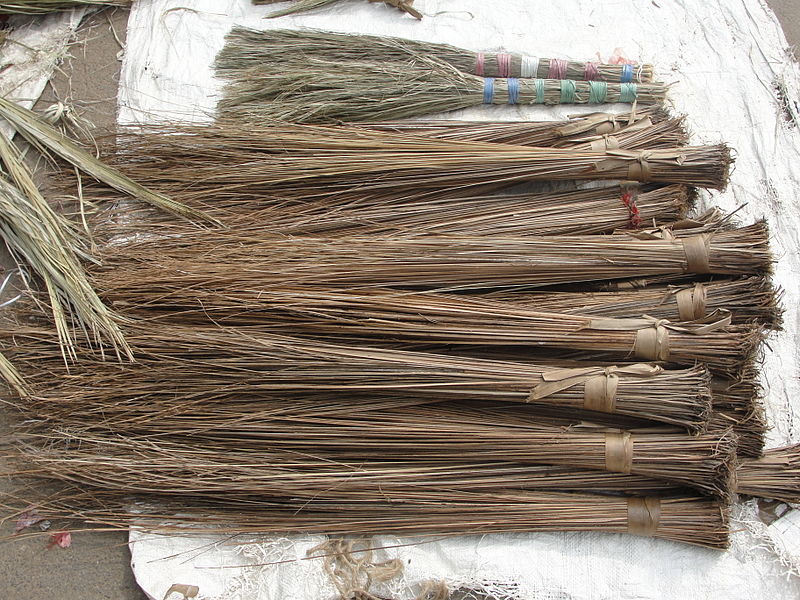
When I was better practiced at my meditation, I received a visual that stayed with me long after. I saw a man with dark curly hair, stepping out of a large forest with four or five handmade brooms slung over his shoulders. He was wearing a simple shirt and loose pants with boots on his feet, all of an indeterminate time period. He was leaning against a rough lumber fence but he looked at me, looked me in the eye. The sensation that only happens in the physical world was there. He was looking at me.
I began to meditate at night on that image, willing it to me, calling him back. I opened myself up to receive any message he had to share, but what I got were more brief flashes of images that meant nothing to me. Eventually, I started to feel a presence in the house that brought with it the sweet smell of pipe smoke. In my gut, I knew it was him. Whether he was an actual ancestor, or a metaphor for that cultural bloodline, I didn’t know, but I started paying attention.
I thought that the male spirit I was entertaining was Polish or German, both of which I know are heritages that live in my blood. Later, when he spoke in my journeys, it was German, and we found ourselves at an impasse. I had sung enough songs in German to recognize a few words but that was the extent of my knowledge. Several of my houseguests eventually experienced physical contact with the spirit, accompanied by the smell of sweet pipe smoke and I used to joke that he must have thought I was dense, requiring him to seek help in getting my attention. We all called him The German Guy.
On a whim, at a wedding rehearsal party, I asked my mom what she knew about our German heritage. And my mom told me stories about her bootlegging German grandfather, where his house was when they went to visit him and what it looked like. She even remembered the song he used to sing to the sound of his windchimes:
                        How dry I am, how wet I’ll be,
                        If I don’t find, the bathroom key.*
In the back of my head, I heard the German Guy sigh. I don’t know who he is or if he, in that shape, means anything to my lineage. But I liken him to the visual representation of my German heritage, to all the Germans standing in my ancestral tree. To the known families of Art, Arth, Schmeelk, and Pils. To honor them, I leave an offering I saw in one of my meditations, of dark German ale with chunks of hard bread softening in the bottom and I thank them for their lives. And I thank them for mine.


*A brief web search led me to the information that this was a common folk rendition that was a runaway from a small lyric of the Irving Berlin song “The Near Future”, written in 1919, during Prohibition.

Wednesday, October 24, 2012

Calling the Dead on All Hallow’s Eve

At this time of year, the air is cooling, the garden beds have been put to rest, cider is mulling and apples are transformed into a myriad of treats, whether candied, cobblered or sauced. Crisp autumn leaves fall and dry, skittering across sidewalks and pavements when the winds lift. In the Northeast, the green world is dying and we feel the approach of winter’s arrival. In this time of in-between our connection to the Dead is strongest.
My Ancestor Altar stays up year round as my ancestor work is every day of my life. They walk with me always. My altar lives on top of a bookshelf and holds a photo tree with pictures of my deceased grandparents and great-grandparents. I have a special glass I use to make oblations, liquid offerings, to the ancestors and a candle holder I light to act as a beacon. It is also decorated with pieces of petrified wood and fossils. I add items and take some away during the year but this altar is my working altar.
Samhain night, Halloween, is the time of year that you don’t have to be a sensitive to communicate with the dead. Just as in our world, it would be hard to call your friends without a phone, spirit work is no different. There are tools that help strengthen those connections: names, candles, personal objects, and offerings to entice them. I make another altar specifically for this holiday, decorated with items appropriate to the season, like petrified wood, bones, tree bark (I’m partial to birch), little pumpkins, festive candles, and autumn leaves. It pulls the energy of the outdoors inside my dwelling for those nights when the idea of being indoors feels stifling. It’s a means of opening our personal space; the spirit world does not take much notice of walls, but we do.
This time of year prompts many people to remember the loved ones no longer with them. The visual loss of leaves on the trees stirs an introspection from deep within and we emotionally feel each person we have known who no longer breathes reflected in the dying of the natural world around us. I refer to them as my Beloved Dead, and it is specifically this group I reach out to communicate with on Halloween. I place photos of them on my altar, though I do not include photos of anyone living, for superstitious reasons. I use post-its to cover the images of the living when I have no other photos, so as not to get them confused with the dead.
I have personal items that were passed down to me after loved ones died, as well as items gifted to me by them that I add to my altar. I strengthen the connection with objects the spirits are familiar with and might have a lingering attachment to. It also helps me focus my intent more strongly. I have a glass ring that my Great-Grandma Elsie gifted me when she began her decline into Alzheimer’s that I place on the altar every year. I also put out our cat Luna’s food bowl, with her collar and her favorite patchwork mouse toy, into which I’ll sprinkle some of her favored catnip treats, in hopes that she too will return for the night.
On Halloween, when the veil between worlds is thin, light a candle on the altar and call in your Beloved Dead by name. Invite them into your home. Pour a drink for them. I leave a glass of water for the wandering spirits to quench their thirst, an emotional memory from their living years. I also pour a cup of Blackberry Tea for Elsie, a cup of coffee for my Grandpa, and a shot of rum for my more spirited ancestors, as a treat. Our memories are made up of sights, sounds, tastes and smells. Our spirits can still access them even as the ability to touch fades.
Allow yourself to sit in the silence of the evening, interspersed with the giggling hordes of lively trick-or-treaters. Be open to the impressions that come from the balancing energies of life and death. Once the doorbell has stopped ringing, attend to your altar. If you sense that you are not alone, speak gently to the room about you.
This night is the time to say the things you need to say to those who are no longer physically with you. It’s important for our own lives, for the ones we live here in the world, that we not feel the weight of things left unsaid holding us back from moving forward from our grief. Just because a loved one dies, doesn’t mean we are silenced. This night is also the perfect time to honor those who came before you, to remember them and to keep their memories alive for your children and grandchildren. It’s the perfect night to reminisce and share some of your favorite stories of those who are gone. What is remembered lives.
I light a candle for my Beloved Dead, calling in their names individually, inviting them to my home for a visit. And then I put out tea lights, one for each person I know who passed since last Halloween. This year, I have five spirits to light candles for, five souls who have passed within the last twelve months, five Newly Dead. I will ask nothing of them but speak prayers for them to be at peace, and to reassure them that those left behind will be all right.
As part of my larger work, I will unroll the names of ancestors and dead I have gathered from the multiple shrines I’ve tended over the last year. I will read each one aloud and burn them in a Samhain fire, sending smoke out into the thinning veil, sending prayers from the living who remember them still. To Those Who Have Gone Before, be at peace and travel well. Until we meet again. Ase.

Wednesday, October 3, 2012

Into the Labyrinth

In my earliest ancestor meditations, the visual image I received was the same. Flashes of faces all talking at me, talking to me, as if the sound was turned off. Then the scene opened and a woman or man stood at the edge of a body of water, whether an ocean, lake, canal or pond. The water was always grey, that deep slate blue-grey. Their faces were pleasant and happy to see me but tinged with sadness. They were pointing into the water, out to the unknown, and I knew that's where they were telling me I had to go. I dove into my ancestor work, trying to clear and sharpen the image.
For a while, everything was bigger. My support system expanded, as did my ancestral knowledge and my spiritual universe. Everything I experienced deepened, widened, and exposed its layers to me. The web split open, revealing itself, and my world blossomed, colored with dimension, like a crystal prism filling a room with light. In the shadows of that light the edge was exposed and a hidden doorway became visible. This is why I do the work I do.
It's strange to me, in that wyrd way, that my ancestors pointed to the water, the well of emotions and memory. And it felt each time like they were pointing to a specific point of going in where the emotions were deepest. I could feel the tug of it against my breastbone. I have always been afraid of jumping in the deep end, even feet first, and as a child my inner primate refused to dive head first into dark and deep water, so the visual has a double meaning for me. Go to where the fear lives and open the door.
I once jumped 70 feet into a mountain river, high in the Carolinas, after carefully watching over a dozen other people dive in, watching where they hit, being sure all dozen divers emerged unscathed. It was a moment that filled me with such fear I felt my heart might burst and I understood I was taking my life in my hands. One hand towards joy and one hand towards death. What a wonder it was to expose myself to my own mortality… then I took a breath, and I jumped.
For the last few years, my personal work had me finding my out of the labyrinth, weaving my own thread as I crawled out of darkness, winding it out behind me as I altered myself. It’s as if I were replacing the bulbs along the path from fluorescents to sunlight. If I came this way again, I would not carry fear of the unknown with me. If I know the way out, then I know the way in.
Now, in my dreams and meditations, an old woman and an old man lay naked on a stone table in the woods, a living ancestor altar. They are crying and telling me there is something I have to do. They glimmer like spirit in my dream world and I know they are faces from my family tree. They've given me a quest. I have a travelling bag and a weapon, and they are pointing out of the wood, their faces tinged with sadness. They are sending me out into the world, covering ground, seeking something unknown. This dream repeats, without alteration.
For the last year, I have been winding in, winding down, going into the recesses of this body and healing. In the twilight glow of autumn, I am both Inanna, going underground to know myself, and Ariadne, the keeper of the secrets of the labyrinth. I know the edge I'm walking towards is the scariest one for me. It's the wall that holds me back, the heavy anchor that holds me in place. So it's important to have your thread as you wind through the labyrinth doors. I know the door that lies at the center of the labyrinth.
I pull the earth energy up into my body and anchor myself to it. I pull the star energy of the ancestors down into me and anchor it in my heart. Where earth and sky meet in me, a door appears. I have only to touch it and it will open.

At the start of the labyrinth, before I step in and cross over, I honor my parents, still breathing in this world, still loving me from this plane. My sister and brother, my nieces and nephew, my great-nephew are my anchors. I carry them with me into the labyrinth.
At the first turn, moving inward, I honor my grandparents, my Beloved Dead, the four who have crossed over to other world, one of whom I never knew: Richard Riddle (factory worker) & Donna MacDonald (pediatric RN) ~ Mark Dutcher Eaton (bookkeeper) & Ruth Emma Ruston.
At the second turn, moving outward, I honor my great-grandparents, all deceased, those who lived and grew up at the turning of a century: Robert George Art (blacksmith) & Margaret Loretta Burke (glovemaker) of Lockport, NY ~ Harold Lafayette Riddle (factory worker) & Elsie Elizabeth Durant of Lockport ~ Frank William Ruston (insurance salesman) & Minnie Estelle Wicker (singer) of Lockport ~ Royal Levant Eaton (prison guard) & Hattie Eva Smith of Auburn, NY.
At the third turn, outward again, I honor my 2x great-grandparents, those who saw this country's Civil War and all the change that came after: George Art (gardener) & Katherine Pils (housekeeper) of Lockport; Frank Burke (lock tender) & Eliza Conners of Lockport ~ Lafayette Riddle (farmer and factory worker) & Frances Gillette of Royalton, NY; George Francis Durant (laborer) & Emma Louise Burnah (housekeeper) of Lockport, from VT ~ Charles Evan Ruston (laborer) & Ruth Ireland of Lockport, immigrants from England; Hiram King Wicker (grain and feed store owner and Mason) & Emma Angeline Whitcher of Lockport ~ Bennett Eaton (farmer) & Theresa Cordelia Tenney of Somerset, NY, from MI;  Silas Parker Smith (farmer) & Hattie Eva Dutcher of Wilson, NY.
At the fourth turn inward, I honor my 3x great-grandparents, the soldiers and farmers who helped villages become towns and towns become cities: Adam Art (soldier) & Katherine Maria Schmeelk of Pendleton, NY, immigrants from Germany; John F. Pils & Mary Burzee, of Pendleton, he an immigrant from Germany; David Conners (laborer) & Mary Dowd of Lockport, both Irish immigrants; Thomas Burke (hack stable owner) & wife Ellen of Lockport ~ Marquis DeLafayette Riddle (farmer) & Sarah Clickner of Royalton, NY; Levi H. Gillette (farmer) & Jane Berry of Royalton; Albert Durant (laborer) & Rosella LaValley of VT, immigrants from Quebec ~ Richard Ruston (wealthy farmer) & Anna Richardson of England; William Ireland & Phoebe Lenton of England; Thaddeus Rice Wicker (carpenter) & Cynthia Lusk of Lockport, from VT; Bailey Harrison Whitcher (shoemaker) & Ordelia DeLozier of Lockport, from VT ~ Solomon Gould Eaton (farmer) & Hannah Ann Treadwell of MI, from Lockport; Philitus Tenney & wife Malvina; Ammi Smith (farmer) & Sophia Sears of Hartland, NY; Reuben Feagles Dutcher (farmer) & Eliza Marsh Bird of Somerset.
At the fifth turn inward, just after, I honor my 4x great-grandparents, the soldiers and farmers who expanded west: Barney Dowd (farm laborer) of Lockport, immigrant from Ireland ~ Freeborn-Moulton Riddle (farmer) & Abigail Chaffee of Batavia, NY, from MA; Ezra Wheeler Gillette & Mary Ann Boots of Royalton, from VT; Francis Berry (farmer) & Elizabeth Hill of Mayfield, NY; Francois Xavier Lavalle & Rosella LaRoche of Dannemora, NY, from Quebec ~ Pliny Wicker (ferryman) & Chloe Morgan of New York, from VT; D.V. Lusk (farmer) & wife Mary of Lockport, from MA; Simeon Whittier & Dorcas Kittredge of VT, from MA; Peter DeLozier (P.O.W. and cabinet maker) & Lucy Raymond of Lockport, from CT ~ Joshua Eaton & Lucy Gould of NY, from CT; Herman Sears & Clarissa Dubois of NY, from CT; Martin Dutcher (soldier and farmer) & Cynthia Ann Feagles of Somerset; Manley Bird (broom maker) & Irene Pond Marsh of Somerset.
At the sixth turn, at the key, at the crossroads, I honor my 5x great-grandparents, the soldiers and farmers who began to move, settling into new territories: Joseph Riddle (soldier) & wife Mary of New York, from Monson, MA; Eliphal Gillette & Abigail Hannah of Royalton, from CT; Joseph Boots (farmer) & Harriet Gower of Royalton, immigrants from England; Thomas Berry & Gertrude Dixon of Mayfield, he immigrated from Ireland; Alexis Lavallee & Marie Amable Langevin of Quebec ~ William Wicker & Susannah Parker of VT, from MA; Abner Whittier, Jr. & Elizabeth Dow of VT, from MA; James Kittredge & Mary Bailey of MA; Oliver DeLozier (soldier) & Eleanor Erkells of NY ~ Benjamin Eaton & Hepsibah Skiff of NY, from CT; Willard Gould & Ann Arnold of NY, from CT; Isaac Sears & Abigail Andrews of NY, from CT; David Dutcher & Jane Palmer of NY; Edmund Bird & Mary Coleman of MA.
At the seventh turn, outwards, I honor my 6x great-grandparents, the immigrants, the children of immigrants, those whose families founded this country and those who came seeking better lives: Pierre Paquier Lavallee & Marie Agathe Charland of Quebec; Walter Dixon & Annatje Goedemoet of Mayfield; John Berry & Nancy Machet of Mayfield, immigrants from Ireland; Alexander Hannah & Mary Calhoun of CT; Wheeler Gillett & Julianna Merchant of CT; Thomas Bootes & Mary Glyde of England; Thomas Ridel & Rebekah Moulton of MA, from Ireland ~ Peter Lozier & Fytje Zabriskie of Hackensack, NJ; Isaac Dow & Martha Hanniford of MA; Jacob Wicker (soldier) & Abiah Washburn of MA; John Parker & Jane Pearson of MA; Abner Whittier & Jemima Davis of MA ~ Thomas Eaton & Elizabeth Parker of CT, from MA; Stephen Skiff & Elizabeth Hatch of CT, from MA; Jeremiah Brooks & Elizabeth Brooks of CT; Caleb Arnold & Tabitha Luther of MA; Knowles Sears & Susannah Townsend of CT, from MA; Henricus De Duyster & Helena Van Deusen of NY; Enoch Bird & Silence Lyon of MA.
At the eighth, outward, I honor my 7x great-grandparents, more who helped build this land, for good or for bad, with nothing but the hope for better lives for their children: Jean Francois Paquet dit Lavallee II & Marie Madeleine Coulon of Quebec; Baltus Goedemoet & Gertrude Michel of NY, from the Netherlands; David Calhoun & Catherine Coe of CT, he immigrated from Scotland; Hugh Hannah & wife Margaret of CT; Eliphal Gillett II & Mercy Smith of CT; Thomas Bootes & Mary Jennings of England; Solomon Glyde & Mary Hyland of England; Freeborn Moulton (captain, soldier) & Rebekah Walker of MA, from CT ~ Jacob Zabriskie & Antje Terhune of Hackensack, NJ; Nicholas Le Sueur & Tryntje Catherine Slote of NJ; William Wicker & wife Rebekah of MA, immigrated from England; Joseph Washburn & Hannah Johnson of MA; John Parker & Sarah Lillie of MA; James Pearson & Hepzibah Swain of MA; John Whittier & Mary Hoyt of MA; Joseph Davis & Jemima Eastman of MA ~ Thomas Eaton & Lydia Gay of CT, from MA; Thomas Gould & Eunice Brooks of MA; Jabez Brooks & Mary Bateman of CT, from MA; William Benedict Arnold & Ann Coggeshall of RI; Jacob Parker & Thankful Hemenway of MA; James Sears & Desire Tobey of CT, from MA; Direck De Duyster & Jannetje Hendrickse Bondt of NY; Abraham Van Deusen & Jacomyntje Van Schoonhoven; Lemuel Lyon (soldier) & Lydia Perry of MA; Samuel Bird & Anna Atherton of MA.
At the ninth turn, into center, I stop. I stand at center, at heart and home, I honor all those who stand behind the first seven generations and all those who will come after me. I honor them in my quest to be the best and strongest version of me I can be, making choices those who came before me were unable to make. I believe I am altering the larger ancestral pattern behind me and altering the one before me, to better ease the passage of those yet to come.

Wednesday, September 19, 2012

Autumn Crossroads at Equinox

We are turning into autumn and the last of our tomatoes and beans are fruiting. The morning glories herald the dawn in vibrant hues of violet, periwinkle, and fuchsia. The white moon flowers are twined around the rail, their buds thick and strong. They are ready to burst open and hail the darker days of the year. Silence stills the land here, one year into recovering from the horrible flooding that made headlines in the news. The first of the geese flying north to south in migration have trumpeted across the sky.
Smells turn crisp and quick as leaves dry, drop and decay, crunching against the bottom of our feet as we walk through the brush. Garden fruit and vegetables that missed their harvest will rot and fall. They become mulch and nourish the earth for sowing in the spring. In autumn, layers of bone, earth and leaves cover the world, dulling the sharp piquant of summertime. We bed our gardens and add bulk to our bodies against the funneling twist of leaves lifting in chillier winds. The beauty of life is migrating onward, disappearing into the earth and ether. The world outside us prepares to sleep. The world inside us softens into rest, too.
We have toiled through the languid heat of our longest days and the changing landscape heralds the lengthening dark that will descend soon upon us. The Equinox is my favorite time of year, symbolic of the crossroads. It is at the point where the breathing world joins with the spirit world. It’s a place where two conflicting truths can stand equally as firm and where balance is born. It is the place where the gateway exists. It is a gateway that lives inside you.
As the point of balance floats over our land like twilight fog, obscuring lines and blurring edges, we have the chance to touch the other side without walking through it. On Equinox, I pause to catch a breath. I stand between the long days of light and the long nights of dark. I stand at the crossroad and pay homage to those who have stood here before me, to the pause in the passage of time, and to those who will stand here long after I am gone. On this day I can see into the future as far as I can see into the past.
We stand in the tipping point, the grey space, the limbo, the in-between. Equinox is a time for feeling and reflection, a chance to catch our breath before moving forward. This is the time of year when I pause my search for more lines of my family tree. I wrap up my current work and make notes of where to look next. I will spend the winter months researching what names I have, reading old tomes and histories so that I might discover what I can about who my ancestors were and the places they inhabited.
The genealogical research is easier for me to do in sprints, following one line through till I hit a wall, then fleshing out that line, giving it form and story. In this way the act alone is a study in my own history and I am the eternal student. By using this method, the names and dates imprint on my memory with context. Every winter my living knowledge of my family grows stronger. In my dedication, the threads between me and my ancestral dead grow thicker.
We are about to enter the labyrinth, going underground like the mythological Ariadne, under and inward. I have been practicing my embroidery, in remembrance of my Great-Grandmother Minnie, and her mothers, whose scraps of sewing craft I treat as sacred objects from a line of women I never knew. In my nightly meditations I have been embroidering labyrinths, moving into the dark to come out of the dark. It takes two full lines, two lengths of needle and thread, in at one end and out at the other, to create the full labyrinth, which is made up of two roads, crossing at the key. In this ancient tool, duality and balance snake into forms that do not lose their symbolic origins.
If I unwind the labyrinth, the four arms of the equinoxes and solstices spread before me. We stand at the crossroad, facing autumn, knowing that as we step onto the road it is already turning towards winter. The crossroad lies near the heart of the labyrinth. We turn inward to find center at Solstice, and roll outward, retracing steps to find the sun again next Equinox. In walking the labyrinth, we move like the waters of our body move to the currents of the ocean, rolling in and out, each turn in moving us closer to healing and wholeness. As life continues through the shorter days and my body moves daily through the world, I carry the peace of the labyrinth inside me, as an anchor of stillness, walking it quietly within while the world moves loudly around me.
As the leaves dry and fall, I find some of this peace in the act of showing honor to those long gone. I walk the local cemeteries, picking up trash and litter. It is such a small offering made to the memory of those gone before. They may not be my ancestors but they belong to someone. These dead shaped the town that I live in and they had lives filled with hopes and dreams, just like mine. To me the cemeteries feel most like parks, with spirits wandering here and there. They are some of the quietest spaces, full of the grace of those who lived and those still living who remember their names.

Wednesday, August 22, 2012

Stones of the Earth

The human animals of the earth do not walk it alone. We share it with other animal allies, learning lessons on how to better ourselves through observing the ways they live in their habitats. It seems the more evolved our society got, the further from our primal connection to nature we moved. Our allies can help us rebuild that connection. There are more allies in the natural world waiting to teach us. We are surrounded by them: plants, trees, weather, minerals, gemstones, etc. My strongest natural allies are rocks, minerals and gemstones.
We walk across them every day. We kick them around, we dig them up, we build structures with them and we crush them down to be used in composite materials. Most people take little notice of them but stones vibrate for me. They have energy. They transform it. They act as a conduit for it. They store it. And sometimes they release that energy back into the world.
Predjama Castle in Slovenia contains a torture chamber that saw 700 years of violence. It stands now as a museum and is internationally known to be haunted. Employees and volunteers have heard the same voices repeating from the ether of the dungeon bowels. What was discovered beneath the fortress was a cavern of quartz, iron, salt and water, all of which are components for creating a quartz battery. They theorize that the combination of elements actually recorded sounds from when the dungeon was actively used. It is believed that the repetitive voices heard today are captured moments from a previous time, held within the quartz deposits.
Some world wonders are discovered accidentally. After pumping water out from underground in the process of mining for iron and silver, the Cueva de los Cristales, or Cave of Crystals, was discovered 300 meters beneath the Naica mountain in Mexico. The caverns are filled with gypsum crystals which had been submerged under water for 500,000 years. Under high temperatures and with the presence of mineral-rich water, the selenite grew to an awe inspiring size. The largest of the crystals is estimated to be about 600,000 years old and over 10 meters long. That’s 33 feet in length. Pollen removed from a water bubble in one crystal approximates that 30,000 years ago that desert was once covered in dense forest.
I haven’t been to either Slovenia or Mexico, but I’m fascinated by the world’s natural stone formations, especially caverns. Being surrounded by stone on all sides is an amazing experience, as was my trip to Howe’s Caverns in New York. At one point in the tour, we were adrift on a boat on an underground river in the pitch black… wonder-filled.
My experience with the physical world stretches as far south as North Carolina, as far north as Toronto, east to the coast of Maine, and west to Michigan, save for one flight to Texas. I am fascinated by caverns and also find myself drawn to the mountains over and over. I cannot stand on the mountain top and not feel the energy of the mass of stone beneath me. It sits beneath the soil, beneath the flesh of the earth. I am known for picking up random stones on my travels that speak to me through shape, color or feel. In fact, they’re littered throughout my home altars and outdoor garden.
Stones are the bones of the earth. I have stood on the spines of the earth where the smoky mountains meet the blue mountains. I have felt the pulsing heart of the mountain chain writhing above the lush green landscape. I have felt the firmament of planet beneath me, high above the other mountains and I have stood in that moment full of wonder at the world stretched out before me.
I have been to the shore of Maine, climbing over stone slabs that look like petrified wood, and I felt the calling of the ocean across its great expanse. The stones I stood on, slick with algae and years of seawater, were once joined to the Western bluffs of Ireland, before the plates split and shifted. I felt an ancestral stirring in my bones, beneath my flesh, standing at the edge. I wonder what the stone of the ocean floor feels like beneath all that water. The ocean is cradled by stone.
In the Narmada river in India, there is a place where seven currents converge. In this conjunction, the currents shape river stones into oblong spheres called shiva linghams. They are spiritually powerful stones, where the male shape is created by the female waters. I have found them to be wonderful stones to meditate with. I also have a preference for meditating with chunks of petrified wood, specifically for my ancestor work. The pieces I own are the bones of old sisters and brothers, the remnants and ghosts of long dead forests and groves, transformed into stone.
Our ancestors built stone cairns to mark their way, placing them on trails, mountain peaks and shorelines. Over the centuries we have covered the dead with stones and entombed them within it. Even now we use stones to mark the burial places of our dead. I use them to communicate with the spirit world. The simplest and most powerful ancestor altar I could imagine would be a small cairn built of a stone from every homeland my ancestors have known. Simple, no frills, but a structure emanating with the power of multiple landscapes, holding the memories of lands walked by those who came before.

Cueva de los Cristales, Mexico.
*Tune into my blog next week for a look at the stones I crafted to communicate with my ancestors.
Creative Commons License
This work is licensed under a Creative Commons Attribution-NonCommercial-NoDerivs 3.0 Unported License.