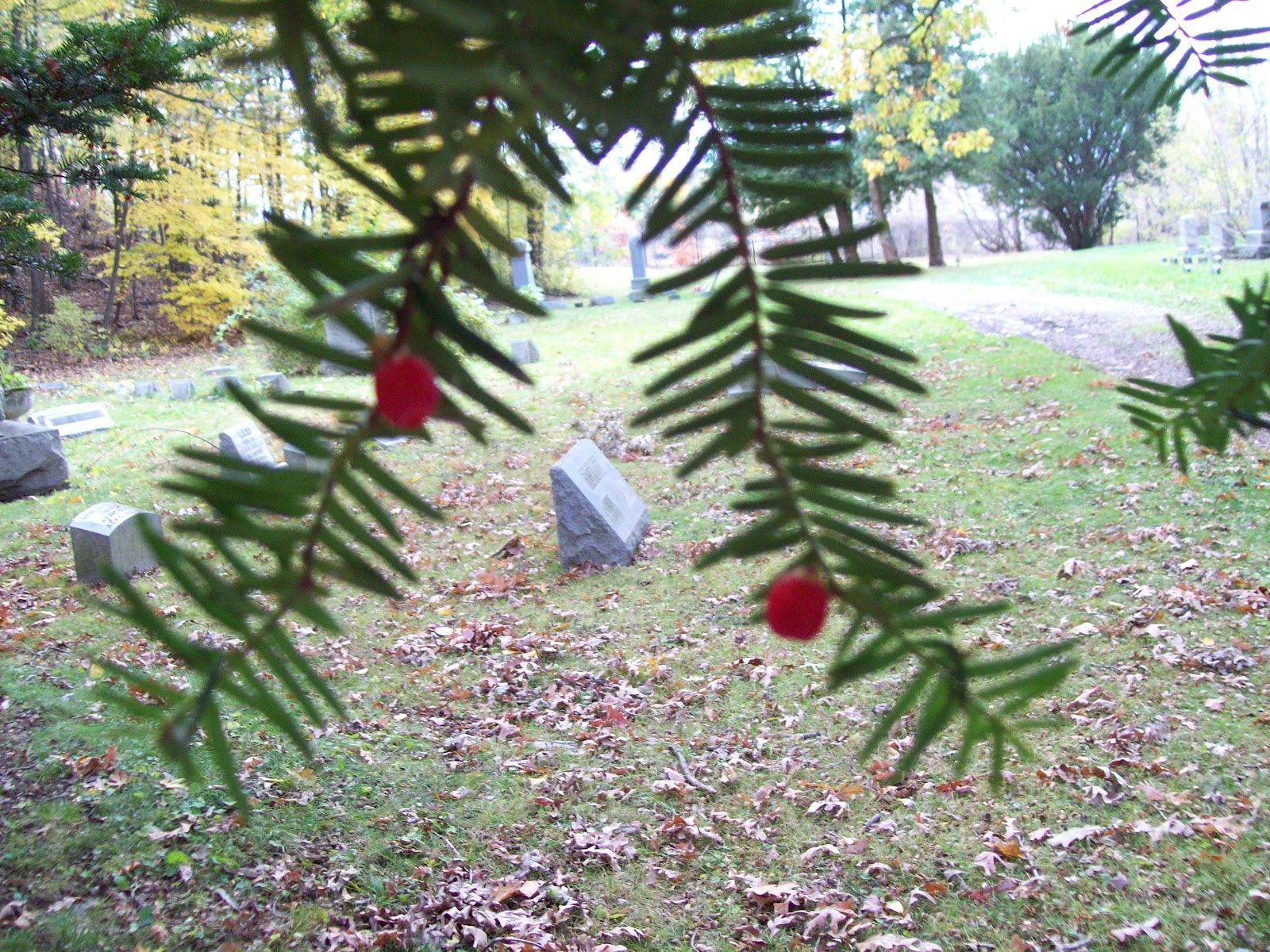
Remember...

Ancestral energy lives in the stars above us, the stones beneath us. Their memory gathers in oceans, rivers and seas. It hums its silent wisdom within the body of every tree.

Showing posts with label critical thinking. Show all posts

Wednesday, August 19, 2020

My Family and the Ratification of the 19th Amendment

Great-grandma Minnie Ruston in the glasses, center.
On August 18, 1920 it was written into law that voting rights could not be denied based on sex. Suffragettes had been protesting for the right to vote for decades. An early Women’s Rights convention was held in Seneca Falls in 1848, seventy-two years before the amendment was ratified.

This photo is of an unknown group of women from around the 1920s. My 1x great-grandmother Minnie Ruston is facing the camera in the glasses in the center. She was the daughter of a prominent business owner, fire chief, and Mason, Hiram Wicker. I have not yet been able to identify these women. There are other photos of the white-haired woman in the back row with the black robes on, but I am uncertain who she is.

Suffragette white in 1917?
[It’s important to note, considering how long women had to fight for it, that many states responded by passing laws to limit the freedoms of black citizens, including voting rights. It wasn’t until the Voting Rights Act of 1965 that black women (and men) had the full and legal right to vote. That’s forty-five years after the Amendment.]

It made me wonder where my ancestors were in their lives in 1920. It was only 100 years ago and my female ancestors could not vote. I’ll never know what they thought about women’s rights to vote—I know that not all women were in support of it, though I have learned enough about some families to make some educated guesses. So I searched our archives for photos of my ancestors who were alive at the time, within a few years, and here they are:

My 1x great-grandparents Royal Levant Eaton and Hattie Eva Smith-Eaton were 47 and 38 years old with three children. My grandfather Mark Dutcher Eaton was 5 years old, the youngest in the second photograph. They were living in Auburn, NY where Roy was working as a prison guard.

Royal’s mother Theresa Cordelia Tenney-Eaton was 70 years old, living in Somerset, NY with her son Hubert and his family.

Hattie’s grandmother, my 3x great-grandmother Eliza Marsh Bird-Dutcher was 83 years old living in Somerset with her daughter Carrie and her family. Here she is, on the left, with her son-in-law's mother, Sophia Sears-Smith. Sophia died soon after this was taken, a decade before ratification.

Frank Ruston tucking his head. Either with his wife Minnie, or Minnie took the photo.

Minnie Wicker-Ruston and son Dickie and daughter Ruth, my grandma, around 1922.

Emma Whitcher-Wicker, front right, with sisters Ellen, Harriet, and Frances, l-r.
My grandmother Ruth Emma Ruston was 4 years old, living with my 1x great-grandparents Frank William Ruston and Minnie Estelle Wicker-Ruston in Lockport, NY. Frank and Minnie were 32 and 30 years old and he was employed as an accountant. Minnie’s mother Emma Angeline Whitcher-Wicker, 75, lived with them.

Frank’s parents Charles Evan Ruston and Ruth Ireland-Ruston, 73 and 59 years old, were both first generation immigrants living at their own home in Lockport.  He was still employed by the Harrison Manufacturing factory. (In my childhood it was the Harrison-Radiator factory.)

Robert George Art and Margaret Loretta Burke-Art were both 28 years old, living in Lockport, with two young daughters. He was working as a blacksmith.


Robert’s parents, my 2x great-grandparents, George Art and Katherine Pils-Art, 50 and 49 years old, were both employed by the wealthy Kenan family as their private gardener and housekeeper. Here Katherine is with other housekeepers, second one in from the right.

Margaret’s father, my 2x great-grandfather Frank Burke was 57, worked as the watchman for a city building in Lockport. He’s listed as married, not widowed, living with five of his children, though his wife Eliza Conners-Burke is not included on the census report. She would have been 54 at the time. I don't have any photos of them.

My 1x great-grandfather Harold Riddle, in the light suit, was 17 years old, living at home with my 2x great-grandparents Lafayette Riddle and Frances Ann Gillette-Riddle, 47 and 43 years old. With five of their six children in Newfane, NY.

Harold and Elsie in 1924 when they married.

My 1x great-grandmother Elsie Elizabeth Durant was 16, the last Durant child still at home. My 2x great-grandparents George Durant and Emma Louise Burnah-Durant, 51 and 53, lived in Lockport, NY where he worked at a Block Company. His father Albert died earlier that year in Vermont. His mother Rosella Lavalley-Durant, my 3x great-grandmother, 82 years old, was working as a housekeeper in Vermont.
Rosella Lavalley-Durant

I do not know what they thought but I know where they were and who their descendants became. I know my great-grandma Minnie was an avid photographer and these photos of this group of women survived all these decades later so they must have been important to her, and so they are important to me.
Same group of women with Minnie behind the camera.


Friday, March 20, 2020

Call to Prayer in a Time of Change

It is time now, for those of us who commune with our ancestors, who petition them, who pray to them, or who simply pass their names over their lips… it is time for us all to reach out to them and pray for their strength and guidance. It is time to ask Spirit for aid.

Our world is in imbalance. We are being asked and required to hold down our home fronts and isolate ourselves from each other.

          May those without shelter be watched over and passed over from harm.

It is Spring Equinox here and today the world smells warm and dark and earthy. It smells like promise and hope. My lilies were poking out of the ground three days ago. Today their shoots are four inches tall! Change is happening rapidly and it is not all pleasant.

We will not see the end result until we are on the other side. Hold the Tower card up high. Change does not have to be bad. Ride it. Do not let it ride you. Get creative about problem solving.

Your ancestors have done it before you. They know the way out. They found a way out. You will, too.

          May those without resource know kindness from those who have more than needed. 
          May everyone eat. 
          May everyone have access to a clean and safe environment.

I am thinking of my friends who are losing work indefinitely and sometimes permanently because of our current global need to stay home, whose jobs do not allow a work from home option, whose jobs require crowds to come to them.

I am thinking of my friends in the essential industries that do not get to stay at home, but also, and I mean this, barely get to go home and in some instances are not getting paid for all of their time in because the money is not there. And they are all working with a lack of supplies to safeguard themselves.

And they are still working.

          May the hands of the elders guide them. 
          May the skill of the healers work through them. 
          May they be safe and as free from harm as possible.

And I was thinking about how hard my time in the hospital would have been if we had been in such times and my loved ones could not have come to see me. And I am thinking of those who now have to hold off on surgeries, who are preparing to need hospital care, and who are ending their lives in care.

Tonight I will light candles to my ancestors with specific intention.

          May those who are born during this time be safely seen into the world in good health. 
          May they be brought into life with love and joy and ease.

          May those who die during this time be surrounded by their chosen ancestors.
          May they be shepherded into death with compassion and care. 

          May it be so.

Wednesday, November 6, 2019

Adoption & Ancestors

The question I get asked about the most, especially during the holiday season when everyone is looking for ancestral names, is about how to connect with your ancestors when you are adopted. Or if you even can.

The simple answer is, of course you can.

The Ancestral energy stream we connect to is not made of names. There just happen to be names attached to those threads of energy that create the stream.

You are the product of a thousand loves. Their blood lives within you. Your ancestors walk with you now whether you know their names or cultures or not. Now, you can take a DNA test and get some cultural info on your background. And, if you agree to be connected with other possible family members-- it's an option when you register-- then you could potentially open a door to finding biological family.

If you want to.

It is not a requirement for ancestor work. All you have to do is create a small ancestor altar. All you need is a cup of water and a candle. Tend both regularly. Open yourself to the ancestors in your blood and the ancestors in your family while you do it.

Stay open to thoughts and impression that come to you while you do this. 

The reality is, if you were adopted, not only do you have a gallery of ancestors unknown to you, but you also have a gallery of ancestors you have been chosen into available to you. I know not everyone's adoptions work out well. I know there can be jealousy and hurt feelings if there are secrets and mistrusts or abuse. I've seen that reality among my friends. But I am a realistic idealist.

I see the world for what it is but I find hope in painting it as I believe it could be. And, if you go back far enough we all have the same ancestors. So please, let my ancestors me your ancestors until you find your guides.

Here is my truth.

I don't have kids of my own. I never planned to. But if someday I am lucky enough to adopt a wayward teen and they want to become my child, I will create a ritual and I will call my ancestors in and I will stand with them as we welcome that child into our bloodline. And then I will bore them with the names and stories of their new ancestors, their new energy source, their new guardians. And even if something happened and we never spoke again, I would never sever that bond. I would not have the right. I would not take that gift away from them.

I know too well what a source of strength and comfort they are for me.

Not everyone will agree with me or feel the same. I'm sure as someone who is not adopted or has not adopted I am missing some emotional component. I'm not trying to speak with authority. But I aim to empower you to find what works for you and own it.

Wednesday, May 1, 2019

Thinning Worlds


At Samhain I honor my Ancestral Dead and formally welcome them into my home and hearth. It’s a common practice for witches, pagans, and ancestor worship practitioners. It’s also something I do every day, not just in autumn. The other side of the Halloween coin is May Day, otherwise known as Beltane, and it’s another time when the lines between the living and the dead blur.

The living, the dead, and the energy beings that bleed into this world from another. There are too many stories of fairy folk from differing mythologies for me to not be open to the possibility that they exist on another plane. I mean, once you believe in ghosts the door to what is possible stands wide open.

And I believe in ghosts.

            They visit me in my dreams. But when the worlds are thin I see them in the waking world as well. I see movements out of the corner of my eye, things tucking behind chairs and bookshelves that aren’t there when I look for them straight-on. I feel people entering the room behind me but no matter how certain my body is that I am not alone I cannot see anyone with my naked eye. And my scalp prickles as if a hand has gently touched me. It warms beneath another palm. I no longer reach up to check because I know it is not a physical presence.

This is how I live. The blurs are what I refer to as wayward spirits, harmless travelers drawn towards memories of being alive. The thinner the worlds get the brighter my inner lighthouse gets. I have a room lurker who is also an old fixture I call the German Guy. I know he belongs to my maternal Grandma Art’s side and as she passed last spring I am not surprised he has come to sit with me. The hand I feel on my scalp is my Great-Grandma Elsie. She is my spirit traffic cop, never far. When the worlds bleed across each other her presence is more vigilant.

I leave out cups of tea and horribly salted chicken wings as a thank you to her. Or strawberry shortcake in season. She lived with us in the summers and was alive until I was seventeen. There is a space in my heart that was shaped by her, a part of me that remembers how she molded me. She saw what others in my family did not see and now, from a grown-up perspective, her experiences with a difficult son dictated the advice she gave me:

You have to love, anyway. You can’t let the bullies stop you from living your life.

That goes for spirit bullies, too. If you are sensitive to them, they can crowd the room and demand attention. So when I clean my Ancestor Altar and refresh it I call in peaceful spirits that do not wish us harm. I take a shot of some pungent liquor and make an offering at the edge of our property for those spirits seeking offerings with no regard for the living.

There is room for them all to be honored…just out there. Not in my home.

In this thinner world I ask the Ancestors to safeguard those who may not yet be at peace and to watch over their families.

I still grieve for Recent Dead. It wells up as the thinning comes and I can feel spirits more viscerally. I am both reminded of their loss and equally hurt that their ghost has not come to visit. I wish them peace even as I grieve the loss of them, the loss of their physical presence, of their wisdom, of all the time we’ll never have to repair or strengthen wounds and hearts. And I am left to figure out how to move on from unfinished work.

But not alone. Those Who Have Gone Before aid me in my grief. The Ancestral Dead, the centuries of others who have felt such loss, have been deceased long enough that they can hold space for my sorrow. Their physical connection to the World They Knew is long gone and they are drawn to that familiar emotion of loss. Whether intentional or not, they sit with me. I know this. When I am open to it, in my darkest moment, I do not feel alone.

For some people the thought of ghosts is isolating and frightening. It can drive them from a space. We often feel such a way about things we cannot explain. I’ve always trusted what I am experiencing more than just my eyes. We do not see everything and we do not see everything the same way as everyone else. It makes our personal experiences valuable.

Ghosts are real.

Those blurs I see out of the corner of my eye are not all ghosts. After years of working with spirits you can sense/see the difference. Some are land wights waking after a wintry slumber. Finding a way to embrace the life-waking in the same breath as life-transitioning-through-death is a way to honor those who are no more.

Look up the histories of your ancestors and leave offerings appropriate to the lands of your people. I leave out bread and seed and fruit and tea to feed those just waking and I do it in the name of those I miss. In my grief I choose to feed life.

Open your heart to the thinning of the walls between this world and the next. Do not try to quantify or qualify. I will tell you that yes, your loved one is gone. And they are alive. And they are reincarnated. And they are with you. All of that is true, all at once, right now.

Now they are gone. Now they are everywhere.

How will your heart honor them?

Wednesday, September 5, 2018

An Evolution of Spirit

“I am fundamentally an optimist. Whether that comes from nature or nurture, I cannot say. Part of being optimistic is keeping one's head pointed toward the sun, one's feet moving forward. There were many dark moments when my faith in humanity was sorely tested, but I would not and could not give myself up to despair. That way lays defeat and death.” ~ Nelson Mandela

I talk pretty on my blog about kindness and compassion. My words are honest and I work every day to live by them. But I wasn’t always this person. We are born with open hearts, and then the world happens and shapes us and we spend the rest of our lives fighting to get back to that original place of faith in humanity. Every year I get closer. But I like people to know how different I was, to understand how much I have changed. Because if they do not perceive my change, how can they believe themselves capable of the same transformation?

“Loving ourselves through the process of owning our story is the bravest thing we’ll ever do.” ~Brené Brown

I used to be an anger ball. By that I mean I was very quick to anger. I was angry at the violence I had suffered. Angry at the people around me who found relief by taking out their pain and insecurity on others. I was angry at the hardness of a world I did not seem to belong in. I was no better. I curled in or lashed out, always one of two extremes, as a way of taking what I needed from the world to survive it.

“Anger is an acid that can do more harm to the vessel in which it is stored than to anything on which it is poured.” ~Mark Twain

I didn’t know there was another way. I was a heavenly body on the inside of the circuit, the sun that the solar system revolved around. I didn’t see that the world was smothering me because I put myself at the center of it. All I saw was that I was suffocating. And I couldn’t see a way out.

“The way is not in the sky. The way is in the heart.” ~Buddha
I was at a crossroads, my own personal Equinox. I was disconnected from myself, from the earth beneath me, from the sky above me. I could see the forest of trees but not the roots of them entwining and holding each other up. I didn’t know how to bend. I didn’t know how to flow. Everything was fire and lava. I wasn’t living in the world, I was burning my way through it.

“If we could change ourselves, the tendencies in the world would also change. As a man changes his own nature, so does the attitude of the world change towards him. … We need not wait to see what others do.” ~Mahatma Gandhi

When we feel lonely we push out at the world, keeping it further at bay. I pushed everyone away before they could leave me, before they could hurt me. I thought pain was inevitable and that was the face I gave.

“Listen—are you breathing just a little, and calling it a life?” ~Mary Oliver

It wasn’t what I wanted. I was at a crossroads and I made a choice. I turned away from chaos and insanity, from trying to fit in and struggling to breathe. I let go of the anger that was eating me from the inside out. I didn’t know what to do with it, so I just released it in small breaths. I didn’t know what to do with it, so I gave it up to the universe. I rediscovered faith and turned my attention to finding a path that felt firm beneath my feet. I took the time to get to know myself.

“Can you remember who you were, before the world told you who you should be?” ~Danielle LaPorte

I had defined myself for so long by what I didn’t like, what I didn’t want, and what I thought I was supposed to want, that I found I didn’t know what it was I did want. What did I like? Who was I? I first heard an answer in a ritual in the dark in the mountains. Deep in the core of you, what are you? I quieted my soul and listened, and the word that came from my mouth surprised me.
“Light,” I said, with tears in my throat. And later, the overwhelming answer I found was kindness, goodness, compassion, and joy. When I removed the protective layers from my heart, I discovered the brightness I had been searching for all along within me.

“The dark does not destroy the light; it defines it. It’s our fear of the dark that casts our joy into the shadows.” ~Brené Brown
The world I live in is a better place for having me in it. I believe that. I feed it my hope and my optimism and my compassion. It does not mean I am perfect. It does not mean my heart is not weighed down by the violence and evil that men do. It does not mean that I do not cry in the quiet nights within the safety of my walls. But I cry because I am connected now. I feel part of the earth beneath me and the sky above me. I feel part of the roots connecting the trees beneath the surface.

“Softness is not weakness. It takes courage to stay delicate in a world this cruel.” ~Beau Taplin

“Be soft. Do not let the world make you hard. Do not let pain make you hate. Do not let the bitterness steal your sweetness. Take pride that even though the rest of the world may disagree, you still believe it to be a beautiful place.” ~Iain S. Thomas

Do not be ashamed of the ways the world has tested you. Do not be ashamed of the times you have fallen, of the times you have failed to get it right. What matters is that you picked your head up. What matters is that you picked yourself up and you kept going, even though you did not have faith that what lay ahead was better. It is not our perfect moments that define who we are. It is the moments we are imperfect that shows the spirit that lies beneath the flesh and bone. It is how we carry ourselves through those moments that reveal the soul of us.

“Thousands of candles can be lit from a single candle, and the life of the candle will not be shortened. Happiness never decreases by being shared.” ~Buddha

We are meant to follow our own paths. It is never too late to change tracks and find your way back to you. Our original state is harmony and peace. The world is hard but there are others in it, lighting candles in their hearts against the dark, struggling to grow despite the resistance. Every action is a choice. When you stand at the crossroad, open yourself to compassion and hope. You just might be surprised where you find it.


“For a seed to achieve its greatest expression, it must come completely undone. The shell cracks, its insides come out and everything changes. To someone who doesn’t understand growth, it would look like complete destruction.” ~Cynthia Occelli


[Originally posted September 24, 2014.]

Wednesday, April 4, 2018

Why We Funeral


The day before Easter, my Uncle Norm died. He was my dad’s younger brother. He lived directly across the street from me. His was the second sibling death in the family in three years. And it hurts.           
And even in dealing with this grief, another death is looming. And my heart feels like it’s drowning. What do you do when you’re drowning? You focus on one small thing at a time to get yourself above water.
Everyone else’s lives continue at a frantic pace but you are stuck simply trying to remember how to breathe.
I don’t live in the same place as my family. It makes death hard. I don’t have my own vehicle, and I haven’t been able to drive distances since my accident. My recovery also makes public transportation difficult. For now I have no choice but to grieve from here. Here, where no one else knew the people I lose from home, where no one else can or will grieve with me.
For a moment, I wish professional keening was still a cultural thing. I could hire a handful of women to bring over casseroles and cry with me and let me tell them my complicated stories.
We still don’t really talk about grief. Not outside of wearing black while standing inside funeral parlors. My mom had a funeral outfit. I remember the nights she would come home from work and get dressed up in that blouse and those slacks, with hose and heels and make-up. Sometimes a friend would come over and they would go pay their respects together for an hour or so.
I remember. But what I didn’t see was that grief is hard. I sit on that edge uncertain as to whether or not I am grieving the loss of them or the loss of the relationship I will now never-get-a-chance-to-have. Maybe it’s both. It’s probably both.
I think the beginning of grief is largely uncertainty.

One of my first jobs besides babysitting was getting paid to sing at weddings and funerals. Singing at funerals is so surreal when the families are unknown to you. You need to be both a comfort and a catharsis.
The main aspect of a funeral is to lay the body, the sacred vessel of the beloved dead to rest based on their wishes. It’s a way of capping the respect and affection you had for them. It’s a way to wrap up the end of their story.
And that’s great.
[I do think that there will be a tipping point where we have to be accountable for the ecological impact the way we dispose of our dead, of the carcasses left behind. I think that point has already come. No more chemicals. No more sealed vaults. Our bodies were meant to decay in the earth and feed the soil. So we have to change our relationship with death. And our bodies. And how we connect soul/spirit/anima to flesh.]

Mostly funerals are for those left behind to grief. It’s a place we’re allowed to grieve. The coming together of family and loved ones is a soothing balm. You’re not the only one who feels like time stopped. You get to share funny stories and poignant stories, about what a good person they were or lament the loss of time to smooth the broken edges of your relationship. And in some way the ritual should serve those who gather together.
I think about this a lot. The funerals I have been to that were officiated by someone who did not know my beloved dead were laughable. They were bordering on farce—as if the officiant had never performed a funeral before. But the ones I have attended, led by someone who could keep themselves composed, but who had love for the dead were brilliant and moving and beautiful and stirred the ghost of them in me.
I take notes as I grieve. Connection matters. Without connection we are just flesh. So we come together to grieve to make it real. To reconnect a new reality to an old one. If everyone is grieving they are truly gone. When we know that whether or not anyone grieves a death, they are truly gone.
I regret missing my Uncle Dave’s funeral. I know I’ll regret missing my Uncle Norm’s as well. But this time I am not well or fit for travelling. So I gather up my thoughts and I request them to make sense.
I’m still trying to figure out how to grieve alone from hundreds of miles away.

Wednesday, March 7, 2018

Our Attachments to the Things That Belonged to Them


Today we put our couch to the curb to make way for a beloved piano. Our apartment is small. We’ve lived in it for over fifteen years so wall space is hard to come by. Letting go of the couch was my immediate thought when we were trying to decide if we could take the piano or not. We only had a couple weeks to decide.
Easy peasey. Couch out. Piano in.
It's an old couch. It was once white with pink and teal slashes of color, an overstuffed beast. I remember when my grandparents first got it. It was when I was in my early teens and it was like sitting on a cloud.
When my grandpa died in 2004, a few years after my grandma had passed, my brother and I carried the couch and matching loveseat out the sliding glass doors and into his van. They came home with me.
Over the years the couch has sagged. The cats attempted to tunnel through it. I sewed patches of fleece on it as it dried out and frayed so that they couldn’t. It’s pink and teal slashes paled. It has been so hard to get off of since my accident, and so low to the ground, that I didn’t use it anymore.
Today we put it to the curb.
For a moment, for just a moment, I felt like I was putting my grandparents to the curb.
I just wanted to note that. Of course I did. I didn’t let it stop me from doing what needed to be done. I let myself cry as our friends dragged it to the curb. Just for a moment. The sudden emptiness in the living room reflected the emptiness I still feel in my heart for them. And I always will.

Wednesday, December 6, 2017

Grieving This Holiday

"Here is one of the ways grief works in our minds… I fall asleep thinking about my new cat, and how quickly she slipped into her own night time pattern. And how different her pattern is from any of the other cats I’ve had. Had. Because they’re dead now. Bella died in June. Bella hasn’t even been dead for a year. Bella’s only been gone for six months. And I miss her. As cute as Mara is, she is an addition, not a replacement. And I want to have them both. Then I want all five of the deceased and alive cats all in one space. In one time. Right now.
And then I remember that time is a cycle of wheels and gears interlocking and pulling away. Some return to meet over and over and some gears only touch once before travelling onward. Our lives are these wheels within gears, within circles of family and friends. We need time and distance to distort the powerful emotion of feeling all that love at once or we would explode from the wonder of it. But sometimes, in the wake of the awe, we forget that these cycles and shifting circles are what our lives are made up of. And grief is part of that cycle.
I remember Bella’s night time pattern. Every night, before sleep, a kiss on the nose. If I forgot she would cry at me, kneading her feet angrily or worriedly on the bed. It was never the same emotion. And I remembered them, every one of those separate occasions as if they were a flip book of images in my mind until they became the same still. A thousand emotional moments becoming one feeling, one memory, and bringing her back to life. I could hear her tinny, obnoxious cry. And I could feel her coat under my hand. I could feel her push her face against my lips. I started to cry with a kind of grief I haven’t let myself feel for months."

I wrote that four years ago. Rereading it stings at my heart. I remember like it was yesterday. The house is decorated for the holidays. We give our cats a stocking of toys and catnip in the morning. It was hard enough when Luna died. And then, Bella... This year Zami won’t be there either. I know our holiday morning will be bittersweet, making new memories while being haunted by old ones. It’s why learning to be in the moment is important. This year, more than any other, I have a long list of friends who are dealing with the loss of a parent or pet, most of them within the last few weeks. It’s the cycle of life. And it’s heartbreaking.
             It's only been two months since Zami died. Mara is part of this family now, having found her niche. But Zami was the last of the originally babies. Her loss is still palpable. There are three boxes on my altar of cremains. At least they are together again, in a way.
It’s hard to lose someone at the holiday season. And it’s hard to be missing them when we are focused on family and loved ones. The weight of our grief directly correlates to the weight of the love we held for the lost. And when we are surrounded by family, by joyous, loving emotions like the holidays evoke, some of that grief will seep through. The most important piece of advice I can give you is to be gentle with yourself. The holidays are about compassion and you have to start with yourself.
             There’s no timetable for grief. What takes some people months, takes others years. Even then, it never truly goes away. The loss is always with us. So go easy on your grief. Allow it to flow through you.
Four years ago, sitting with friends, I realized that I would never say to Bella again, “Nobody wants your anus,” as she was prone to presenting it to people in greeting. Insistently. I cried for a minute, out of nowhere. They asked what was wrong and I told them and immediately laughed through my tears, because it was such a strange thing to miss. I said that it was stupid and my friends said, No. It wasn’t.
             And they were right. The tears gave way to smiles and funny stories and the day went on. I didn’t ruin it with my grief. I allowed it to move through me.
So who cares if you’re at a holiday party and you think about your dad and you cry. Everyone loses people they love. Everyone understands. And if they don’t, maybe we need to make them. I cry for my Grandpa every Christmas morning when I eat my orange, because he’s not here.

The last Christmas with the Original trio, 2009.
It’s when we hold our grief in that it eats at us and it hurts. That’s when keeping it behind walls until it bursts ruins our days and moods. At the holidays, it’s impossible not to think about our fresh losses. We’re afraid of our grief. We’re afraid to bring it up because of the tears that threaten to follow. But what doesn’t work through us lives within us. So those who are grieving need to be able to be sad so that we can push through the crust of grief to the happy memories underneath it. The swifter you allow the flood, the sooner it ebbs.
If you aren’t the one grieving?
             Give your friends a break. Invite them to your festivities even if they’re dealing with a loss. Remind them they still have you. Be understanding if they choose not to come. Be understanding if they show up and are not the life of the party. Holidays are not about how things look. They’re about brotherhood and sisterhood and compassion.
At least they should be.

I spend a lot of my time hanging natural ribbons on trees in memory of those no longer with me. So I both make and collect ornaments that do the same thing. I have an angel cat for both Luna and Bella and now, Zami. A hummingbird for my grandparents and an owl for my grandma. You could also get some heavy card stock and cut out suns and snowflakes. Write the names of your Recent and Beloved Dead on them and hang them on your tree.
Drink a toast to those you miss when you are all gathered together. Have everyone raise a glass and speak their name. Speak their names. Invoke them into your joy. Share funny or heartwarming stories about them. Set a favored cocktail out on a clear space as an altar and offering for them. Bake the cookies they loved or used to make themselves and share them.
Cry when you need to.
Put out a bunch of tea lights and candles, unlit. Throughout the day, as you remember a happy memory, light another candle. Literally allow the love and memories you had to bring light into your holiday. The darkness of winter seems to last forever, but this is when the light begins to return. I use the holiday as a reminder that there is joy after the sadness. Grief may pull at our hearts but love will win out in the end.

Blessings to you and yours this holiday season.


[Originally published December 18, 2013 as Grieving at the Holidays, after the loss of Bella.]

Wednesday, November 22, 2017

My Mayflower Connections

The Mayflower
The first of my paternal ancestors stepped foot on this land three-hundred and ninety-seven years ago. My known maternal ancestors helped build French-Canada forty-five years later. Without their lives and their struggles, I would not be here. I would not be me. So for all of them, even the roads they took that I find unsettling, I am extremely grateful.
The history of our country is not easy or pretty. Western man stole all the land they settled, purchasing it for paltry sums from a people who had a different understanding of ownership. I have done a lot of research on that period of time and that’s pretty much how I feel. But, in the beginning, before the influx of colonials from England, there was a moment of peace, and a moment of hope for tolerance.
That is the day I am thankful for.
In September of 1620, the Mayflower left England with 102 passengers bound for Virginia in the New World, on a crossing that took sixty-six days. The majority of the voyagers were Separatists who had funded the voyage, having permission to settle at the mouth of the Hudson River. The Separatists were a splinter group of Puritans, who were Protestants that wanted to let the Bible be the final authority on their religion, and encouraged them to have an individual relationship with their God. Whereas the Puritans were taking on trying to convert the Church of England, the Separatists wanted a place “separate” to practice as they believed.
The Separatists of the Plymouth colony followed the teachings of their minister, John Robinson, who believed in and preached religious tolerance, and in this manner were unlike the Puritans who came after them and settled in the Massachusetts Bay Colony. While none of the colonies would allow Quakers or Baptists to settle with them, which is discriminatory but was common practice, the Plymouth Colony did not force its Anglican members to convert. Off course and low in stores, the ship landed off of Cape Cod in November.
Seven of my ancestors were on board the ship. Francis Cooke, a woolcomber, came over with his oldest son John, to establish a home for the rest of their family, who waited in Leiden. Thomas Rogers, a camlet merchant- a luxury fabric of camel’s hair or angora mixed with silk- came over with his son Joseph. The rest of the family waited in Leiden as well. James, a tailor, and Mrs. Chilton brought their 13 year-old daughter Mary with them. At 64 years of age, James was the oldest passenger aboard ship. They were all Separatists.
Mourt’s Relation: A Journal of the Pilgrims at Plymouth, 1622 was published in England as a means of encouraging people of like-mind to join them in the New World, and it details what their first months were like. After anchoring, the ship sent out parties to find wood, fresh water, and survey the land for other resources; they collected juniper wood to burn aboard ship. November 15, they came upon empty Indian homes, harvest fields, and buried caches of corn. They had dug up a mound, and once they realized it was a burial, they replaced everything and reburied it; they disturbed no more. The found corn, they did take for themselves, but the author states their intention of making amends to the corn’s owner when they encountered them.
They made many searches for the indigenous peoples but could not find them. In early December, men tracing a path along the river were fired upon by arrows and they retaliated. The natives soon disappeared into the woods and they gave chase but found none. Again, they regularly searched out the natives with no luck. One day, after failing to find them, the men shot and ate an eagle for dinner (and noted in the journal that it tasted like mutton).
Only half of the ship’s passengers survived the brutal first winter. James Chilton died aboard ship December 18 while they were still harbored in Cape Cod Bay. His wife died in early January in the First Sickness to claim multiple lives. Thomas Rogers died soon after that. All their bodies were buried in a mass grave with others. The location of this gravesite is unknown.
The Chiltons left behind an orphaned daughter, my direct ancestress Mary, an orphan at the age of 13. Based on the placement of the share of land she was later given in her parents’ names, it is believed she was taken in by either the Alden or the Standish family. The Separatists were aware that they had no claim to settle in Plymouth, as their contract was for Hudson Bay, but after losing half of their people and the rest being ill, the group made a decision.
On March 16, 1621, Samoset, of the Mohegan, approached the colonists in their village. He said his people were a five day walk and one day canoe from where they were, and that he had learned English from the men who fished and hunted with his people (unverified but these French trappers are possible ancestors on my maternal line). It was Samoset who told the Pilgrims that their settlement land was called Patuxet. Four years prior to their arrival, the Patuxet people had been wiped out by a plague, after white men had come to their land.
Samoset told them of their neighbors, the Wampanoag, whom he was living with, and the Nausets- the ones who had fired upon them in the woods. He explained that when Captain Thomas Hunt came in 1614, he deceived them and took twenty-seven men with him. He sold them into slavery for 20 pound each. Twenty of the men had been Patuxet and seven had been Nauset. When the Nauset saw that the white men had returned, they had attacked before their men were taken again. Samoset helped take the message to the Wampanoag that these white men did not condone what Captain Hunt had done.
A few days later, Samoset returned with Tisquantum, commonly remembered as Squanto, who also spoke fluent English. He was a native Patuxet who had been taken into slavery. He lived first with Spanish monks, second in England with a merchant named John Slaney, and third as a guide for Ferdinando Gorges, coming home on an expedition ship in 1619. Tisquantum acted as an interpreter between the English colony and the local Wampanoag tribe. He helped teach the Separatist farmers to cultivate corn, extract maple sap, catch fish and eels, and how to avoid the local poisonous plants. Their first harvest was a successful one.

Feasting
Without Edward Winslow’s written account of the first feast, from December 12th, or William Bradford’s reflections on it twenty years later, we would not even know such an event had occurred. What we call Thanksgiving would not become an annual holiday for a couple centuries yet. [Edward Winslow is my 11x Great-Uncle. His brother John Winslow arrived in Plymouth in November 1621; he was not present for this harvest feast. Two years later, John would wed young Mary Chilton. The younger, orphaned girl was present for the feast.]
Their crops of wheat and barley did well, though the native corn fared far better. Twenty years later, William Bradford wrote about how, that harvest, the colonists were all in good health. There was plenty of cod and bass in store for every family and they were busy storing fowl, wild turkey, and venison. They had a good enough harvest that they had a “peck of meal a week to a person.” He says the reports of their plenty were not untrue.
Their harvest in, Governor William Bradford “sent four men on fowling, that so we might after a special manner rejoice together.” The men killed as much fowl as would feed the entire colony for a week. Bradford invited the Wampanoag sachem Massasoit and his people to join them. There were 53 colonists and 90 Wampanoag at the first Feast, which lasted for three days. The Wampanoag brought five deer to add to the gathering. Edward Winslow closes his letter with “although it be not always so plentiful as it was at this time with us, yet by the goodness of God, we are so far from want that we often wish you partakers of our plenty.”

          This is the moment I remind you that history is written by the victors. But for this post, I defer to what the accessible history tells me. But I leave a door open to a different truth. This initial feast was not called Thanksgiving. In fact, the first holiday referred to as Thanksgiving- decades before it became an annual holiday- was celebrated in 1637 after a massacre of Indians. For the Eastern tribes, our holiday is their Day of Mourning.

Feasting Today
For me, Thanksgiving Day is not about the Separatists who came to this country to make a settlement in their own image. And it’s not about the Wampanoag people whose population would soon be decimated by war with the colonists and disease. For those three days in Plymouth, however guarded, a friendship was known between two peoples of different culture and belief, and there was hope and promise of peace between them.
That time in history was so turbulent. I have ancestors who fought against and killed natives at Esopus, an ancestor who lost a wife to native blades at Esopus, ancestors who fought the northern natives in the name of France, an ancestor who lived among the Lenape and was a friend to them, an ancestor who was raised by the Lenape and taken as a son by the sachem, and who started life in native tribes before white men ever walked the soil. I embrace them all and learn from their stories.
This is the message I remember: Compassion for others. Tolerance for differences. Gratitude for blessings.
Every year, in memory of all that has come before, I make a list for what I am grateful for as it unravels through the day, and I will include all those who have come before me whose stories have been my shaper. Wherever you are, remember the things that bring your world joy and fill you with blessing, for those are the things that will light your path on darker days.

Looking Ahead
I would be remiss if I did not compare the horrific slaughter of the native people that came later with current events. A year ago, Native Nations were camped at Standing Rock to protest the Dakota Access pipeline, as a means to protect our precious drinking water. They were gassed, attacked by dogs, jailed, and beaten for protesting.
This year they are cleaning up a 210,000 gallon oil spill in South Dakota from the Keystone Pipeline. I am a firm believer that if the technology is not sound, we need to wait. Not scrap it, but perfect it. And if the men-in-charge would say their technology is sound then, given the amount of spills that occur, I would say their equipment is cheap.
We found this country a pristine wilderness and the first thing we did was begin to ravage it for profit, increasingly at the expense of our health. How long until we listen to those who still live in symbiosis with the earth beneath us?
She created us. We are of her. She gave birth to us. We return to her.

Will we listen to her?


"There is much that we can still learn from my Wampanoag ancestors, the first Americans, who welcomed the Pilgrims to these shores with an open hand of friendship and taught them how to survive and farm this rugged land. The very first Thanksgiving was a feast joined by the Wampanoag tribe and the Pilgrims to celebrate a successful fall harvest. That feast provided us with an enduring lesson of what can be accomplished by people of different backgrounds and cultures by simply working together. It's time for us all as Americans to get back to that basic principle. We must understand and remind our fellow Americans and the rest of the world that the only path to peace and prosperity is one that includes all people."
Cedric Cromwell / Chairman, Mashpee Wampanoag Tribe


[Updated from a post originally published November 21, 2012]

Wednesday, November 8, 2017

Known Family Veterans

[Post updated from 2014, including members of my family tree newly discovered who were veterans.] 
My grandfather, Mark Dutcher Eaton, didn't see battle, but he was drafted into the U.S. Army during WWII, already married and a father. I have had the privilege to read the letters he wrote to his beloved sister Dorothy about his time there. He was released from service when the war wound down, something I am grateful for, or my father might not have later been born.
War is in our history. It’s in every rise and fall of culture. The ghosts of battlefields long forgotten are littered with the blood of our ancestors. On Veterans Day, I honor my ancestors who both waged war and stood defense, in service, so that I might be here.

Early Settlement
  • Capt. Roger Clapp (1609-1690), born in Salcombe Regis, England, sailed to Plymouth, Massachusetts in 1629 on the Mary and John. In 1665 Capt. Clapp took charge of the Dorchester Company stationed at Castle Island in Boston Harbor, the oldest fortified military site in North America. He held the post for 21 years and was given a nine gun salute upon retirement.
  • Sgt. William Pond (1622-1690) of Dedham, Massachusetts, of the colonial militia, was the first generation of his family born in the new colony.
  • Lt. Peter Wolfe (1606-1675), an immigrant from England, of Beverly, Massachusetts, served in the colonial militia in 1646, in defense of Salem, Massachusetts.
  • Sgt. Jeremiah Gillette (1650-1707), another immigrant from England, was the first generation born in America. He served in the colonial service of Connecticut.
  • Isaac-Etienne Paquet dit Lavallee (1636-1702) arrived in Canada, at age 28, in the Compagnie de LaMotte, Regiment de Carignan-Salieres in 1665. These first French regular troops arrived to aid the colonists of New France in dealing with the Iroquois. They were responsible for construction of the forts of Saint-Louis and Saint-Therese, as well as the roads between them. In the spring of 1666, Isaac’s company built Fort Saint-Anne at Lake Champlain. They were dispatched into Iroquois country in September of 1667, but could not rouse the Indians into battle. The Iroquois brokered peace and LaMotte’s famous regiment was disbanded. Isaac was one of 400 soldiers who elected to stay in the colonies.
  • Sgt. John Parker (1640-1699)… it is assumed he took part in the Indian Wars, probably King Philip’s War (1675-1676) in MA.
  • Francios LeSueur (1625-1672), a French civil engineer who immigrated with his sister. He moved to Esopus, NY in 1663 where he served in the Second Esopus War.


1754-1763 French & Indian War
  • Lemuel Lyon (1728-1781), of Stoughton, Massachusetts, served in Timothy Walker's company in 1755. He is on muster with Capt. John Carpenter’s regiment in August of 1757. He saw action in the 1758 Battle at Fort Ticonderoga, where he kept a 35 page journal, which has been published in, Narratives of the French and Indian War (2): the Diary of Sergeant David Holden, Captain Samuel Jenks, Lemuel Lyon, French Officer at the Siege of Quebec.


1775-1783 American Revolutionary War
  • Oliver Lozier, also Delozier, (born 1747) was a Bombardier, a noncommissioned officer, in Capt. John Doughty's company, in Col. John Lamb's regiment (2nd continental artillery). He was on the muster roll for April 1781 at West Point. Oliver enlisted for the duration of the war and was discharged April 4, 1783.
  • Capt. Freeborn Moulton (1717-1792) of Massachusetts, was charged a company of Minute-men of Monson. They were part of Col. Danielson’s regiment, which marched at the Lexington alarm of April 19, 1775 to Cambridge, where they remained until May 6, 1775.
  • Thomas Riddel (1739-1809), an Irish immigrant, was a Private in Capt. Issac Colton's company, Col. David Brewer's (9th) regiment, enlisting in 1775.
  • Joseph Riddle (1759-1847), son of Thomas Riddel and grandson of Capt. Freeborn Moulton, enlisted young and served almost the full duration of the war. He was a Private in Capt. Isaac Colton's company, Col. David Brewer's (9th) regiment enlisting in 1775. In 1776 he moved to Capt. Joseph Munger’s company, regiment of Col. Robert Woodbridge, the “Massachusetts Line.” By 1777 he shows as a Fifer in the 4th Massachusetts regiment under Capt. Caleb Keep and Col. William Shepherd, and later as a Drum-Major in Gen. Glover’s brigade. He was at the battle of Burgoyne, guarding the road to Albany, as well as the battle of Monmouth, NJ in 1778. A year later he served the Continental Army in the 9th company for Col. John Bliss’s 1st New Hampshire regiment. He was discharged from the Continental Army in June of 1780. Pension records list him as a cripple, so he was likely wounded.


1801-1805 The Barbary Wars
  • Peter De Lozier (1786-1849) was born in Connecticut. He joined the Navy and was on board the USS Philadelphia in 1803 when the government moved to end piracy on the Barbary Coast. Comm. Edward Preble commanded the Mediterranean Squadron into a blockade in October. On Halloween, the USS Philadelphia ran aground on a coral reef. The entire crew, with their Captain, William Bainbridge, was captured and the ship was used by the opposing Navy as a gun battery. Peter De Lozier and his crew spent 30 months in a Tripoli jail. When the conflict was over, he mustered out of service and claimed residence outside of Lockport, NY. He married, took up cabinetmaking and had a daughter, but eventually left his family to return to the sea. He died of cholera in Connecticut without ever seeing his family again.


1812-1814 War of 1812
  • Martin Dutcher (1796-1872) was a Private in Capt. Andrew A. VanDerzee’s “New Baltimore” company, Col. Barnabas Carver’s 61st regiment in the War of 1812. He fought in the Battle of Plattsburgh, 1814. After the war he retired to Somerset, NY.
  • Joseph Riddle (1759-1847), though older, served in the War of 1812, as well as the Revolutionary War.
  • Pliney Wicker (b.1781) was a Private in Sumner’s Regiment in the Vermont militia.
  • Elizur Lusk also served in the War of 1812, from Lockport, NY.


1861-1865 American Civil War
  • Adam Art (1836-1896) immigrated to New York from Hesse Darmstadt, Germany, and served in the Civil War under Capt. Levi Bowen, 29th Congressional district.
  • Thomas Burke (b.1835), of Lockport served under Capt. S.F. Bowen, 29th Congressional district.
  • Marquis DeLafayette Riddle (1825-1898), of Pendleton served under Capt. S.F. Bowen, 29th Congressional district.
  • Three of my 2x Great-Grandmother’s brothers, Daniel Raymond Whitcher (1831-1914), George Harrison Whitcher (1841-1863) and Orville Bailey Whitcher (1843-1864) served in the Civil War. Both George and Orville gave their lives in service to the Civil War. George died at Cemetery Ridge on the field of Gettysburg, fighting with the Michigan 7th. Orville was 21, and a painter before the war. He died of a gunshot wound to the left knee in battle at Alexandria, Virginia in June of 1864. Daniel served as full Sergeant in the Batty B company of the Michigan 1st.


1914-1918 World War I
  • Royal Levant Eaton (1873-1931), a New York state prison guard, served in the National Guard during WWI.

1962, Oct 16-28 Cuban Missile Crisis

  • David Ruston Eaton (1944-2015), a Navy radio operator. The last story he ever told me was one, it was said, he had seldom told, about being aboard ship during an almost-caused-a-war moment on the edge of the Caribbean Sea, off the coast of Florida. I don't remember enough of that story and I wish he was still here to tell it to me one more time.

That's my Uncle Dave in the back, behind the Neil Patrick Harris look-a-like.

Honoring Roots and Freedoms
I believe in peace and practices of non-violence. I know that I am able to believe in peace because I have known peace, and that I have known it because of the sacrifices men and women made to acquire it for our country. Soldiers are men and women of principle and purpose who believe that the side they are fighting for is a just cause, no matter what history will later decide.
My ancestors were farmers, ministers, soldiers, crusaders and Norman invaders. In all of our histories, our ancestors were defenders and colonizers, pawns and pillagers, and brave men and women facing uncertain futures. They faced those futures for us, whether they knew it or not and we can honor them today by learning from our own history. They are more than regiments and companies. The most important thing I can remember is that an army of fighters is made up of men and women who have names and families. They are men and women who are husbands, wives, mothers and fathers, brothers and sisters. They are people of flesh and blood, of dreams and desire.

I am,
that they were,
that they are,

that they will be.
Creative Commons License
This work is licensed under a Creative Commons Attribution-NonCommercial-NoDerivs 3.0 Unported License.